Description
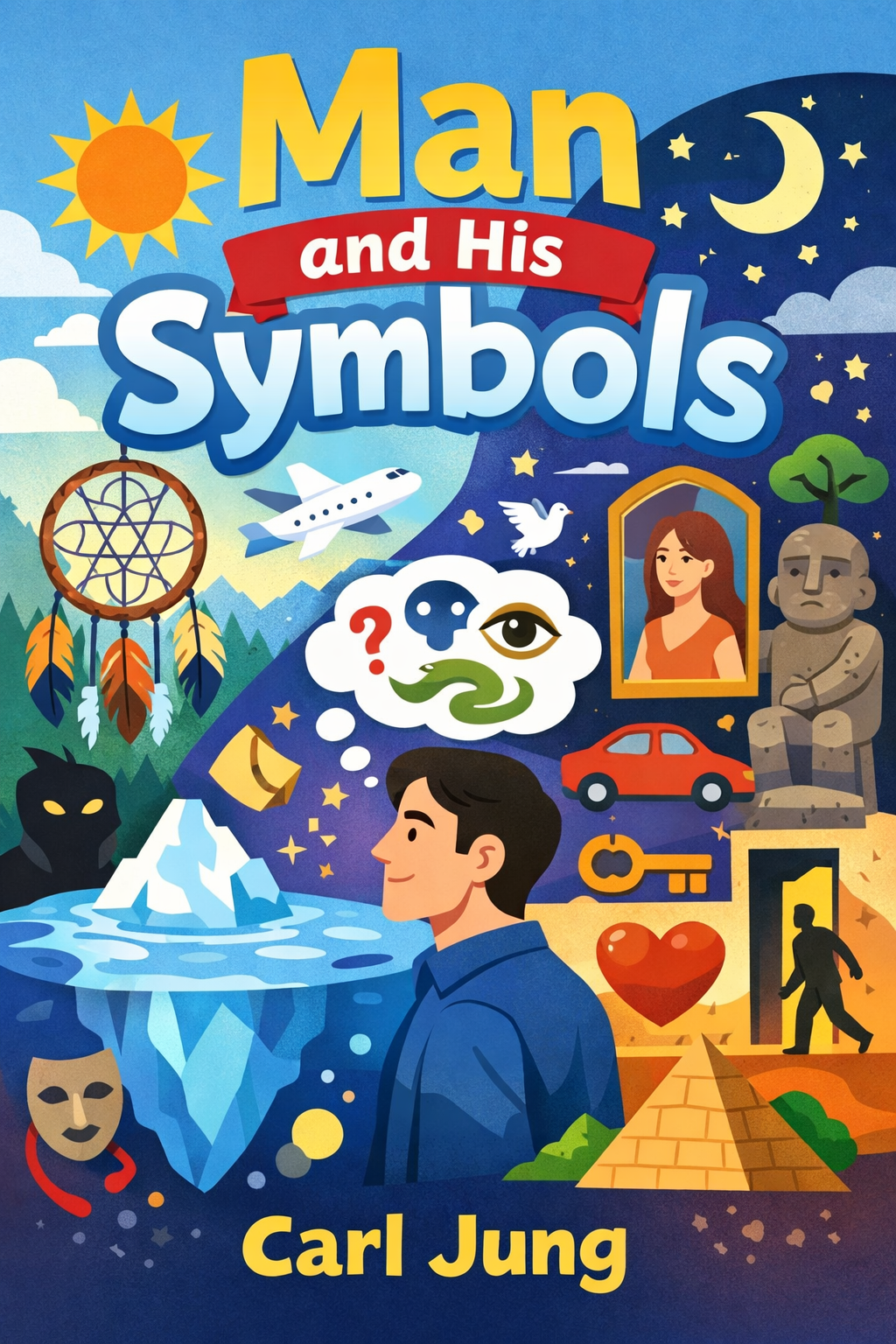
Our modern world, dominated by reason and logic, has largely forgotten the ancient language of symbols. Yet, according to the foundational work of Carl Jung and his collaborators, this language remains the native tongue of our unconscious minds. We do not consciously create the vivid imagery of our dreams; rather, these symbolic pictures arise spontaneously from a deep part of ourselves, carrying messages, insights, and warnings that our waking, rational selves often ignore. To engage with these symbols is to begin a profound dialogue with the hidden dimensions of our own psyche, a journey that can lead to greater wholeness and self-knowledge.
Dreams are not random nonsense or mere echoes of the day’s events. They are a purposeful expression of the unconscious, attempting to balance or correct our conscious attitudes. A person with an inflated sense of self might dream of being humiliated in a social setting, a stark symbolic correction from within. These messages can even carry a prophetic quality, not in a supernatural sense, but by assembling subliminal perceptions and intuitions into a coherent warning. The unconscious mind perceives things our conscious self overlooks, and through the symbolic narrative of a dream, it can urge caution or highlight a path we are refusing to see. Ignoring this internal guidance can widen the rift between our conscious and unconscious lives, leading to anxiety, restlessness, and a feeling of being internally divided.
While many dream symbols are personal, rooted in an individual’s unique experiences and emotions, others emerge from a deeper, collective layer of the human psyche. These are archetypes: ancient, universal patterns and figures that appear across all cultures, myths, and religions throughout history. They are not inherited ideas, but inherited potentials for forming certain types of images. The Hero, the Wise Old Man or Woman, the Great Mother, the Trickster—these are not figures we learn about so much as figures we instinctively recognize. A child with no religious education may dream of divine, redemptive figures as her psyche prepares for death, drawing not on personal memory but on this collective well of symbolic forms. Archetypes connect us to the shared emotional and spiritual heritage of humanity, providing a sense of meaning that our modern, disenchanted world often lacks.
Myths are the collective dreams of humanity, and their archetypal patterns provide a roadmap for psychological development. The ubiquitous Hero’s Journey, for instance, mirrors the individual’s struggle to establish a conscious identity, or ego, overcoming challenges and integrating lessons from mentor figures. This mythic pattern plays out in our private dreams, guiding us toward maturity. For women, archetypal patterns like the transformation in “Beauty and the Beast” symbolize the integration of the unconscious and the recognition of inner value beyond superficial appearances. By engaging with these patterns, we move toward higher levels of consciousness, evolving from a state of unconscious unity with the world into conscious, self-aware individuals.
This lifelong process of psychological integration and maturation is called individuation. It is the journey toward becoming the complete, unique person one is inherently meant to be, reconciling the conscious ego with the contents of the unconscious. A central archetype guiding this process is the Self, which represents the totality of the psyche, the ultimate goal of wholeness. In dreams, the Self may appear as a sacred circle, a squared stone, a divine child, or a majestic figure like a king or queen. These symbols of the Self send specific, coordinating messages, often appearing at critical junctures to provide a sense of order, centering, and profound meaning, pulling the disparate parts of the personality together.
The symbols of the unconscious manifest not only in our nightly dreams but also in the waking visions of art and culture. Paintings, sculptures, and stories are often direct expressions of archetypal material from the artist’s unconscious, revealing the psychological state of both the individual and the era. In a time of collective crisis or spiritual poverty, art may become chaotic or nihilistic, reflecting a fractured psyche. Conversely, art that engages with deep symbols can help heal and rebalance a culture, just as working with dream symbols can heal an individual.
Interpreting this symbolic language requires care and humility. A symbol is not a fixed sign with a single dictionary definition. A snake might represent danger, healing, wisdom, or sexual energy depending on the dreamer’s context and associations. Effective analysis avoids simplistic, preconceived meanings and instead explores the personal resonance of the image. What emotion does it evoke? What personal memories does it connect to? The meaning unfolds through this dialogue, requiring the dreamer’s active participation. By learning to respect and interpret this inner symbolism, we open a vital channel of communication with ourselves. We move from being a house divided to a more harmonious whole, guided by the timeless wisdom that speaks to us in the night and echoes in the deepest stories we have ever told.