Description
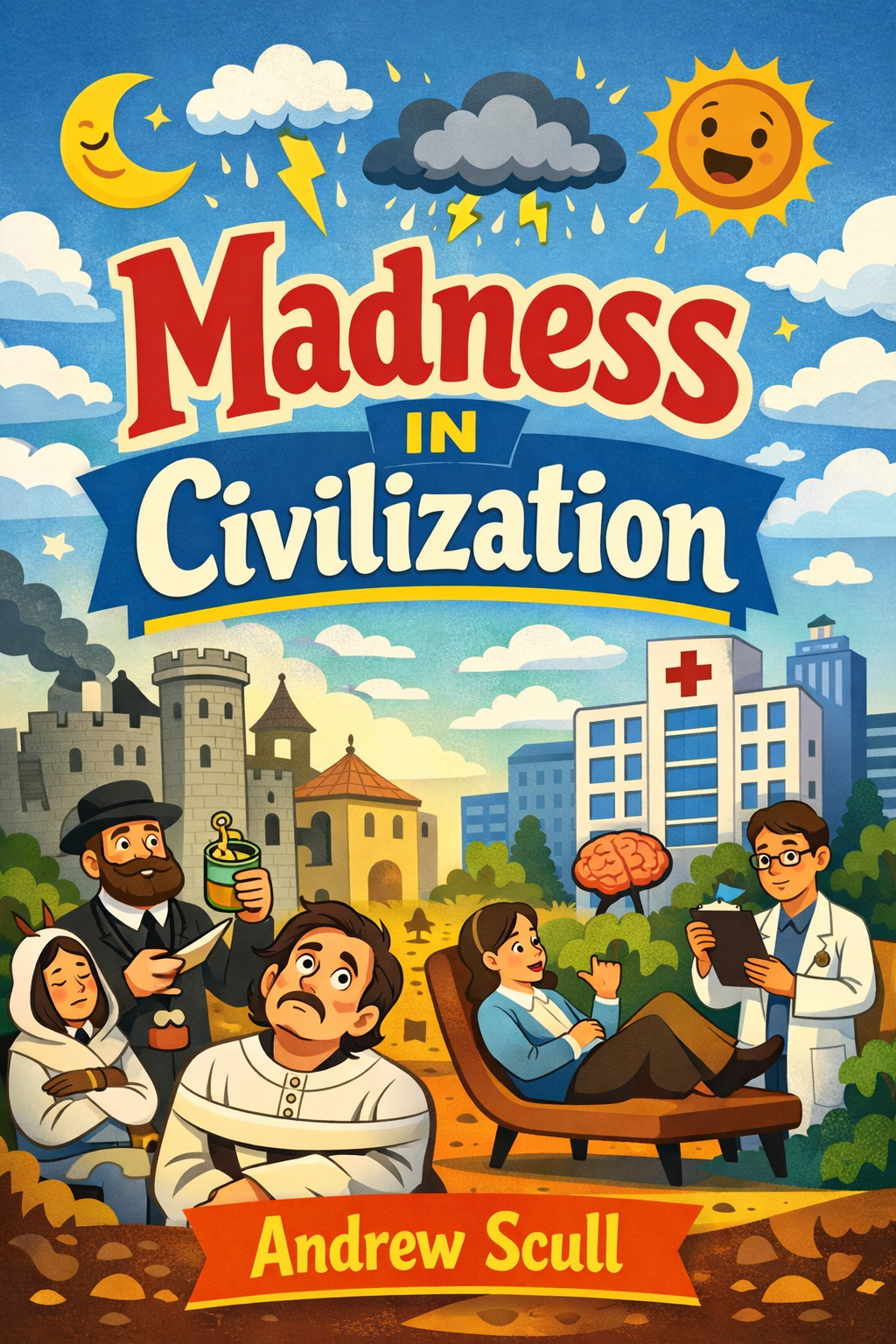
The human struggle to comprehend mental illness is a profound and often disturbing mirror held up to civilization itself. Madness in Civilization is not a simple chronicle of medical progress, but a sweeping exploration of how societies from antiquity to the modern era have defined, explained, and treated those deemed mentally unwell. The story reveals that our conceptions of madness have never existed in a vacuum; they are inextricably woven into the fabric of contemporary religion, art, philosophy, and power structures. What one era venerates as divine prophecy, another condemns as demonic possession or moral failing. This journey through history shows that there is no straight line from ignorance to enlightenment, but rather a turbulent path marked by fear, cruelty, fleeting compassion, and revolutionary, though often flawed, ideas.
In ancient times, the origins of madness were fiercely debated. The Judeo-Christian tradition often framed it as a divine punishment or, paradoxically, a source of prophetic insight, as seen in the biblical stories of King Saul and Jeremiah. In stark contrast, Greek and Roman physicians like Hippocrates sought physical, internal causes. They proposed the theory of the four humors—blood, phlegm, yellow bile, and black bile—believing that an imbalance among these fluids led to mental disturbance. Treatment, therefore, aimed at restoration through diet, exercise, and purging. This clash between supernatural and somatic explanations would echo for centuries.
The preservation and advancement of medical knowledge, including these early ideas, owes a great debt to Arabic scholars. Following conquests, they absorbed and synthesized the medical texts of the Greeks, Persians, and others. Figures like Avicenna compiled this learning into monumental works such as *The Canon of Medicine*, which became a foundational medical textbook in Europe for centuries. Arabic medicine uniquely blended empirical observation with cultural concepts like *jinn* (spirits believed to cause illness), creating a rich intellectual tradition that passed the torch of medical science from antiquity to the medieval world.
By the Renaissance and Enlightenment, madness became a potent theme in art and a focal point in the battle between reason and superstition. While philosophers championed rationality, belief in witchcraft and demonic influence remained potent, leading to the persecution and execution of tens of thousands, often targeting women displaying signs of mental distress. Simultaneously, artists and playwrights explored madness with deep fascination. Albrecht Dürer’s engraving *Melencolia I* linked melancholy to creative genius, while Shakespeare’s *King Lear* portrayed madness as a tragic, human response to profound loss. Madness was not just a medical condition but a cultural spectacle and a philosophical puzzle.
For the individuals suffering, however, theory offered little solace. Society largely refused to care for them, casting them out to beg, starve, and wander. The “treatment” available was often brutal, such as exorcisms performed by a church that interpreted mental anguish as demonic possession—a practice that could maim or kill with impunity. The first institutions meant to house the mentally ill, like the infamous Bedlam (Bethlehem Hospital) in London, became symbols of horror. Originally a general hospital, by the 17th century it was a chaotic dungeon where patients were chained, beaten, starved, and displayed to the public like zoo animals for a fee.
The 18th and 19th centuries saw the rise of the asylum as the dominant solution. Promoted as a humane alternative to neglect or family imprisonment, these dedicated madhouses promised moral treatment and a structured environment for cure. In reality, they often became vast, overcrowded warehouses of misery, where the “undesirable”—from the genuinely ill to inconvenient relatives like the Marquis de Sade—were hidden away. Unregulated and profit-driven, they were places of profound loneliness and abuse, isolating patients from society under the guise of therapy.
A pivotal shift began in the mid-19th century, as madness started to be seen not as a single monstrous condition but as a constellation of different illnesses with various causes. This paved the way for the seismic impact of Sigmund Freud, who argued that mental disorder stemmed from unconscious conflicts and past trauma, shifting the focus deeply into the psyche. The cataclysm of World War I then forced a dramatic, large-scale reckoning, as thousands of soldiers returned with “shell shock,” proving that even the seemingly sound mind could be shattered by external trauma, challenging stigma and demanding new forms of treatment.
The 20th century finally witnessed the long-overdue dismantling of the asylum system, spurred by scandals, new psychiatric medications, and a movement for deinstitutionalization and community care. While this closure of the great Victorian institutions was motivated by ideals of humane treatment, it also created new crises of homelessness and inadequate support. The history concludes not with a neat resolution, but with the recognition that our understanding of mental illness remains incomplete. Madness in Civilization ultimately demonstrates that how a society treats its most vulnerable minds is a definitive measure of its humanity, a challenge we continue to navigate today.