Description
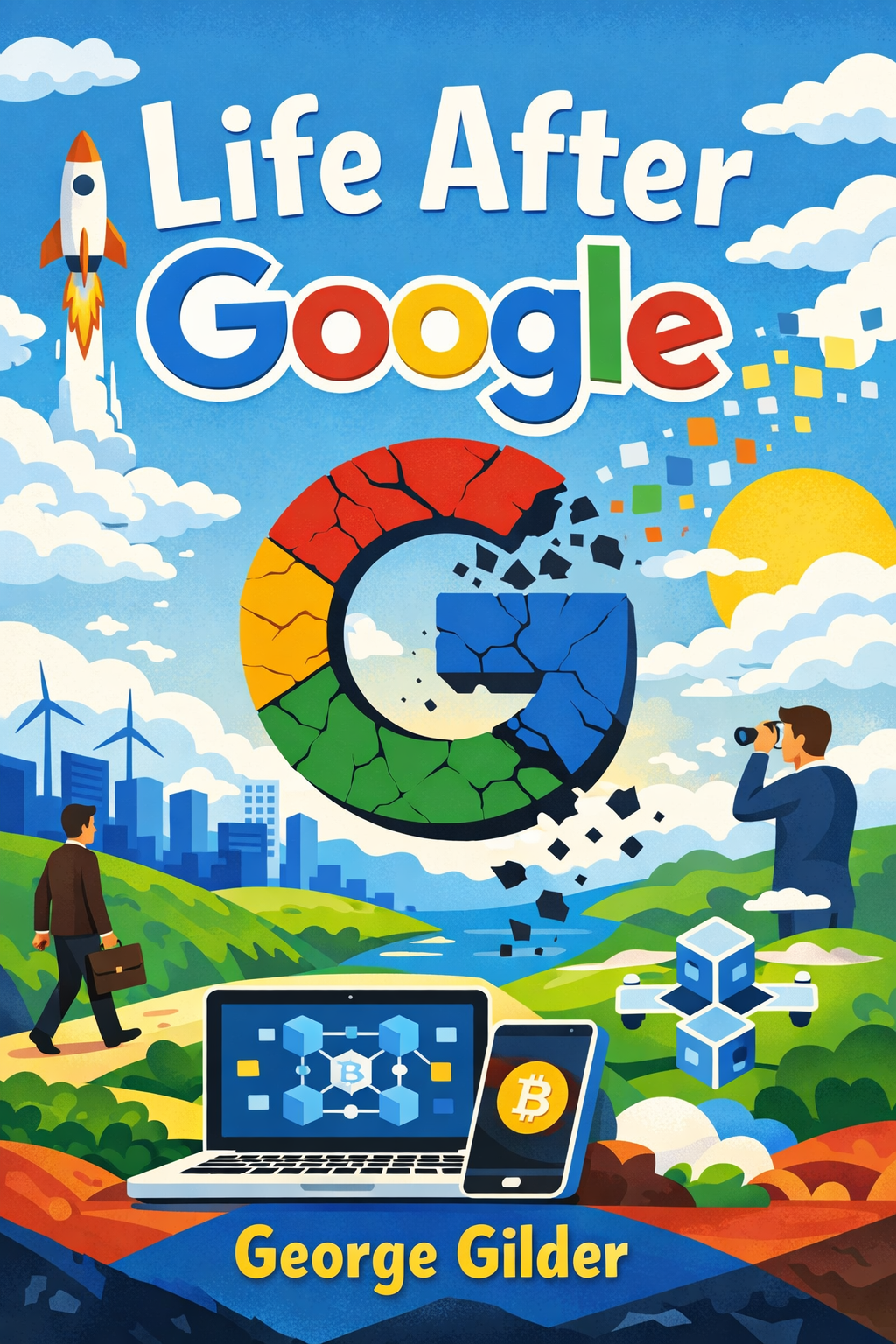
The digital age has been overwhelmingly defined by one company’s vision: Google’s. This vision posits a world where all knowledge is centralized in vast cloud servers, analyzed by sophisticated algorithms, and funded by advertising that monetizes human attention. This “free” model in exchange for personal data has created empires, but it is built on a fragile foundation. It concentrates power, compromises privacy, and creates what critics call “Siren Servers”—alluring hubs that draw in information and value, only to create systemic vulnerabilities and economic imbalances. The central question posed is whether this is the end of the line for digital evolution or merely a phase preceding a more robust and human-centric architecture.
Contrary to popular dystopian fears, the book argues that the greatest threat is not from runaway artificial intelligence, but from the flawed systems we ourselves design. The mathematical principle of incompleteness, established by Kurt Gödel, suggests that no logical system, including any future AI, can be entirely self-contained or self-justifying. It will always require external context and programming. Therefore, an AI cannot spontaneously become a malevolent overlord; it would have to be deliberately or negligently architected to do so. The real danger lies not in autonomous machines, but in the concentration of data and power within closed systems that lack transparency and accountability—a perfect description of the current landscape dominated by large tech firms.
The path forward requires a fundamental shift in thinking, beginning with our institutions. While many traditional universities have become expensive, reputation-focused entities that sometimes stifle innovation, a new wave of thought is championing practical creation. Initiatives like the Thiel Fellowship demonstrate the power of supporting young entrepreneurs to build tangible solutions outside conventional academic pathways. This ethos of hands-on building is crucial for developing the next generation of technology that prioritizes security and individual sovereignty over centralized control.
This new paradigm is already being constructed, and its cornerstone is cryptography. Emerging from the enigmatic creation of Bitcoin by Satoshi Nakamoto, a new digital landscape—the cryptocosm—is taking shape. Its core principle is decentralization. Instead of data residing on vulnerable corporate servers, security is managed through a revolutionary technology called the blockchain. Imagine a public ledger, duplicated across thousands of computers worldwide, where every transaction is cryptographically sealed, time-stamped, and linked to the one before it. To alter a single record, a bad actor would need to overpower the entire network, making fraud practically impossible. This system replaces trusted intermediaries (like banks or data centers) with mathematical certainty and distributed verification.
Bitcoin introduced this concept, but the true potential lies in the blockchain’s broader applications. Platforms like Ethereum expanded the idea beyond currency, allowing for “smart contracts”—self-executing agreements written in code. This enables a new wave of decentralized applications for everything from finance to identity management, where users control their own assets and data. Simultaneously, a renaissance in hardware innovation is challenging the dominance of pure software and cloud services. New specialized processors and devices are creating a more balanced and resilient technological ecosystem, moving away from total reliance on remote server farms.
However, the transition to this new world is not without its complexities. The book critically examines the attempt to position Bitcoin as a new “digital gold” or stable store of value, highlighting its volatility and design challenges. A truly functional digital economy may require different cryptographic solutions for daily transactions versus long-term value storage. The key insight is that the cryptocosm is not about creating a single perfect currency, but about building an entirely new foundational layer for the internet—one based on security, verifiable scarcity, and individual ownership.
Ultimately, the message is one of historical transition. The age of “free” services funded by surveillance and advertising is reaching its logical and ethical limits. The next era belongs to cryptography and decentralization. This new system promises to redistribute power from central hubs to the edges of the network, to individuals. It envisions an internet where you own your identity, your data, and your digital assets as securely as you hold a private key in your wallet. The future being built is not an incremental update to the old web, but a complete architectural overhaul—a life after the current model, founded on the immutable laws of mathematics rather than the mutable policies of corporations.