Description
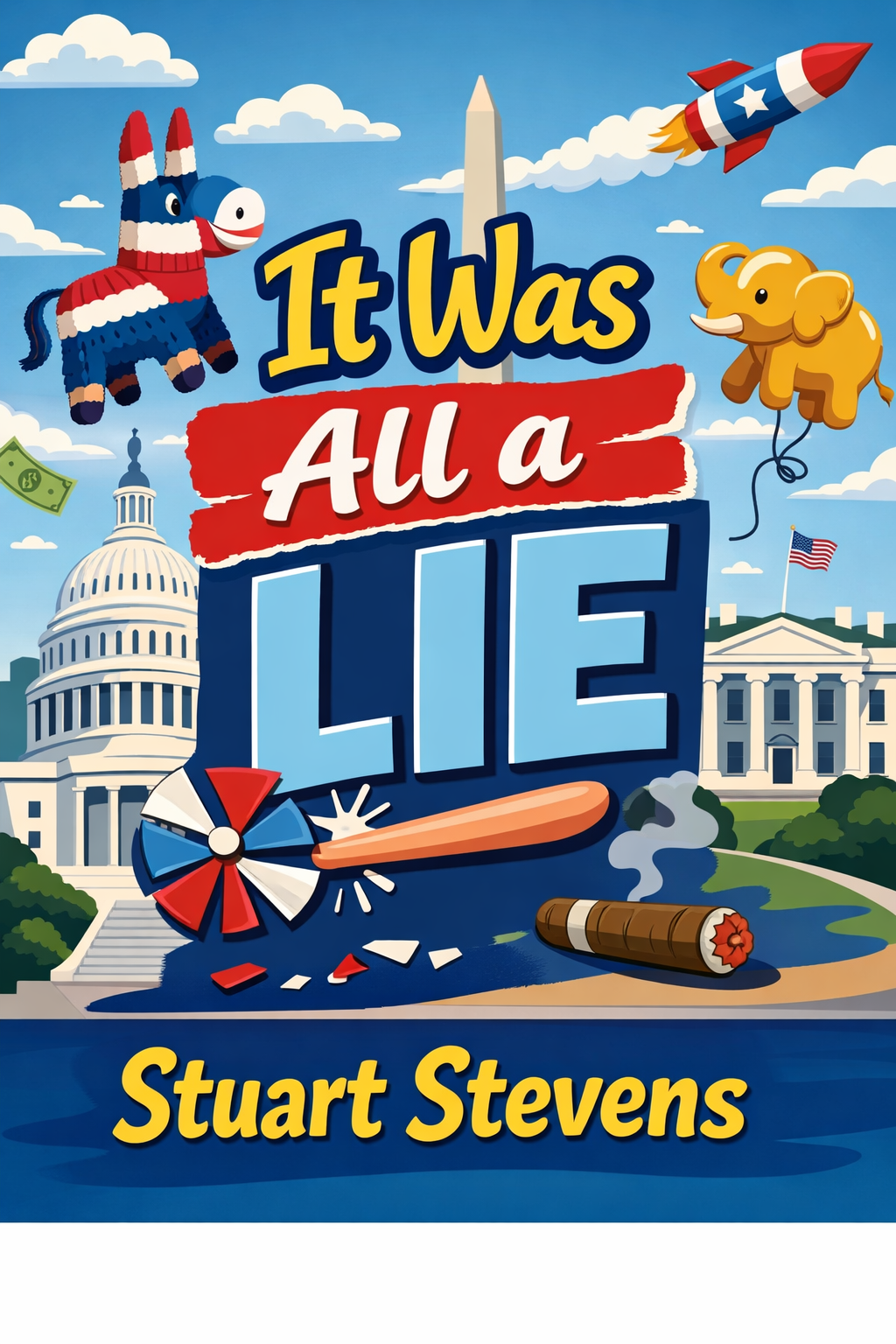
In “It Was All a Lie,” veteran Republican strategist Stuart Stevens delivers a scorching insider’s critique, arguing that Donald Trump is not an aberration but the logical endpoint of a party that has long been built on deception. Stevens, who worked on numerous campaigns including four presidential races, confesses his own complicity in marketing a set of core values—character, fiscal conservatism, family, and inclusive patriotism—that he now believes were never sincerely held. The book is a painful autopsy of a political movement, contending that the party’s embrace of Trump stripped away a fifty-year facade, exposing a foundation of racial animus, hypocrisy, and a hunger for power at any cost.
The journey into this moral decay begins with a re-examination of Republican icon Ronald Reagan. Stevens punctures the myth of Reagan’s genteel conservatism, detailing how his campaign strategically employed racist dog whistles. The infamous 1980 speech in Neshoba County, Mississippi—near the site where civil rights workers were murdered—where Reagan championed “states’ rights” was, in this analysis, a deliberate signal to white voters uneasy about racial progress. This established a blueprint, drawing a direct line to Trump’s overt racial demagoguery, such as his attacks on NFL protesters. The argument is clear: Trump’s language is cruder, but the appeal to white grievance is a tradition, not an innovation.
This racial strategy, Stevens asserts, fundamentally transformed the party’s identity. From Nixon’s “Southern Strategy” onward, the GOP increasingly relied on a coalition of white voters, treating outreach to communities of color as a reluctant electoral calculation rather than a moral imperative. The 2012 post-election “autopsy” that urged greater diversity was swiftly abandoned when Trump demonstrated a path to victory through maximizing white turnout. Stevens points to aggressive voter suppression tactics targeting young and minority voters as evidence that the party’s machinery is designed not to win everyone over, but to selectively diminish the voices of those who threaten its power. The lie of a “big tent” party was finally discarded.
The hypocrisy extends deeply into the realm of morality. Stevens eviscerates the alliance between the Republican Party and the Christian right, which overwhelmingly supported a man embodying the antithesis of “family values.” He sees no contradiction, but rather a revelation. The moral posturing about character, he argues, was always a political cudgel used against opponents like Bill Clinton, not a genuine standard for the party’s own leaders. The embrace of Trump—a serial philanderer who bragged about sexual assault—lays bare that this coalition was ultimately about securing political power and defending a cultural order, not upholding biblical principles. The transactional alliance was finally naked for all to see.
Economic philosophy suffers a similar exposure. The party’s long-professed devotion to fiscal responsibility and debt aversion is revealed as another convenient fiction. Stevens contrasts the unanimous Republican opposition to Bill Clinton’s 1993 budget—which led to a surplus and historic prosperity—with the party’s full-throated support for Trump’s deficit-exploding tax cuts and spending. The core principle, it seems, was not prudent stewardship but opposition to Democratic governance. Supporting a president who famously lost more money than any other American taxpayer became effortless once partisanship was the only true creed.
Beneath these specific betrayals, Stevens identifies a deeper, more corrosive culture: a normalized and escalating deceit. From the weaponization of propaganda outlets to the relentless attacks on the credibility of institutions like the press and judiciary, the Republican ecosystem created a reality where truth is partisan and facts are flexible. This environment, which treats politics as a war without rules, was the perfect incubator for a figure like Trump, who simply took the party’s tactics to their most brazen extreme. The machinery of fear and resentment, carefully maintained for decades, finally found its perfect avatar.
The conclusion is grimly existential. By fully surrendering to Trumpism, Stevens believes the Republican Party has signed its own death warrant as a credible, governing entity. It has sacrificed every stated principle for short-term power, becoming a vehicle for white identity politics and authoritarian impulses. The “lie” is over; the mask is off. What remains is a party that has chosen a path of demographic and moral insolvency, leaving a veteran of its wars to document the betrayal from within and mourn what it long pretended to be.