Description
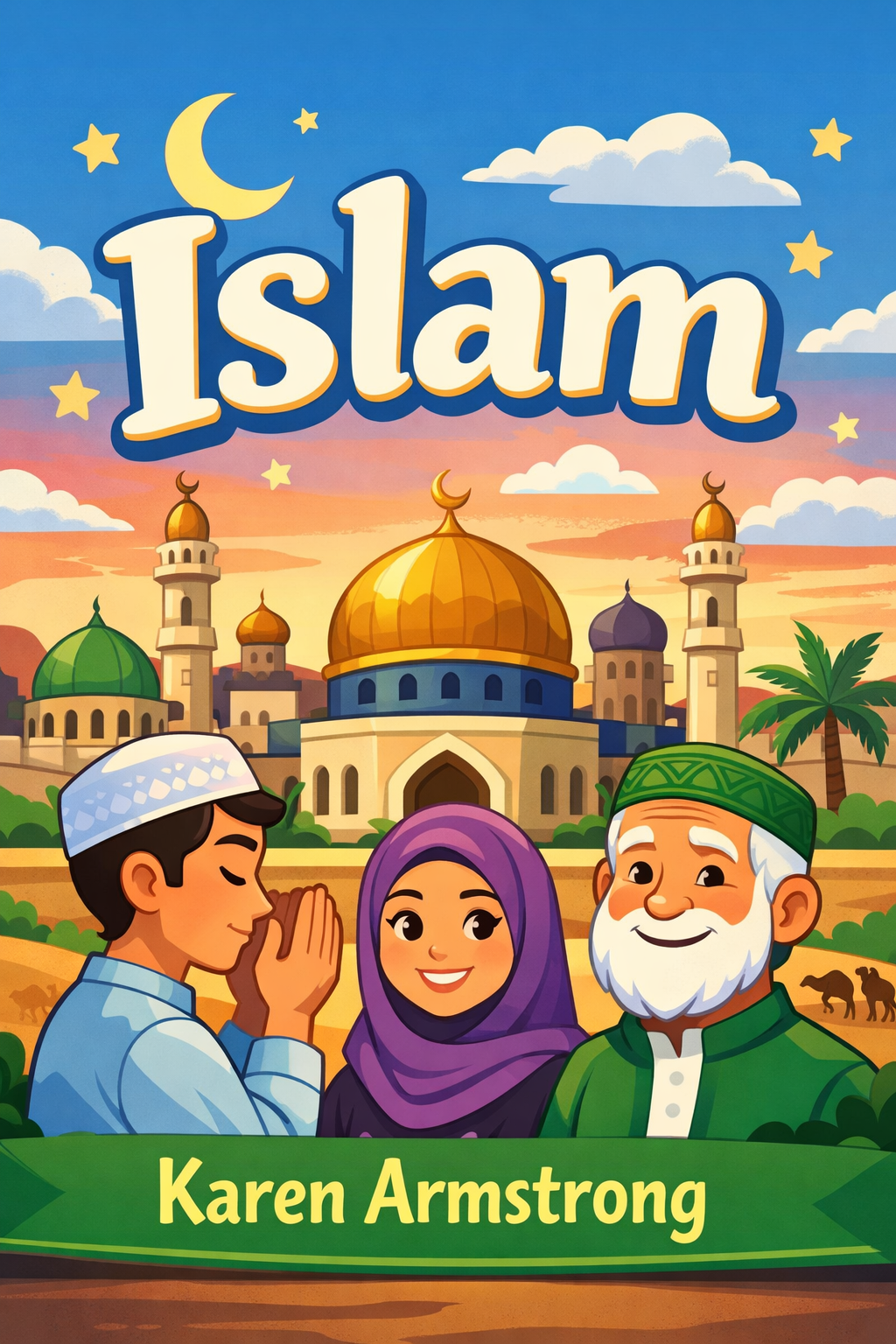
Islam presents a profound exploration of a faith often obscured by modern headlines and ancient prejudices. At its heart, this narrative reveals Islam not merely as a system of personal belief, but as a religion uniquely dedicated to the project of creating a righteous and equitable community in the earthly realm. This central ideal—that spiritual fulfillment is inextricably linked to social justice—has shaped its dynamic and often tumultuous journey through history. To understand Islam is to engage with this ongoing story, a fifteen-century-long endeavor to align human society with divine will.
The story begins in the arid landscape of seventh-century Arabia, a society in the throes of a spiritual and moral crisis. The prophet Muhammad emerged in Mecca, a commercial hub where newfound mercantile wealth had eroded traditional tribal obligations to the poor and vulnerable. His revelations, which would become the Quran, offered a direct and powerful answer: a call to submit to the one God and to replace arrogance with humility, greed with compassion. Early Islamic practices like mandatory alms for the poor and ritual prayer were designed to cultivate this egalitarian ethos. Yet, this message of moral reckoning threatened the Meccan elite, leading to persecution and a pivotal migration. Muhammad’s move to Medina in 622 was revolutionary, establishing the first Muslim community, or *ummah*, based on shared belief rather than blood kinship. Here, the blueprint for an Islamic society was drafted, centered on a covenant of collective security and justice.
From this foundation, Islam rapidly expanded, both as a faith and a political entity. Following Muhammad’s death, Muslim armies burst out of Arabia, conquering vast swathes of the Byzantine and Persian empires. This expansion was driven by complex factors, including economic necessity, political ambition, and a sense of divine mandate. The astonishing speed of these conquests created an empire that stretched from Spain to the borders of India. However, governing this colossal domain with the simple, pious principles of Medina proved an immense challenge. A tension emerged between the caliphs, the political successors to Muhammad who championed imperial administration, and a growing class of religious scholars who saw themselves as the true guardians of the prophetic legacy.
It was from this tension that Islamic law, the Shariah, gradually crystallized. Rather than being a single, static code handed down from heaven, the Shariah was a human project of interpretation, developed by scholars striving to apply the Quran and the Prophet’s example to an ever-more-complex world. They sought to ensure that the empire’s power served the faith’s original goal of justice, not merely its own perpetuation. As the centralized caliphate weakened, Islam entered a golden age of intellectual and cultural flourishing. Power fragmented, but a common Islamic civilization thrived, fostering breathtaking advances in science, philosophy, medicine, and the arts from Cordoba to Baghdad. This period demonstrated the resilience and adaptability of the Islamic ideal across diverse cultures.
The modern era, however, brought a profound and traumatic shift. From the eighteenth century onward, the rising military and economic might of the West led to the colonization of much of the Islamic world. This encounter was not merely political but deeply psychological, forcing Muslims to confront questions of decline, authenticity, and how to engage with a secular, technologically dominant modernity. The subsequent struggle for independence left new nation-states grappling with their identity, often torn between Western-inspired models of governance and a desire to return to Islamic principles.
The contemporary landscape of Islam is defined by this ongoing conversation. The phenomenon often labeled “fundamentalism” is, in this view, part of a global reaction against the perceived alienation and moral confusion of modern secular society. It is one powerful, but not singular, response among many. Across the world, Muslims continue to debate, reinterpret, and live their faith in myriad ways—through intellectual discourse, mystical practice, social activism, and daily devotion—all in pursuit of that enduring, elusive ideal: a just society that reflects divine compassion on earth. This journey from a revelation in a Meccan cave to a global community of billions is a testament to a faith forever engaged with the most pressing questions of human collective life.