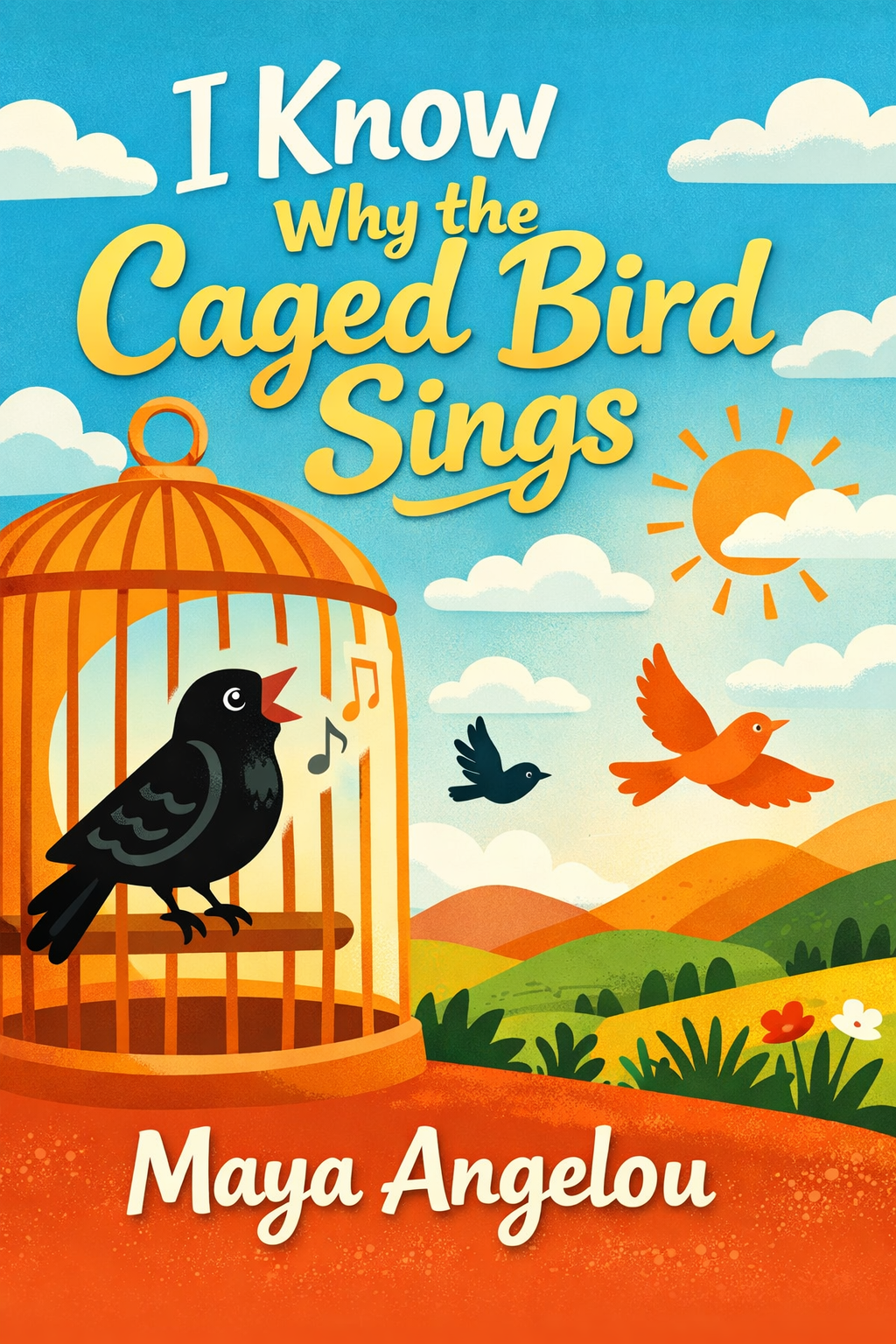
Description
Maya Angelou’s luminous memoir opens with a childhood defined by displacement. At three years old, she and her older brother, Bailey, are sent by train from California to the rural, segregated town of Stamps, Arkansas, to live with their formidable grandmother, whom they call Momma. The world of Stamps is one of stark boundaries, where the legacy of slavery is a living presence and the threat from the white community is a constant, unspoken dread. Momma’s general store becomes the center of their universe, a haven of Black community and resilience. Here, Maya first confronts her own sense of profound ugliness and alienation, believing her appearance marks her as an outsider even within her own family. Her salvation in these early years is her deep, unwavering bond with Bailey, whose loyalty and cleverness provide her only solace and shield.
This fragile stability is shattered when, at age eight, Maya is sent to live with her glamorous mother in St. Louis. The vibrant, chaotic city offers a thrilling new life, but it turns monstrous when her mother’s boyfriend rapes her. The trauma is compounded by the aftermath: the man is killed, likely by Maya’s uncles, and the young girl internalizes a devastating belief that her own voice caused his death. To protect those she loves from her “poisonous” words, she chooses a vow of absolute silence, retreating into a mute, observant shell. Returned to Stamps, she is a ghost of her former self, until Momma orchestrates a gentle intervention through the town’s aristocrat, Mrs. Bertha Flowers.
Mrs. Flowers becomes Maya’s lifeline to a world beyond pain. This elegant, educated woman treats Maya with a respect she has never known, introducing her to the music of language. She coaxes Maya to speak not by demanding it, but by sharing literature, reciting poetry, and explaining that words must be tasted and heard to be truly alive. She gifts Maya books of poetry, igniting a passion that begins to melt the ice of her silence. Through Mrs. Flowers, Maya learns that her voice is not a weapon of destruction, but an instrument of beauty and power. This relationship marks the beginning of a long, arduous healing, where the act of reading and, eventually, speaking becomes a reclamation of self.
The narrative follows Maya into adolescence as she moves to California during World War II. Living with her mother in San Francisco, she grapples with new complexities: a tumultuous relationship with her charismatic but unreliable father, the challenge of being one of the first Black students at a white high school, and the confusing awakening of her own sexuality. A desperate desire for belonging leads her to an impulsive act—she becomes pregnant at sixteen. Faced with this crisis, however, she does not break. The memoir concludes not with despair, but with a hard-won sense of agency. As she cares for her newborn son, she recognizes her own strength and capacity for love. The cage of trauma, prejudice, and self-doubt is not fully dismantled, but she has found the key. She has learned why the caged bird sings—not a song of joy, but a resilient prayer, a plea for freedom that is, itself, an act of liberation. The story ends on a note of cautious, earned triumph, with the young mother embracing her child and, by extension, her own future, having forged an identity from the very hardships that sought to silence her.