Description
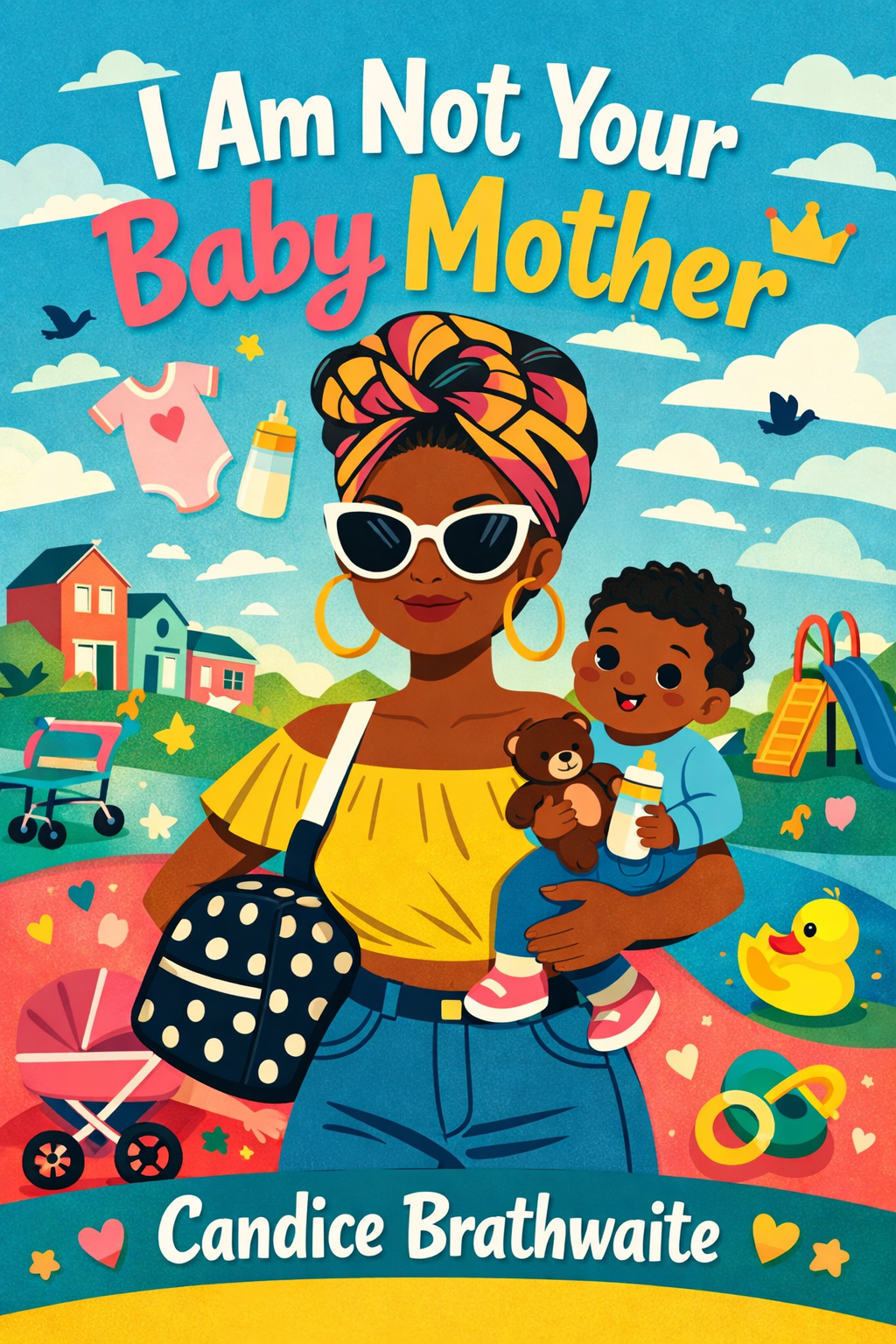
Candice Brathwaite’s journey into motherhood begins not with universal joy, but with a profound sense of absence. Upon her pregnancy, she sought guidance and community, only to find the landscape of mainstream parenting advice populated by faces and experiences that did not reflect her own. Where were the stories that spoke to her fears, her cultural context, her reality as a Black woman in Britain? This book is her answer—a powerful, often searing, correction to that silence. It is not merely a parenting memoir but a social critique, a love letter to her family, and a manifesto for visibility, woven from the threads of her own life.
Her ambivalence about becoming a mother was deeply rooted in her childhood, where she witnessed the immense struggles of her single mother. Thrust into a caretaker role early, she associated motherhood with overwhelming burden and fatigue. This, compounded by the pervasive and damaging stereotype of the “baby mother”—a Black woman inevitably abandoned to raise a child alone—initially steered her away from the path. When pregnancy did occur, her decision was shaped by a clear-eyed assessment of her circumstances and the unwavering support of a partner, Bode, whose commitment as a father was evident. Yet, even with this solid foundation, the outside world was quick to project its biases onto them, as when a medical professional casually implied the father’s absence, an assumption never leveled at white mothers.
This incident underscores a central theme: the corrosive power of monolithic narratives about Black families. Brathwaite challenges the caricature of the absent Black father, drawing from the devoted men in her own life, like her grandfather and father, who provided stability and love. She acknowledges the complex socioeconomic factors that can strain families but insists on a fuller, more human story. Her relationship with Bode, built on mutual respect and shared responsibility, stands as a quiet rebuttal to these harmful tropes. Their partnership, however, faced immediate material challenges. Financial precarity was a constant shadow. The couple’s fixation on acquiring a luxury Bugaboo stroller transcends mere materialism; it becomes a poignant symbol of their desperate desire to arm their child with every possible shield against the stigma of poverty in a visibly class-conscious and racially biased society. They understood that perception could affect opportunity, a lesson extending to the very name their child would carry.
The act of naming becomes a fraught negotiation with history and future prospects. Haunted by the scene from *Roots* where Kunta Kinte is beaten into accepting the name “Toby,” Brathwaite grapples with the modern implications of this loss of identity. She acknowledges the privilege her own racially ambiguous name afforded her and confronts the painful reality of name bias in employment and education. Choosing a name for her daughter, therefore, was a strategic act of protection, an attempt to grant her “cover” in a world quick to judge, while wrestling with the cost of that assimilation to her child’s cultural heritage.
This protective instinct turned to literal life-saving necessity during and after the birth of her daughter. In a harrowing account, Brathwaite details how her serious medical concerns during labor were repeatedly dismissed by healthcare staff. Her pain was minimized, her warnings ignored, leading to a catastrophic postpartum hemorrhage that nearly killed her. This experience is framed not as a tragic anomaly but as a direct consequence of systemic racial bias in healthcare, where Black women’s pain is statistically undervalued with devastating outcomes. Surviving this physical trauma ushered in a psychological one: postnatal depression. Here, her narrative bravely intersects the universal struggles of new motherhood with the specific isolation of experiencing it while feeling invisible within the broader cultural conversation about maternal mental health.
Her quest for a safer, better environment for her growing family led to a move from London, a decision laden with its own complexities of uprooting and finding community anew. It was this very hunger for community and representation that ultimately catalyzed her into action. The lack of relatable stories forced her to become the author of her own. She began to share her experiences, creating a digital space that resonated with thousands of Black mothers who had also felt unseen. Her work evolved into a movement, amplifying diverse stories of motherhood and challenging the homogeneous image that had once made her feel so alone.
Ultimately, *I Am Not Your Baby Mother* is a testament to resilience and reclamation. Brathwaite takes a term often used pejoratively and infuses it with complexity, humanity, and power. She documents the specific joys, anxieties, and injustices of raising Black children in a society riddled with inequality, from microaggressions to macroeconomic barriers. The book is both a deeply personal chronicle and a compelling call to witness, to expand our understanding of family, and to dismantle the stereotypes that continue to shape, and too often endanger, the lives of Black mothers and their children. It is the story she needed to read, written with honesty, wit, and unwavering love.