Description
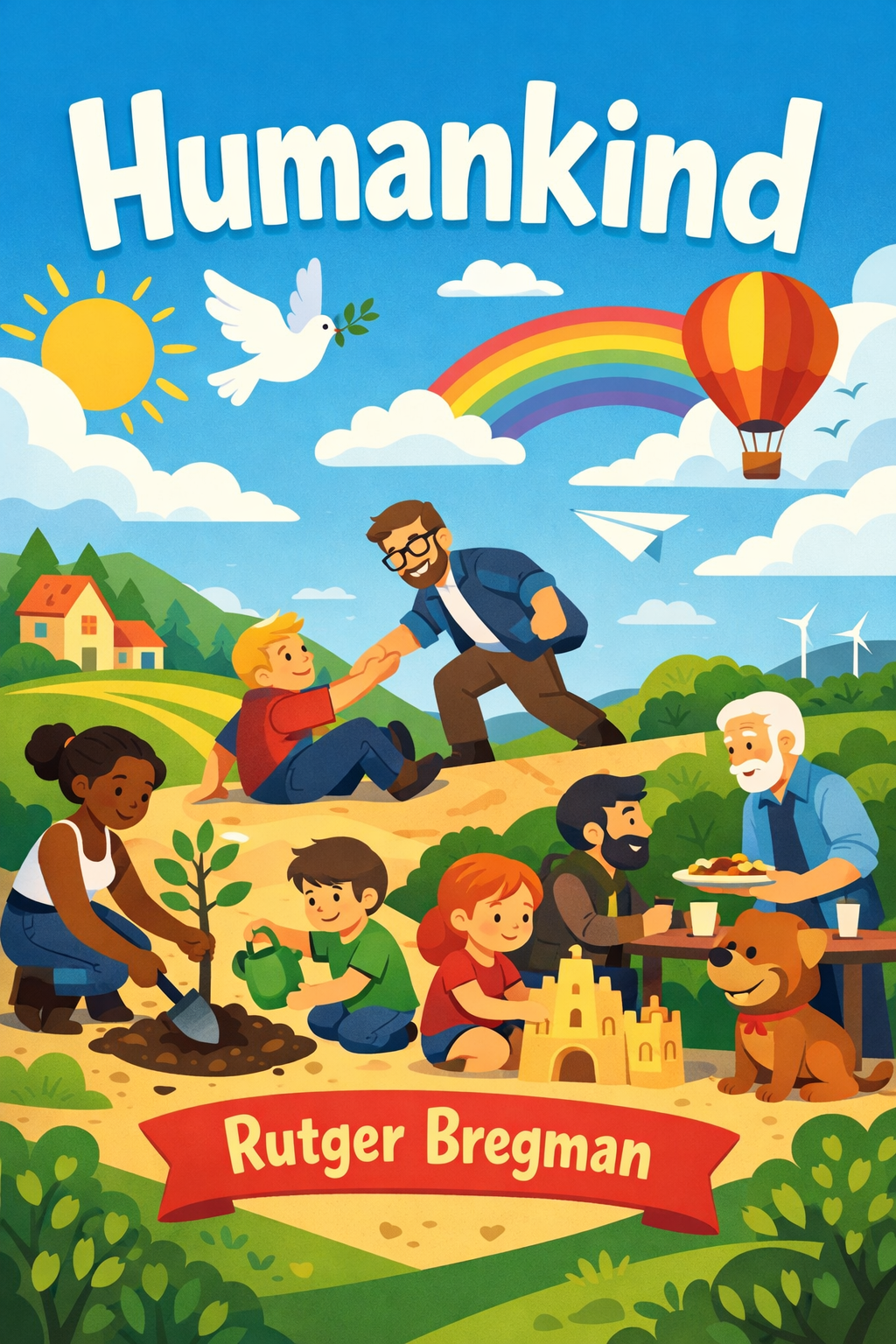
For generations, a dark story has shaped our view of ourselves. It tells us that humans are fundamentally selfish, competitive, and cruel, and that only the strict rules of civilization keep our base instincts in check. This book challenges that narrative head-on, presenting a sweeping and evidence-based case for a more hopeful reality. It argues that our species’ true evolutionary advantage is not ruthless fitness, but profound friendliness. Our capacity for cooperation, empathy, and solidarity is what has allowed us to thrive.
The book begins by dismantling the myth that crises reveal our inherent barbarism. It revisits historical moments of extreme stress, like the London Blitz during World War II, where the expected societal collapse into panic and selfishness never materialized. Instead, people displayed remarkable resilience, calm, and an increase in mutual aid. Similarly, studies of behavior during natural disasters consistently show a surge in pro-social action, not a descent into chaos. Yet, the persistent belief in human selfishness is so ingrained that we often interpret acts of kindness through a cynical lens, searching for hidden, self-serving motives.
This pessimistic bias is actively fed by the stories we consume. The news operates on a principle of negativity, highlighting extraordinary acts of violence and disaster while ignoring the mundane, widespread reality of daily cooperation. This creates a “nocebo” effect, poisoning our collective outlook. Even our fiction often reinforces the idea of inherent human depravity, as seen in iconic tales like *Lord of the Flies*. The book contrasts this with a remarkable real-life account of stranded children who, far from descending into savagery, built a cooperative community that ensured their collective survival.
Delving into our deep past, the book questions the long-held assumption that prehistoric human life was a violent “war of all against all.” It critically examines anthropological and archaeological evidence often used to support this view, pointing out flaws and biases in interpretation. The emerging picture suggests that for the vast majority of our history, our ancestors survived and flourished not through relentless aggression, but through sophisticated social bonds and collaboration. Our evolution selected for traits that fostered group cohesion and trust.
Paradoxically, the book argues that it was the rise of large-scale civilizations and agriculture, not our innate nature, that institutionalized systematic violence and inequality. As societies grew larger and more complex, distancing people from their immediate tribal circles, new structures of power and control emerged. However, even within these systems, the human aversion to violence is profound. Historical analyses of soldiers in battle reveal that the majority actively avoid killing, and that intense conditioning is required to overcome this innate reluctance.
The narrative also acknowledges the complexity of our better angels. Our powerful capacity for empathy and in-group loyalty can, under certain conditions, have a dark side. It can narrow our moral circle, fostering prejudice against outsiders and fueling conflicts between groups. This isn’t a refutation of our core goodness, but a recognition that our strongest social instincts are nuanced and can be manipulated.
Ultimately, this book is a call for a realistic revolution in how we see ourselves. It does not preach a naive optimism but presents a robust, evidence-based case that our default setting is cooperation. By internalizing this more accurate view of human nature—one that recognizes our ingrained friendliness—we can begin to design our schools, prisons, governments, and economies in ways that nurture this potential rather than suppressing it. The conclusion is empowering: believing in human goodness is not foolish idealism, but the first practical step toward building a society that reflects our truest, and best, selves.