Description
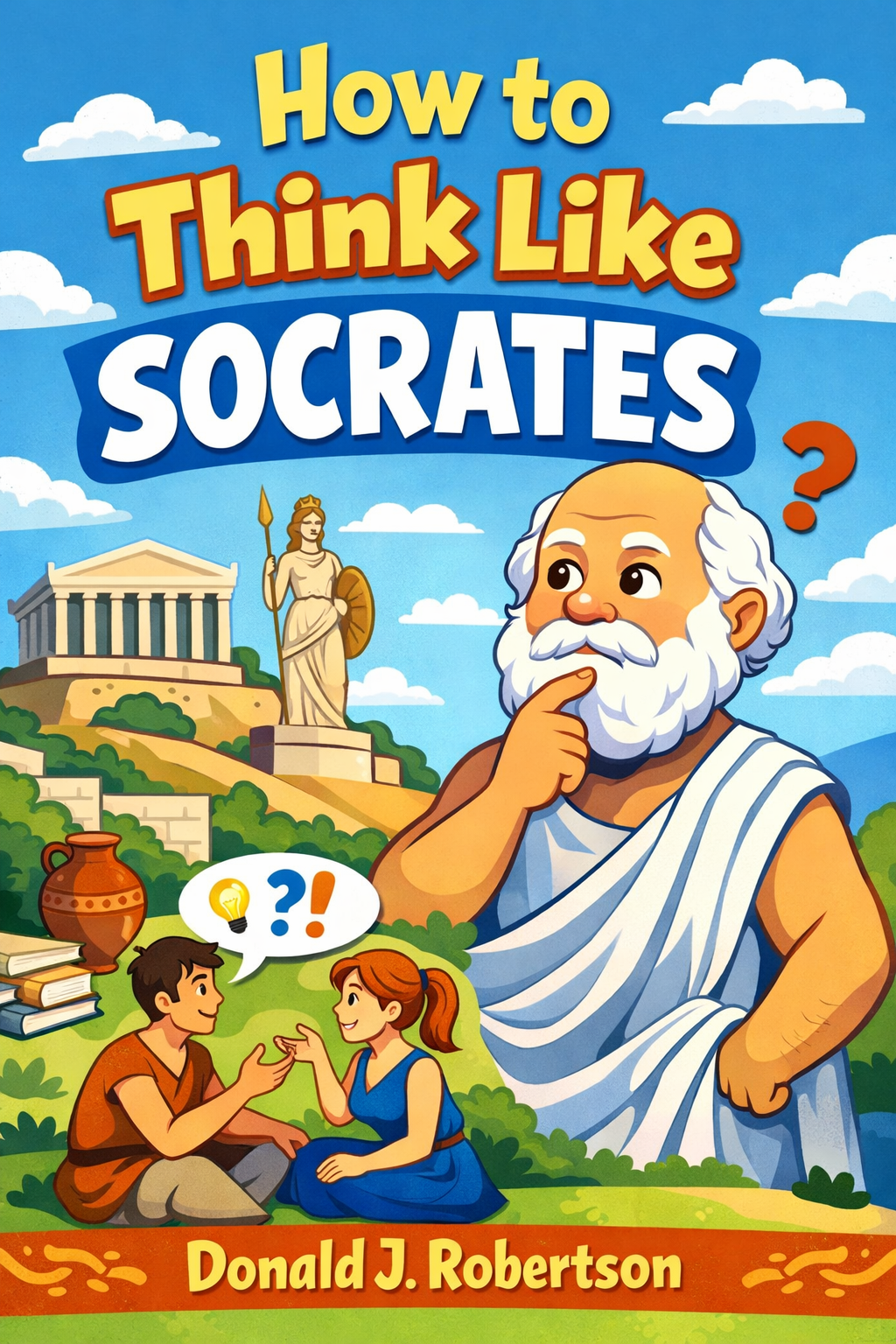
At the heart of this exploration lies a simple, radical idea: the unexamined life is not worth living. This principle, championed by the ancient Athenian philosopher Socrates, serves not as a dusty relic of history, but as a vibrant, urgent call to action for the modern world. The book positions Socratic thinking not as a set of academic rules, but as a living practice—a way of navigating complexity, cutting through noise, and confronting our deepest assumptions. It argues that in an age of information overload and entrenched opinion, the Socratic method is the very tool we need to build clarity, resilience, and genuine understanding.
The journey begins by dismantling the common misconception of Socrates as merely a purveyor of clever arguments. Instead, we meet a man defined by a profound awareness of his own ignorance. His famous declaration, “I know that I know nothing,” is presented not as a confession of failure, but as the foundational step of all true wisdom. It is the intellectual humility that opens the door. By first admitting the limits of our knowledge, we create the necessary space for curiosity and real learning. The book challenges readers to perform this difficult, internal audit: to identify what they truly believe and, more importantly, why they believe it. This process of self-interrogation is the first, often uncomfortable, stage of thinking Socratically.
From this bedrock of humility, the book introduces the famous Socratic method—the *elenchus*—not as a debate tactic to win points, but as a cooperative, truth-seeking dialogue. It’s a shared excavation. Through persistent, thoughtful questioning, Socrates and his interlocutors would peel back the layers of a concept like “justice,” “courage,” or “piety.” The goal was rarely to arrive at a neat, textbook definition. Often, it was to reveal the contradictions and inconsistencies in commonly held beliefs, leaving everyone in a state of productive perplexity. The book masterfully translates this ancient practice into a modern context, showing how we can apply it to our discussions about work, ethics, politics, and personal relationships. It teaches us to ask “What do you mean by that?” and “How do you know that is true?” not as challenges, but as invitations to dig deeper together.
This practice naturally leads to the core Socratic conviction that virtue is knowledge. For Socrates, to truly know what is good and right is to do it; wrongdoing is ultimately a form of ignorance. The book unpacks this challenging idea, suggesting that when we act against our better judgment—when we are lazy, unkind, or dishonest—it is often because we have not fully reasoned through the consequences or have been misled by short-term desires. Therefore, the relentless pursuit of truth through questioning is not an abstract exercise. It is intrinsically tied to living an ethical, flourishing life. By clarifying our values and understanding the good, we align our actions with it, leading to *eudaimonia*—often translated as happiness, but better understood as human flourishing or a life well-lived.
The narrative does not shy away from the ultimate cost of this commitment. Socrates’ dedication to his philosophical mission, his refusal to stop questioning the powerful and the complacent, led directly to his trial and execution. He was charged with corrupting the youth and impiety. His defense, as presented in the *Apology*, becomes a powerful case study in integrity. Faced with the choice between exile, silence, or death, he chose death, arguing that to abandon his quest for truth would be to betray his very purpose. This final lesson is perhaps the most potent: thinking Socratically requires courage. It demands the fortitude to follow the argument where it leads, even when it upends comfortable beliefs or clashes with societal norms.
Ultimately, the book is a guide to building an examined life. It provides practical frameworks for cultivating Socratic habits: engaging in dialogue with people who disagree with you, writing out and challenging your own beliefs, and embracing confusion as a sign of progress rather than failure. It argues that this practice is the antidote to dogmatism, echo chambers, and intellectual laziness. By learning to think like Socrates, we do not acquire a stockpile of answers. We hone a method for lifelong questioning. We become more empathetic listeners, more careful reasoners, and more active participants in our own lives. In the end, we are invited not to worship Socrates, but to emulate his spirit of inquiry—to become, in our own small ways, philosophers in the marketplace of our daily existence, relentlessly and humbly in pursuit of what is true, good, and beautiful.