Description
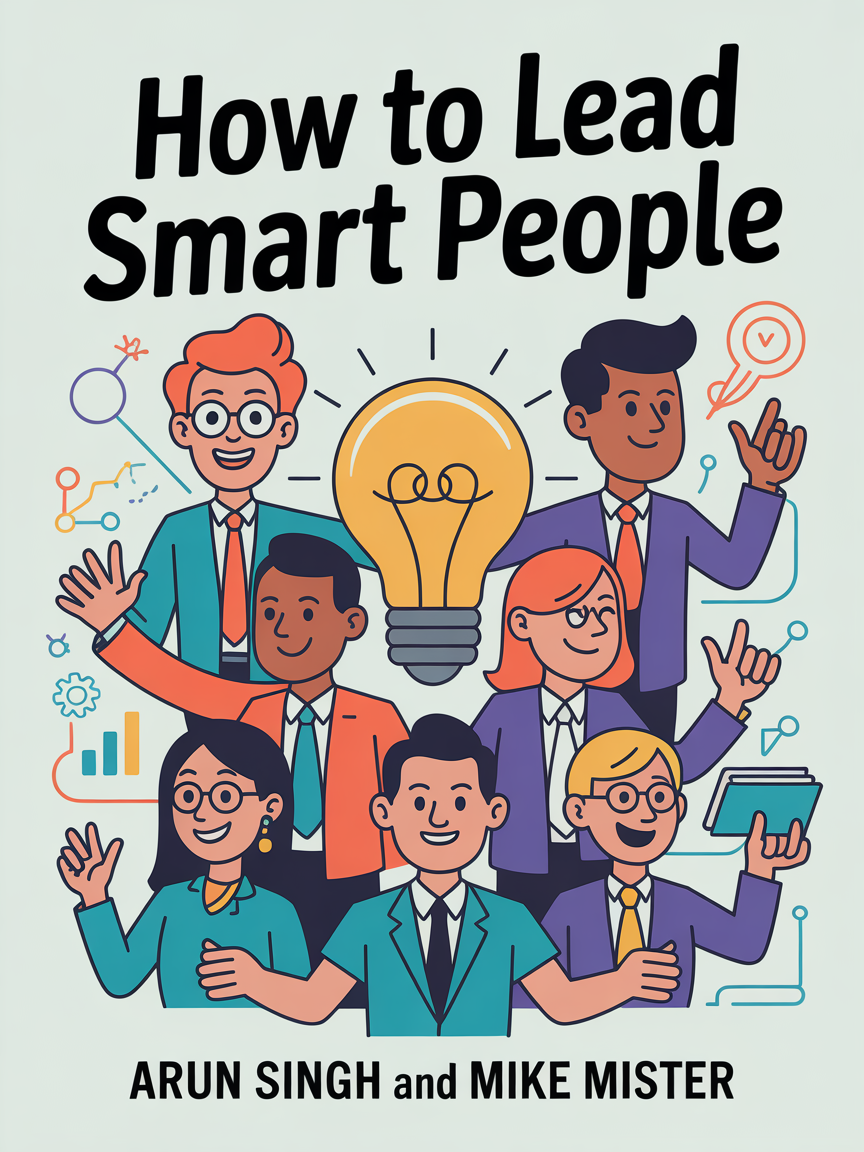
Leading people who are exceptionally intelligent, highly skilled, or experts in their field is one of the greatest challenges a manager can face. Why? Because smart people often have strong opinions, a high degree of autonomy, and a belief that they know the best way to do things. They don’t just follow orders. This can be deeply frustrating for a leader. If you try to use traditional, top-down authority, they will likely resist, disengage, or even leave. But if you are too hands-off, the team can fragment, losing focus and alignment. The solution is not to be the “boss” or to try to be “smarter” than them. The solution is to become a “smart leader” yourself. This means learning a new set of skills focused on meeting the unique psychological needs of high-performing individuals: their need for autonomy, respect, and a sense of purpose.
The foundation of smart leadership begins with how you communicate. You must be assertive, which is very different from being aggressive. Aggression is about using force or intimidation to win. Assertiveness is about clearly, calmly, and respectfully stating your own needs and boundaries. Smart people will respect this; they will not respect aggression. Consider Angela, a senior associate who was on track for a promotion. Her boss, Mark, stormed into her office and aggressively demanded she prepare his presentation for an upcoming conference, a task that would jeopardize her own presentation. The old Angela might have said yes just to please him. But the new, assertive Angela used a technique called “fogging.” She calmly acknowledged his need, saying she understood he needed help. Then, she firmly stated her own boundary: she would not be able to deliver the task in time, as she had to focus on her own work. She stood her ground without starting a fight. This protected her time and demonstrated her leadership potential.
The other half of communication is conscious listening. This is perhaps the most critical skill. Smart people are full of ideas. They need to know that their ideas are being genuinely considered, not just “heard” before the manager does what they wanted to do anyway. True listening builds buy-in. Johan, a managing partner at a law firm, wanted to acquire a smaller firm. He thought it was a great idea, but he knew he couldn’t just announce it. He needed his team’s support. He held meetings with everyone and practiced true, active listening. He would repeat what people said to confirm he understood. He would paraphrase their concerns to show he was processing them. He even reflected their emotions, acknowledging when someone felt anxious or excited. Crucially, he made sure to amplify the voices of the quieter team members, inviting them to speak. By the time the decision was made, everyone felt their perspective had been valued. They were motivated to make the acquisition a success because they felt like part of the process.
Many capable leaders fall into a very common trap: they are so good at their jobs that they think, “It’s just faster and better if I do it myself.” This is what Ayesha did. She was brilliant and efficient, so she took on all the most challenging and interesting work. She left her team, who were also smart, with only the boring, repetitive, mundane tasks. She thought she was being helpful, but she was actually destroying her team’s morale. Their satisfaction was shockingly low. They felt untrusted, bored, and stuck. Ayesha had to learn the difficult skill of delegation. At first, it was slow. It took more of her time because she had to train her team and check their work. But in the long run, it was a huge success. Her team members, now challenged, felt empowered, skilled, and loyal. Ayesha’s own workload lightened, freeing her to focus on high-level strategy. She built a reputation as a leader who develops talent, which in turn attracted more smart people to her team.
Smart leaders are humble enough to know they don’t have all the answers. They understand that their “gut instinct” can be wrong. When facing a big decision, they actively seek out other perspectives, especially dissenting ones. Eguono, an executive, was very excited when his old friend Ade proposed merging their two firms. On paper, it looked like a “no-brainer.” But Eguono had been burned by a bad decision in the past, one that also seemed like a no-brainer. This time, he did something different. He created a special task force to analyze the decision from every possible angle. He didn’t just pick his friends; he included people from finance, technology, legal, and HR. This diverse group saw risks and opportunities that Eguono had completely missed. The merger eventually went through and was a huge success, precisely because it was built on a foundation of many perspectives, not just one person’s enthusiasm.
In our globalized world, it’s very likely your team includes people from many different cultural backgrounds. A leadership style that works perfectly in New York might be a complete failure in Dubai or Tokyo. Smart leaders don’t have a single style; they are flexible and adapt. Peter learned this the hard way when he moved to manage an office in the United Arab Emirates. He was completely confused by his new team. Some of his colleagues from India and China preferred a very direct, hands-on leadership style with clearly defined tasks. But his Emirati associates were different; they were focused on “saving face” and building a relationship of trust and respect before any business could be discussed. Peter realized he couldn’t use a one-size-fits-all approach. He had to be a chameleon. He researched his team’s cultural preferences and adapted his style to motivate each person effectively, showing respect for their way of working.
No leader becomes smart in a vacuum. Growth requires guidance. Smart people are often ambitious and eager to learn, and a good leader knows how to harness this. Suki, a young architect, knew she had a lot to learn about the professional world. She actively sought out a mentor, David, who worked at a different firm. He helped her navigate complex office politics, advised her on which projects to take, and gave her a bigger-picture view of her career. Their relationship helped her grow exponentially. But mentorship is not just a one-way street from old to young. Smart leaders know they can learn from everyone. This is “reverse mentorship.” Years later, when Suki’s mentor, David, left his firm to become a consultant, Suki became his mentor. She taught him how to navigate the world of social media and build his new business profile online. A smart leader is always learning.
Ultimately, a leader’s most important job is to set a clear direction and inspire the team to move toward it. But the smartest leaders know that a vision that is handed down from on high rarely inspires. Smart people are motivated when they feel a sense of ownership. They want to be involved in creating the vision, not just executing it. Felice, a managing partner at a law firm, saw a huge new opportunity for his firm to expand into IT law. But he didn’t just announce the new department. He first did his own research to confirm his hunch. Then, he invited stakeholders from all levels of the firm to question and challenge his idea. He used their feedback to refine the plan. Finally, he brought them together to help write the new vision statement. Because they had all built it together, the entire team was energized, aligned, and motivated to make it a reality.
In the end, leading smart people is not about being the ultimate boss, having all the answers, or being the most intelligent person in the room. It is about being a skilled facilitator. It’s about creating an environment of psychological safety where intelligent people feel respected, challenged, and included. A smart leader achieves this through a specific, learnable set of skills. They are assertive about their own needs but are also conscious, active listeners. They delegate, not to offload work, but to empower their team. They embrace diverse perspectives, adapt to new cultures, and never stop learning. Most importantly, they understand that a vision is only powerful when it is shared. As a final, simple tip: remember to give praise. Smart people need positive feedback. A good rule of all is to give five pieces of genuine praise for every one piece of criticism. This keeps your team motivated and focused on doing great work.