Description
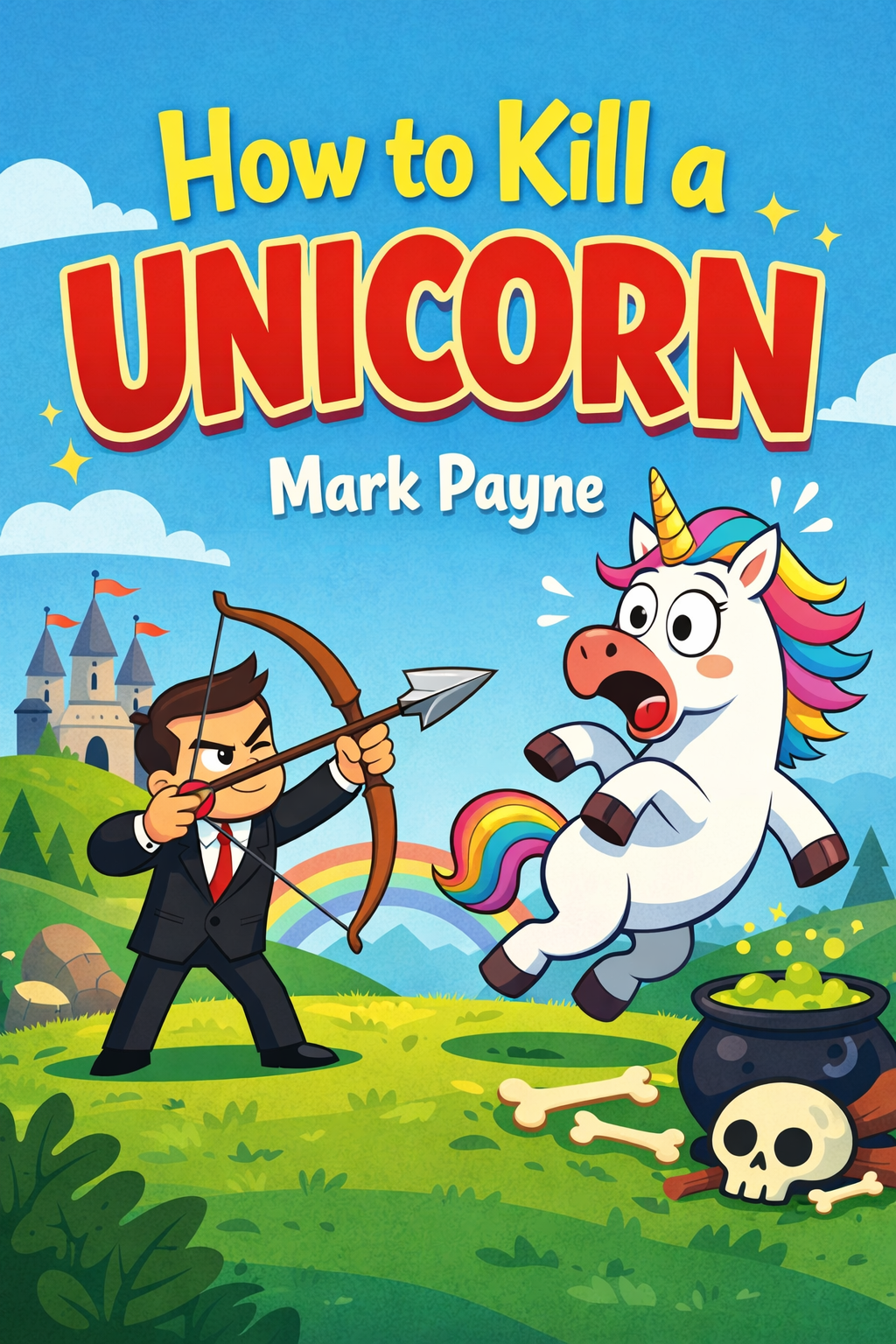
The book presents a counterintuitive approach to innovation, arguing that the most dazzling ideas often fail because they are disconnected from practical and commercial realities. True innovation, it suggests, requires the deliberate “killing” of mythical “unicorn” ideas—those concepts that seem magical but only work in a perfect world—to make room for solutions that are both desirable and executable. The core philosophy is that lasting innovation is born from a rigorous marriage of “Magic” and “Money”: the deep understanding of human desires and the hard-nosed understanding of business viability.
The foundation of this process is team construction. Instead of grouping similar thinkers, you must build intentionally diverse teams that combine analytical, financial, and strategic experts (the Money side) with creative, empathetic, and design-oriented experts (the Magic side). This combination ensures that every spark of inspiration is immediately stress-tested against the realities of the market. Furthermore, the creative process within these teams should favor structured debate over polite brainstorming. Constructive criticism and the clash of different perspectives, drawn from that diversity, generate more robust and creative outcomes than any attempt to avoid conflict in the name of harmony.
With the right team in place, the methodology involves a dual-track exploration. You must deeply understand the consumer’s unspoken needs, frustrations, and aspirations—the Magic. Simultaneously, you must dissect the business’s capabilities, constraints, and economic models—the Money. The book illustrates this with a case of a Dubai bank where customers only used two products. The Magic discovery was a fundamental lack of trust. The Money discovery was that the bank’s products were siloed, with disconnected systems and incentives. The innovative solution, therefore, wasn’t a flashy new product, but a unified system called Mosaic that connected services so that success in one area improved terms in another, thereby building trust through demonstrated benefit.
This leads to the critical balance of “Wow” and “How.” The “Wow” is the visionary, desirable aspect of an idea that creates excitement. The “How” is the practical pathway to build, deliver, and monetize it. The book warns against becoming intoxicated by the “Wow” while neglecting the “How.” Interestingly, it argues the “How” can even come first. By starting with logistical, financial, or operational constraints, you can channel creativity into finding surprising and powerful “Wow” moments within the realm of the possible, rather than chasing fantasies.
The perspective shifts when examining start-ups versus large corporations. For a start-up, what a large company might see as a radical innovation is often just an obvious, survival-oriented solution. A craft distillery using small barrels to age whiskey faster, creating varied products from local grains, or using small bottles that end up in high-visibility store areas due to theft concerns, are simply logical adaptations to their resources and market position. Their “Magic” is inextricably linked to their operational and financial “Money” reality from day one.
For established businesses seeking to innovate, the lesson is to avoid quick fixes and instead practice rigorous question-asking to uncover the root cause of a problem. A major hotel chain, for instance, faced declining visits from top-tier loyalty members. The quick fix would have been to add more perks. Instead, by asking why, they discovered members saw the program as a game to be won; once they reached the top status, they left for a new challenge. The true innovation was to redesign the program with a lifetime guarantee on status, mirroring an enduring relationship rather than a short-term game, thereby addressing the core human desire for recognition and permanence.
Ultimately, the book is a pragmatic manifesto. It asserts that sustainable innovation is not a stroke of genius but a disciplined process. It requires the courage to challenge exciting ideas, the wisdom to seek out conflicting viewpoints, and the patience to explore both human desire and business mechanics with equal depth. By systematically integrating the consumer’s dream with the company’s bottom line, you move beyond mythical unicorns to create workable magic that endures in the real world.