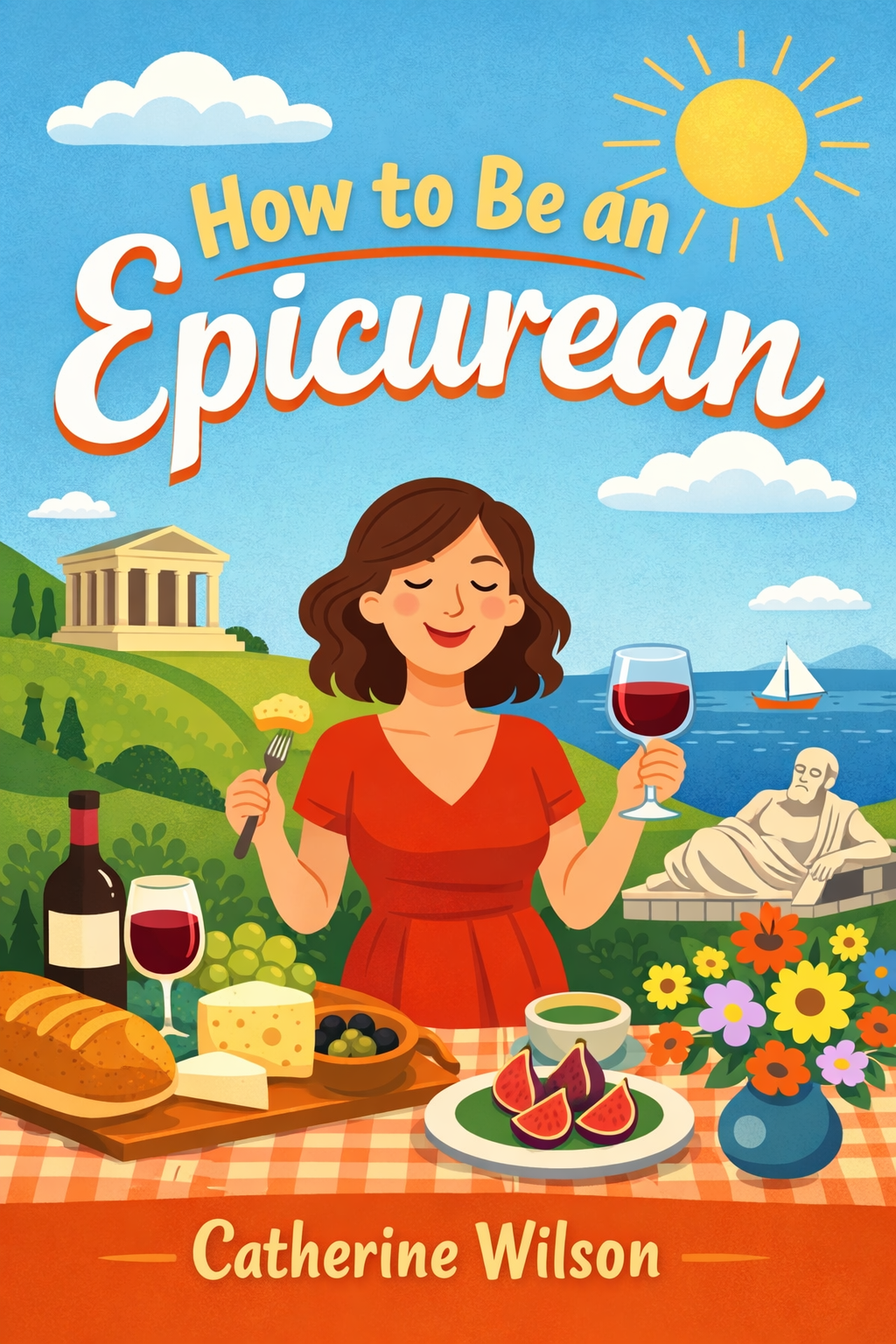
Description
What if the secret to a good life wasn’t about relentless achievement or ascetic self-denial, but about a thoughtful, joyful engagement with the world? This is the invitation of an ancient school of thought that has been misunderstood for centuries. Far from a simple call to hedonistic indulgence, it presents a comprehensive and surprisingly modern framework for living—one that encompasses physics, ethics, and our deepest human concerns. It argues that pleasure is the foundation of a good life, but redefines that pleasure not as fleeting excess, but as a profound state of tranquility and absence of pain, achieved through wisdom, friendship, and an understanding of the natural world.
The philosophy begins with a radical view of reality. Its ancient proponents proposed that everything in the universe is composed of invisible, indestructible particles—atoms—moving through void. This atomic theory, a stunning precursor to modern science, removed the need for supernatural explanations. The world operates by natural laws, not the whims of gods. This materialist perspective extends to us: our minds and consciousness are not mystical entities but emerge from the unique, dynamic arrangements of atoms within us. When the body dies, this configuration dissolves. There is no afterlife, no eternal soul to face judgment or reward. While this may seem stark, it is meant to liberate us from superstitious fear and focus our attention squarely on the one life we know we have.
With this scientific backdrop, the philosophy turns to ethics. The goal of life is to seek pleasure and avoid pain. This sounds simple, but it is a call for profound prudence. Every choice must be evaluated not for instant gratification, but for its long-term consequences. The fleeting pleasure of overindulgence often leads to greater pain, while short-term discomfort, like studying or exercising, can yield lasting well-being. True pleasure, therefore, is found in what the founder called “ataraxia”—a state of serene calm, free from anxiety and physical distress. This is best achieved not through accumulating wealth or status, but through satisfying our natural and necessary desires: simple food, shelter, friendship, and freedom from fear.
This pursuit is not selfish in a narrow sense. While our nature drives us toward pleasure, we are social beings. Kindness and cooperation come naturally because they foster security and happiness. However, human nature can also be drawn toward harmful actions. Therefore, while moral conventions and laws are human inventions—not divine commands—they are essential. They are the prudent, agreed-upon rules that prevent chaos and allow communities to flourish. A modern application of this idea means engaging critically with our legal and social systems, working to reform their flaws, all with the goal of creating conditions where everyone can pursue a tranquil life.
Some pains, however, are woven into the fabric of existence and must be met with clear-eyed acceptance. Romantic love, for instance, brings immense joy but also vulnerability, jealousy, and heartache. To deny love to avoid pain is to reject a fundamental part of the human experience. The philosophy encourages us to engage in relationships—all consensual, respectful relationships—with both openness and prudence, acknowledging the full spectrum of feelings they entail. Similarly, death is the ultimate natural limit. It is not to be worshipped or obsessively feared, but accepted as the inevitable end of a conscious, atomic self. The fact that we cease to exist means there is no “us” to experience being dead. Therefore, the terror of death is irrational. This perspective is not morbid, but freeing: it makes our finite time precious and urges us to fill it with meaningful, pleasurable experiences.
Finally, the philosophy addresses how we know anything at all in a universe of swirling atoms. It advocates for a pragmatic empiricism. We cannot know absolute, perfect truth, as our senses can be fooled. However, our senses are our primary tools, and through repeated observation, testing against feelings of pleasure and pain, and reasoning with others, we can build a reliable and useful picture of the world. Truth is what allows us to navigate life effectively and reduce suffering. This anti-dogmatic stance encourages constant questioning and revision of beliefs in light of new evidence.
In the end, this is not a philosophy of withdrawal, but of engaged, intelligent living. It offers a coherent “theory of everything” that connects the nature of the cosmos to the daily choices on your plate. It replaces anxiety with curiosity, blind faith with reasoned inquiry, and frantic acquisition with appreciation for simple, sustainable joys. By embracing its principles, you choose a life of deep pleasure rooted in reality, guided by prudence, enriched by friendship, and unafraid of the natural limits that give it shape and meaning. It is a path to building your own garden of tranquility in a complex world.