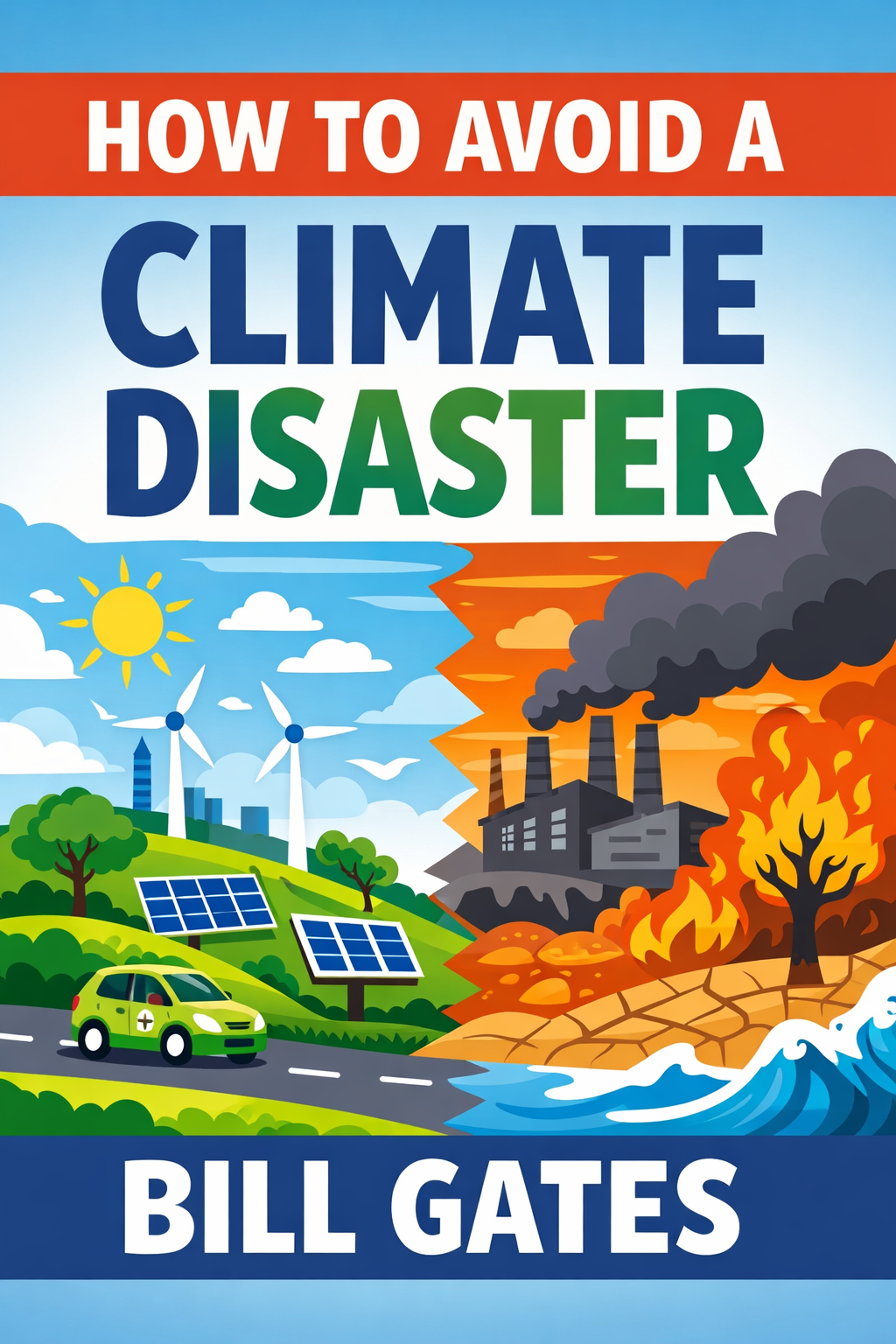
Description
In this urgent and meticulously researched work, Bill Gates presents a clear-eyed diagnosis of the climate crisis and a pragmatic plan for solving it. The central argument is unequivocal: to avert catastrophe, the world must achieve net-zero greenhouse gas emissions by 2050. Currently, humanity adds roughly 51 billion tons of these gases to the atmosphere annually, a number that continues to rise. The consequences of inaction are not distant abstractions but present realities—more frequent and severe droughts, floods, wildfires, and human displacement. Gates frames the challenge with a powerful analogy: the atmosphere is like a bathtub slowly filling with water. Even if we reduce the flow, the tub will eventually overflow unless we stop the tap completely. The goal, therefore, is not merely to reduce emissions but to bring them to zero.
Achieving this monumental task requires a comprehensive understanding of where emissions originate. Gates breaks them down into five key categories: how we plug in (electricity generation, 27%), how we make things (manufacturing of steel, cement, and plastic, 31%), how we grow things (agriculture, 19%), how we get around (transportation, 16%), and how we keep warm and cool (heating and cooling systems, 7%). Each sector presents unique hurdles, but all are interconnected, primarily through our dependence on fossil fuels. The sheer scale of modern civilization—power grids, industrial processes, food systems, and transportation networks—is built on cheap, energy-dense fuels like coal, oil, and gas. Transitioning away from them is the defining challenge of our age.
The journey to zero begins with electricity, the linchpin that can decarbonize other sectors. Today, about two-thirds of the world’s power comes from burning fossil fuels. While wind and solar have made impressive cost reductions and now provide about 7% of global electricity, they face the problem of intermittency—the sun doesn’t always shine, and the wind doesn’t always blow. Large-scale, affordable grid storage remains a significant technological gap. Gates argues for a multi-pronged approach: massively deploying renewable energy where possible, modernizing aging power grids to transmit clean electricity over long distances, and re-evaluating nuclear power. Advanced nuclear technologies, he contends, offer a safe, constant, and carbon-free baseload power source essential for a reliable clean grid, despite public perception shaped by past accidents.
The production of fundamental materials—steel, concrete, and plastic—constitutes the largest single slice of emissions. These materials are the literal building blocks of modern life, and demand for them is soaring globally. The manufacturing processes are intrinsically carbon-intensive, requiring immense heat typically generated by burning coal or natural gas. For instance, making cement involves a chemical reaction that directly releases carbon dioxide. Here, Gates sees a “silver lining”: these processes are concentrated in large facilities, making them prime targets for innovation. Solutions may include developing entirely new methods for producing “green steel” using clean hydrogen, capturing and sequestering the carbon emissions from cement plants, and creating advanced plastics that are easier to recycle or are derived from plants rather than petroleum.
The way we produce food is another major emitter, through deforestation for farmland, methane from livestock and rice paddies, and nitrous oxide from fertilizers. Addressing this requires a combination of technological and behavioral change. Innovations in plant-based and lab-grown meats can reduce reliance on livestock, while new fertilizer formulas and farming techniques can cut emissions. On the consumption side, reducing food waste and shifting diets in wealthier nations can have a substantial impact. Transportation, responsible for 16% of emissions, is moving beyond the passenger car, where electric vehicles are gaining traction. The harder problems lie in decarbonizing long-haul trucking, shipping, and aviation. These sectors need clean fuels with high energy density, such as advanced biofuels or electrofuels synthesized using clean electricity.
Finally, heating and cooling our buildings and producing industrial heat account for a persistent portion of emissions. Solutions range from improving insulation and adopting electric heat pumps in homes to pioneering new methods for generating extreme industrial heat without fossil fuels, perhaps through next-generation nuclear reactors or concentrated solar thermal systems. Throughout this analysis, Gates emphasizes that innovation is not just about inventing new tools but about making them cheap enough to be adopted globally. This is where the “Green Premium”—the extra cost of choosing a clean technology over a fossil-fuel-based one—becomes a critical concept. The task is to drive innovation to eliminate this premium.
The path to zero is not solely a technological puzzle; it is a political, economic, and social endeavor. It will require governments to enact smart policies that fund research, create markets for clean products, and ensure a just transition for workers and communities. International cooperation is non-negotiable, as climate change is a global problem that does not respect borders. Ultimately, Gates makes a case for optimism grounded in hard work. By focusing our ingenuity, investing in research and development, and fostering collaboration between governments and the private sector, we can build the tools needed to stop the climate disaster and create a prosperous, zero-carbon future for everyone.