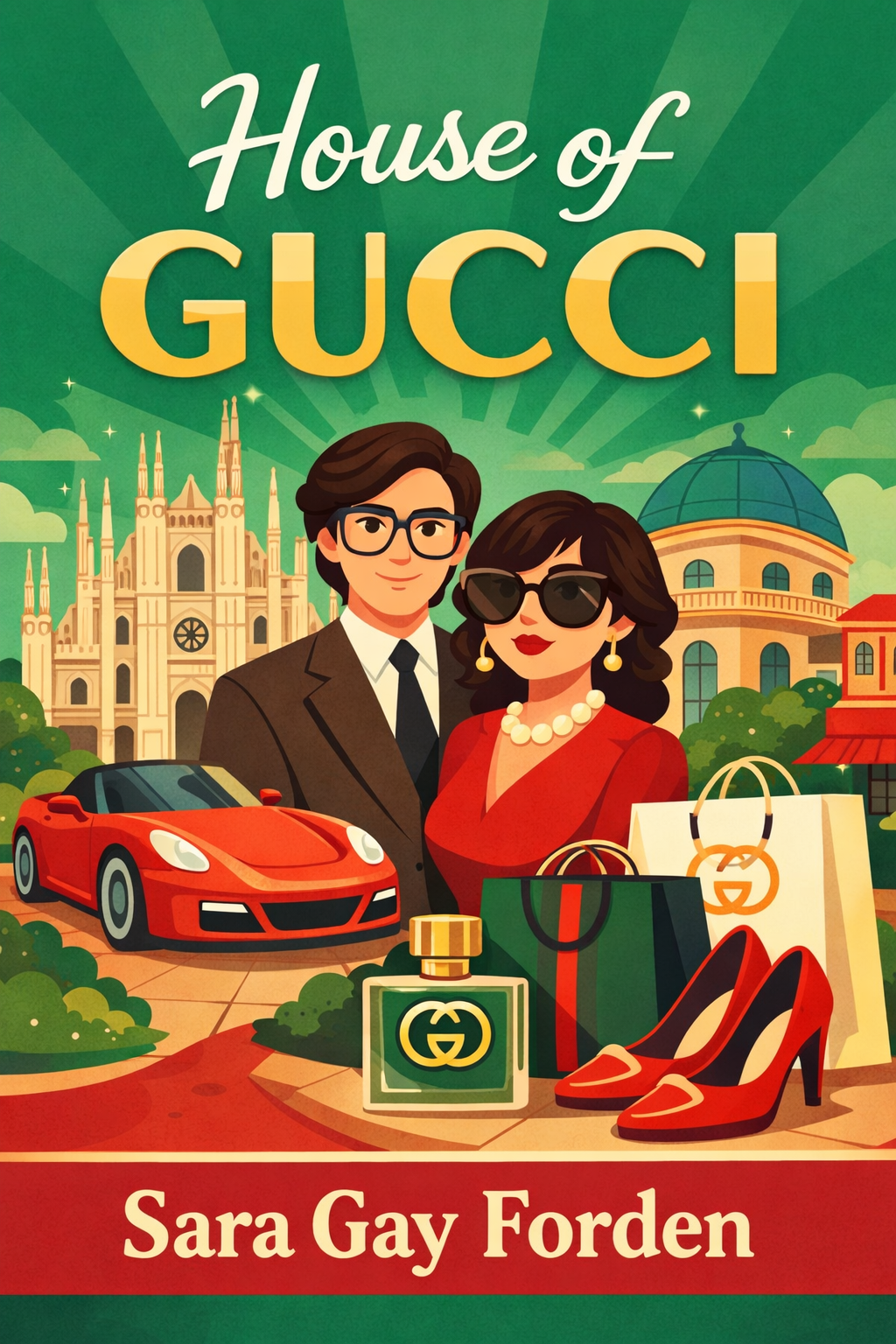
Description
The story of Gucci is a tapestry woven from threads of exquisite craftsmanship, audacious ambition, and devastating betrayal. It begins not on a glamorous runway, but in the bustling corridors of London’s Savoy Hotel, where a young Florentine bellhop named Guccio Gucci observed the habits of the wealthy. He noted how their luggage served as a silent badge of status and taste. Carrying this insight back to Florence, he opened a small shop in 1921, stocking fine imported trunks before establishing his own workshop. Here, artisans employed painstaking, centuries-old techniques, curing veal hides with fishbone grease to produce leather of unparalleled softness. During the leather shortages of World War II, Guccio’s ingenuity flourished, leading to the use of woven hemp and the creation of the brand’s iconic bamboo handle. This relentless focus on quality, paired with an innate understanding of aspirational desire, laid an unshakeable foundation.
Guccio’s sons, particularly the charismatic Aldo, built upon this foundation with visionary zeal. Aldo understood the power of myth and branding long before it became corporate doctrine. He spun tales of a noble saddlemaking heritage, introducing the green-red-green web stripe inspired by horse bridles. He masterminded the expansion into the United States, opening a store on New York’s East 58th Street just weeks before Guccio’s death in 1953. Aldo’s genius made Gucci a global phenomenon, transforming practical items like the horsebit loafer into universal symbols of chic accessibility. Meanwhile, his brother Rodolfo, a former film actor, brought a theatrical sensibility to design and management. Yet, Guccio had sown the seeds of discord by fostering rivalry among his children and unjustly excluding his daughter, Grimalda, from the inheritance. This established a pattern of familial conflict that would define the empire’s future.
The tension between family loyalty and personal desire crystallized in the next generation with Maurizio Gucci, Rodolfo’s shy and sheltered only son. His life was irrevocably altered when he met Patrizia Reggiani, a charismatic and ambitious young woman from a different social sphere whom his father derisively called a “social climber.” Their whirlwind romance provoked a fierce rift, with Rodolfo disowning Maurizio for a time. Patrizia, however, proved strategically adept at navigating the family’s turbulent dynamics. She engineered a reconciliation, after which Maurizio and Patrizia were dispatched to New York under Aldo’s tutelage. For a period, the couple embodied a fairy-tale union, living a life of immense luxury and naming their daughters Alessandra and Allegra. But beneath the surface of gilded happiness, Patrizia’s growing materialism and Maurizio’s evolving ambitions simmered.
As the 1970s progressed, the Gucci empire, though financially booming, began to rot from within due to the family’s poisonous rivalries. Aldo, the patriarch in America, engaged in complex financial maneuvering, including setting up a perfume company to divert funds to his sons, which marginalized his brother Rodolfo and nephew Maurizio. This web of secret deals and perceived slights created an atmosphere of profound mistrust. The once-unified brand became a battleground, with different family factions controlling different territories and product lines, leading to inconsistent quality and brand dilution. The very name Gucci, synonymous with luxury, was being cheapened by the family’s public squabbles and questionable business practices, including massive tax evasion schemes.
The death of Rodolfo in 1983 placed Maurizio, now in his thirties, at a pivotal crossroads. Inheriting his father’s 50% stake, he transformed from a reticent heir into a man possessed by a singular vision: to reclaim and restore the tarnished family legacy. Aligning with a mysterious consortium of investors, he orchestrated a brutal corporate coup, ultimately forcing his uncle Aldo out of the company and into a federal prison for tax fraud. Maurizio achieved his goal of sole control, but the victory was pyrrhic and isolated him completely. He poured millions into a sterile, modernist redesign of the company’s image and operations, alienating the remaining loyal craftsmen and managers. His personal life unraveled in parallel; he grew distant from Patrizia, rejecting her extravagant lifestyle and ultimately abandoning their marriage for a new, quieter life. Patrizia, who had defined herself entirely as “Mrs. Gucci,” perceived this not just as a betrayal, but as an unforgivable theft of her identity and social position.
Maurizio’s reign as the sole leader of Gucci was short-lived and disastrous. His ambitious plans bled the company dry, leading to staggering losses. By 1993, facing financial ruin, he was forced to sell the last of the family’s stake to an investment bank. The House of Gucci was finally free of the family’s strife, but Maurizio was left a wealthy yet hollow man, stripped of the dynasty that had given his life meaning. For Patrizia, his fall from grace was no consolation. Consumed by bitterness and a twisted sense of entitlement, she famously lamented to friends, “I want to see him dead.” What began as venomous rhetoric metastasized into a chilling plot. Exploiting the loyalty of her confidantes and leveraging her remaining finances, she navigated the shadowy underworld of Milan to contract a hitman.
On a damp March morning in 1995, Maurizio Gucci was shot dead on the steps of his office by a hired assassin. The murder sent shockwaves through the world of fashion and high society. The subsequent investigation peeled back the layers of a life consumed by opulence and resentment, leading police directly to the “Black Widow,” Patrizia Reggiani. At her trial, the sordid details of the family’s feuds, Maurizio’s betrayals, and Patrizia’s calculated madness were laid bare. She was convicted and sentenced to prison, a tragic and violent final act in the Gucci family drama. The story concludes with an ironic postscript: the very liberation of the brand from its founding family allowed for its spectacular revival. Under new corporate ownership and the creative direction of Tom Ford, Gucci was reborn, becoming more profitable and influential than ever. The legacy, therefore, is a paradox—a timeless brand born from one man’s dream, nearly destroyed by his descendants’ passions, and ultimately saved by their absence. It stands as a stark reminder that the forces which build a legend can, with equal ferocity, conspire to tear it down.