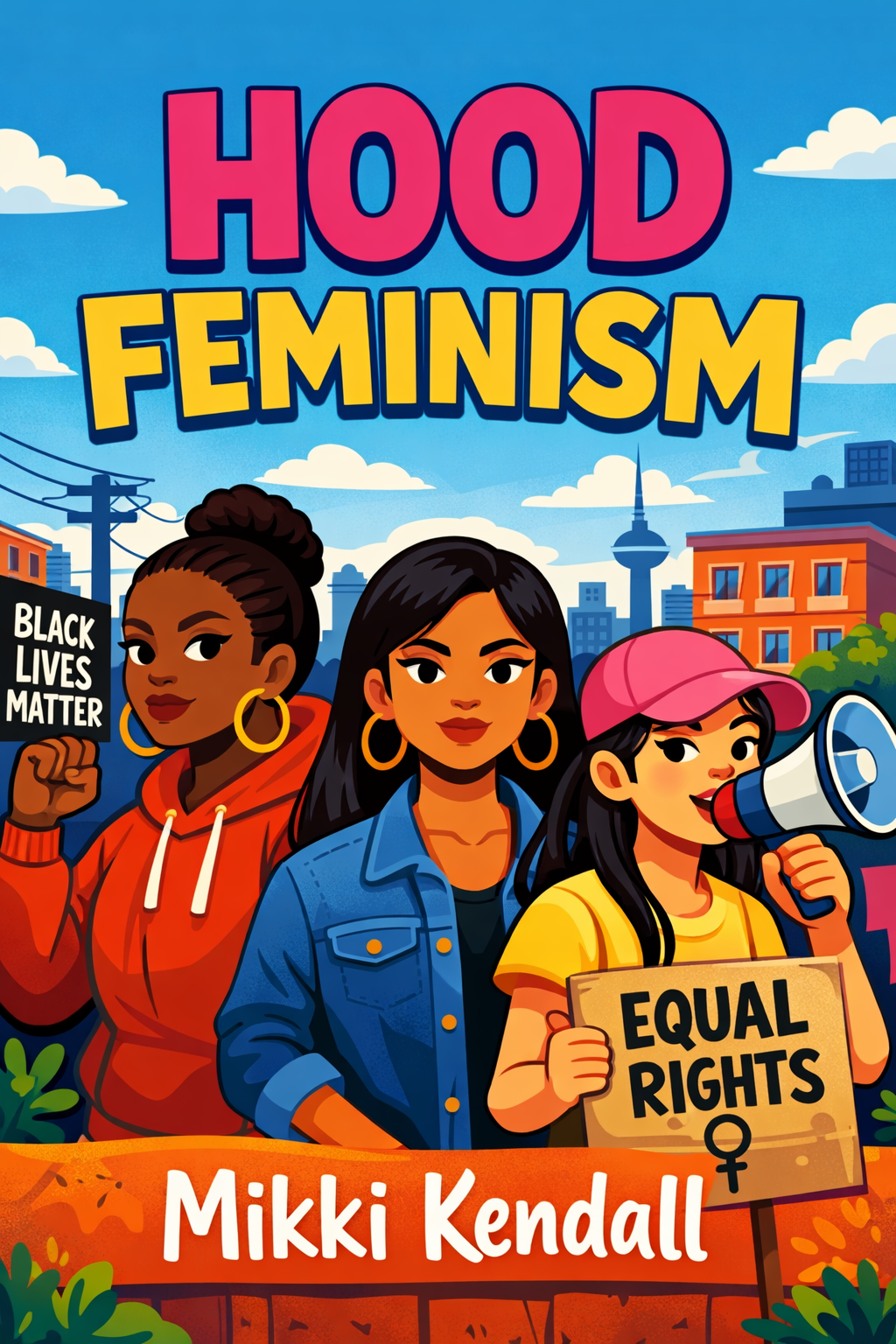
Description
In this incisive and necessary work, the author challenges the narrow focus of mainstream feminist movements, which have historically centered the concerns of privileged, often white, women. The book argues that by ignoring the daily survival struggles faced by countless women, feminism has failed to be a movement for all. True feminist solidarity, it posits, cannot exist while ignoring fundamental needs like food security, safe housing, access to quality education, and physical safety. The movement’s traditional platforms—the gender pay gap, reproductive rights framed in a specific context, corporate leadership—are revealed as secondary concerns for women who must first navigate the brutal realities of systemic racism and economic deprivation.
The narrative powerfully illustrates how poverty is not just an economic condition but a feminist issue. It shapes every aspect of life, from the impossible choice between paying the electric bill and buying groceries to the constant threat of housing instability and eviction. The author draws from personal experience and broader social analysis to show how policy decisions, even those dressed in progressive language like soda taxes, can further penalize the poor. The process of gentrification is framed not as urban renewal but as a force often driven by the economic pressures on white women, which in turn displaces communities of color. Here, feminism’s silence on basic material needs is a profound failure of solidarity.
A particularly devastating section explores the world of Black girlhood, where support is scarce and scrutiny is harsh. The concept of the “fast-tailed girl” is dissected as a societal mechanism that polices and blames young Black girls, often setting them up to be disbelieved or held responsible for their own sexual assault. The school system, far from being a sanctuary, is revealed as a pipeline where bias leads to disproportionate punishment and where the presence of police officers can turn minor infractions into life-altering criminal records. The author challenges the reader to ask who is truly being protected when Black girls are body-slammed by school resource officers.
The discussion extends to body image and health, areas where mainstream feminist dialogue also falls short. The unique pressures of colorism—the privileging of lighter skin within communities of color—and the relentless messaging that equates beauty with whiteness create distinct psychological wounds. Eating disorders in Black girls and women are frequently overlooked, masked by the pervasive and damaging “strong Black woman” stereotype that denies them vulnerability and care. The author’s personal account of hair straightening rituals underscores how the journey to self-acceptance is fraught with internalized racism that feminism rarely addresses.
Reproductive justice is reframed beyond the classic debate over abortion access. From the perspective of marginalized communities, it encompasses the right to have children and raise them in safe environments, free from state violence and environmental toxins. It’s about the right to parent without fear that a child will be shot by police or poisoned by lead in their water. The narrative sharply critiques how white women, upon achieving positions of power, often wield that power in ways that harm women of color, whether as punitive school principals, biased healthcare providers, or politicians advocating for harmful policies. Allyship, the book concludes, is insufficient. It calls for becoming an accomplice—actively working to dismantle the systems of power that benefit some women at the expense of others, and recentering the movement on the urgent, life-sustaining needs of the most vulnerable.