Description
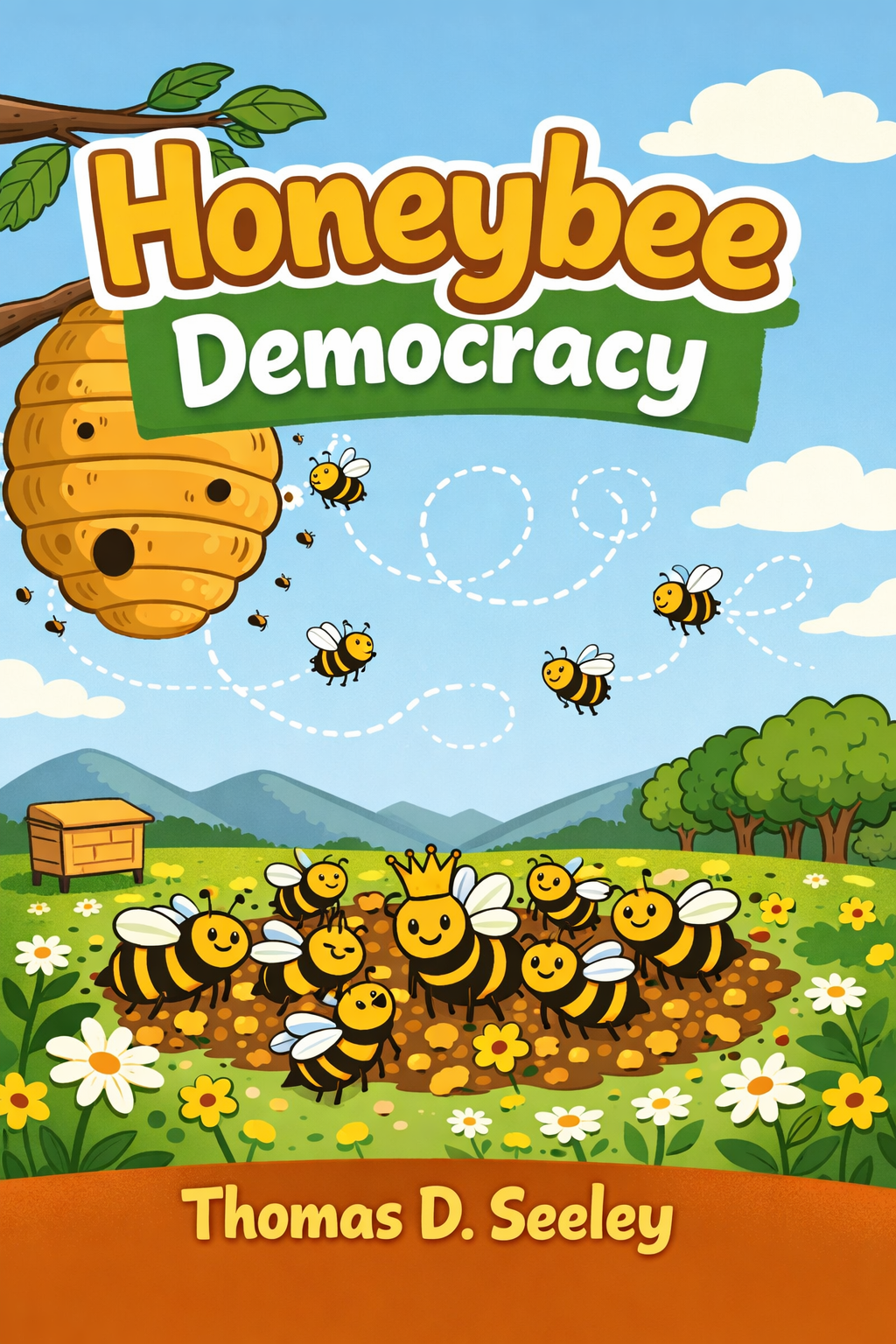
Every year, a honeybee colony faces a critical decision that will determine its survival: finding a new home. When a hive becomes overcrowded, a swarm of thousands departs, clustering on a branch while a few hundred scout bees embark on a search. This process, far from random, is a sophisticated example of collective intelligence and democracy in action. The swarm must agree on a single location from many possibilities, a task it accomplishes with stunning efficiency and accuracy. The journey to consensus reveals a system of communication and evaluation that rivals many human committees in its effectiveness.
At the heart of this process are the scout bees, experienced workers who fly out to survey the landscape. They are not looking for just any hollow tree or cavity. Their criteria are precise and vital for the colony’s future. An ideal nest site is about forty liters in volume—spacious enough for growth and honey stores but small enough to defend and heat. It has a small, defensible entrance positioned low on the cavity, preferably facing south for warmth, and is located high off the ground for safety. Scouts meticulously inspect candidate sites, spending nearly forty minutes crawling inside, measuring dimensions, and assessing conditions before returning to the swarm with their report.
The method of reporting is where the true magic unfolds. A scout communicates her discovery through the famous waggle dance, a figure-eight movement that encodes the direction and distance to the site. But the dance conveys more than just coordinates; its vigor and duration advertise the scout’s enthusiasm for the location’s quality. A superior site inspires a longer, more passionate dance, which attracts more onlookers. These recruited bees then fly off to inspect the site for themselves. If they agree with the assessment, they return and perform their own supportive dances, amplifying the signal. Poorer sites receive only half-hearted performances and fail to generate a following.
This creates a competitive marketplace of ideas. Multiple sites may be promoted simultaneously by different scouts, but as more bees investigate and lend their support to the best options, a positive feedback loop forms. Support for mediocre sites naturally fades as scouts abandon their advocacy, sometimes even producing a “stop” signal to discourage others. The debate continues, sometimes for days, until a quorum is reached—not a simple majority, but a overwhelming agreement typically involving several hundred scouts. This threshold ensures the decision is robust and well-informed.
When the moment to depart arrives, the transition is a masterpiece of coordination. The scouts, who have been relatively calm, suddenly burst into activity, signaling the swarm to prepare for flight. They zip through the cluster, emitting a piping sound and nudging their mates. Within minutes, the entire cloud of bees lifts into the air. The scouts who know the location then guide the swarm, not by leading in a conventional sense, but by streaking through the center of the flying cloud toward the destination, ensuring the queen and the entire colony arrive together at their new, democratically-chosen home.
This natural system offers profound lessons. It demonstrates how a large group can make excellent decisions without a central leader, relying instead on shared knowledge and a structured process of debate. Each bee has an equal voice, but the system is designed so that the best information naturally rises to the top. It values both independent discovery and collective verification, avoiding the pitfalls of groupthink. The honeybee’s method is a testament to the power of distributed intelligence, showing that patience, open communication, and a mechanism for measuring enthusiasm can lead to remarkably wise choices for the community as a whole.