
Description
The story begins not in the halls of power, but in the tense silence of the White House Situation Room on a July morning. Lieutenant Colonel Alexander Vindman, the National Security Council’s director for Eastern European affairs, listens in on a routine call between the American president and the leader of Ukraine. What he hears is anything but routine. The president appears to leverage vital military aid, already mysteriously frozen, to pressure a foreign ally into investigating a domestic political rival. For Vindman, a career soldier and immigrant, this moment crystallizes a profound crisis. The America he pledged to defend—a nation built on laws and principles—seemed to be acting like the authoritarian regimes his family fled. His decision to formally report the incident sets in motion a chain of events that would lead him to testify before Congress and place him at the center of a historic impeachment. This act of conscience was not a sudden impulse, but the culmination of a lifetime shaped by the stark contrast between oppression and freedom.
Vindman’s earliest memories are etched with the grim realities of the Soviet system. After the death of his mother, his father, Semyon, a Jewish engineer facing institutionalized anti-Semitism, made a desperate bid for freedom. He uprooted his three young sons, arriving in New York on Christmas Day with less than a thousand dollars and a fierce determination to build a new life. The family settled in the vibrant Russian enclave of Brighton Beach, where the boys were steeped in their heritage while rapidly assimilating. His father’s relentless work ethic—from furniture salesman to city engineer—and his guiding philosophy to “continuously start over” taught Vindman that growth requires leaving comfort zones behind. America was not just a safer country; it was an ideal, a promise that right and wrong mattered, and that integrity would be rewarded over corruption.
That promise led him to serve. After a rocky start in college, he found his footing in the Army’s ROTC program, discovering a sense of purpose and structure. His military career became a forge for his character. A tense deployment to the Korean DMZ honed his tactical creativity and leadership. The crucible of combat in Iraq during the Second Battle of Fallujah tested his courage and resolve, earning him a Purple Heart after a roadside bomb attack. In the chaos and grief of war, he witnessed the profound meaning of sacrifice and the moral clarity required of soldiers who lead others into danger. These experiences instilled in him a soldier’s code: duty, honor, and the unwavering responsibility to protect his team and his country’s principles.
Parallel to his professional ascent was a personal journey of profound love and loss. His marriage to Rachel provided a stable anchor, but also brought searing heartbreak with the loss of their newborn daughter, Sarah. This grief deepened his understanding of life’s fragility and reinforced his commitment to living with honesty, as a tribute to her memory. Professionally, a pivotal shift occurred when he became a Foreign Area Officer, specializing in Russia and Ukraine. Living in Moscow with his growing family, he experienced Putin’s Russia firsthand—the constant surveillance, the hybrid warfare blending military force with disinformation. He was on the ground when Russia invaded Crimea in 2014, an event that made his expertise critically relevant. By the time he took a post at the National Security Council in 2018, he was one of the military’s foremost authorities on the region, uniquely positioned to understand the high stakes of U.S.-Ukraine policy.
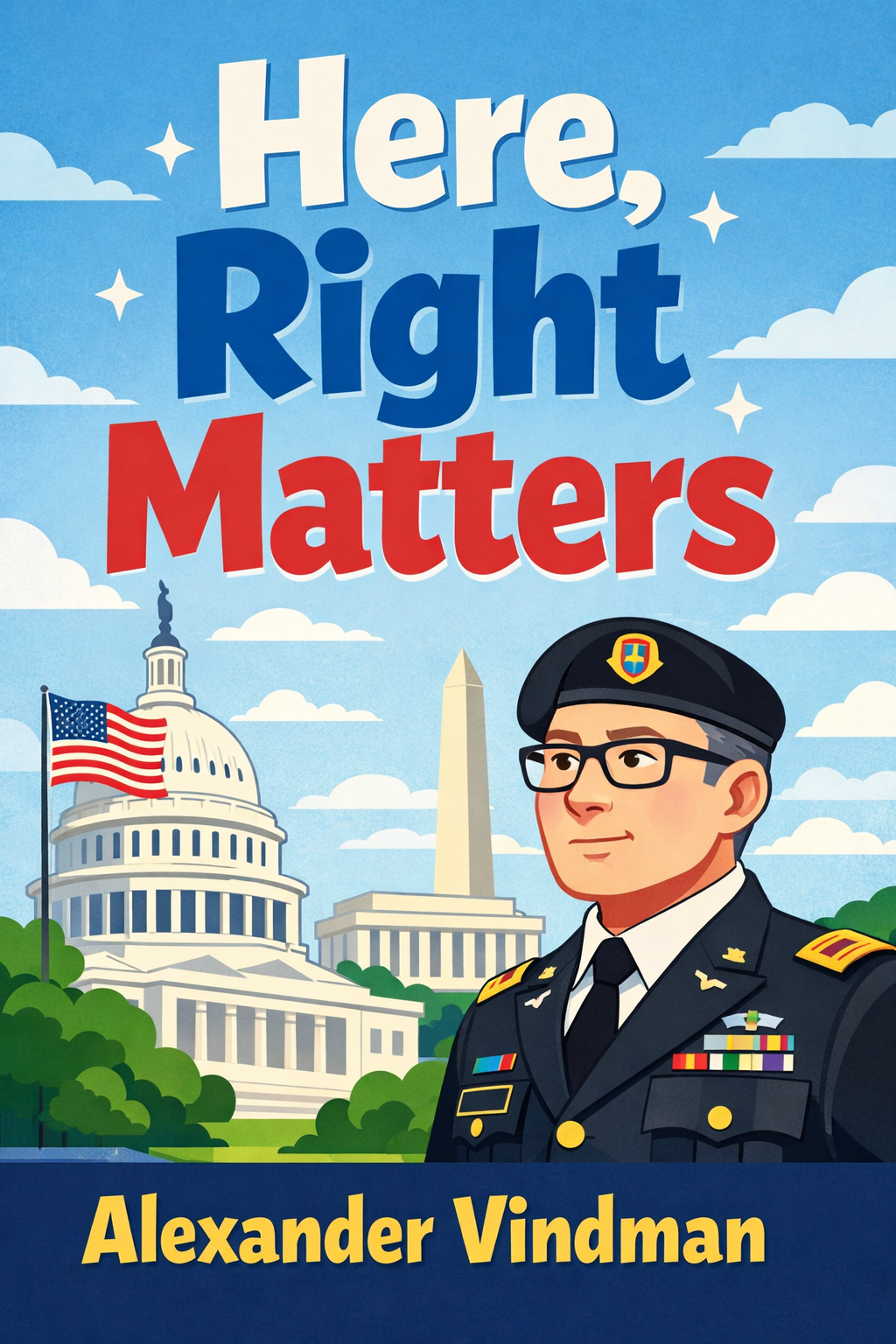
This expertise made the events of 2019 so alarming. He watched with growing dismay as unofficial channels, led by the president’s personal lawyer, circumvented established policy to pursue politically motivated investigations in Ukraine. The now-infamous phone call was the undeniable proof. Reporting it through official channels was, to him, a simple fulfillment of his oath. The brutal aftermath—a coordinated campaign of intimidation, smears, and professional retaliation—was a shock. He was accused of disloyalty, isolated within the White House, and ultimately forced out of his job and his military career. The system he believed would protect a whistleblower acting in good faith seemed to collapse. Yet, through the ordeal, his conviction never wavered. The title of his story, “Here, Right Matters,” became his mantra. It was a declaration that the location of one’s principles—here, in this moment, in this office—is where they must be defended, regardless of personal cost.
The narrative is ultimately a meditation on the meaning of patriotism and the immigrant’s contract with America. Vindman’s family did not escape the Soviet Union’s lies and coercion to find a different version of the same in the United States. His testimony was an act of deep faith in the American system, a belief that speaking truth to power is the mechanism that keeps the promise of democracy alive. It is a story that argues true loyalty is not to a person or a party, but to the Constitution and the foundational idea that no one is above the law. His journey from a Soviet sanatorium to the witness chair in Congress underscores a powerful, personal truth: that the American experiment is perpetually renewed not by blind allegiance, but by the courage of individuals who choose, in decisive moments, to stand for what is right.