Description
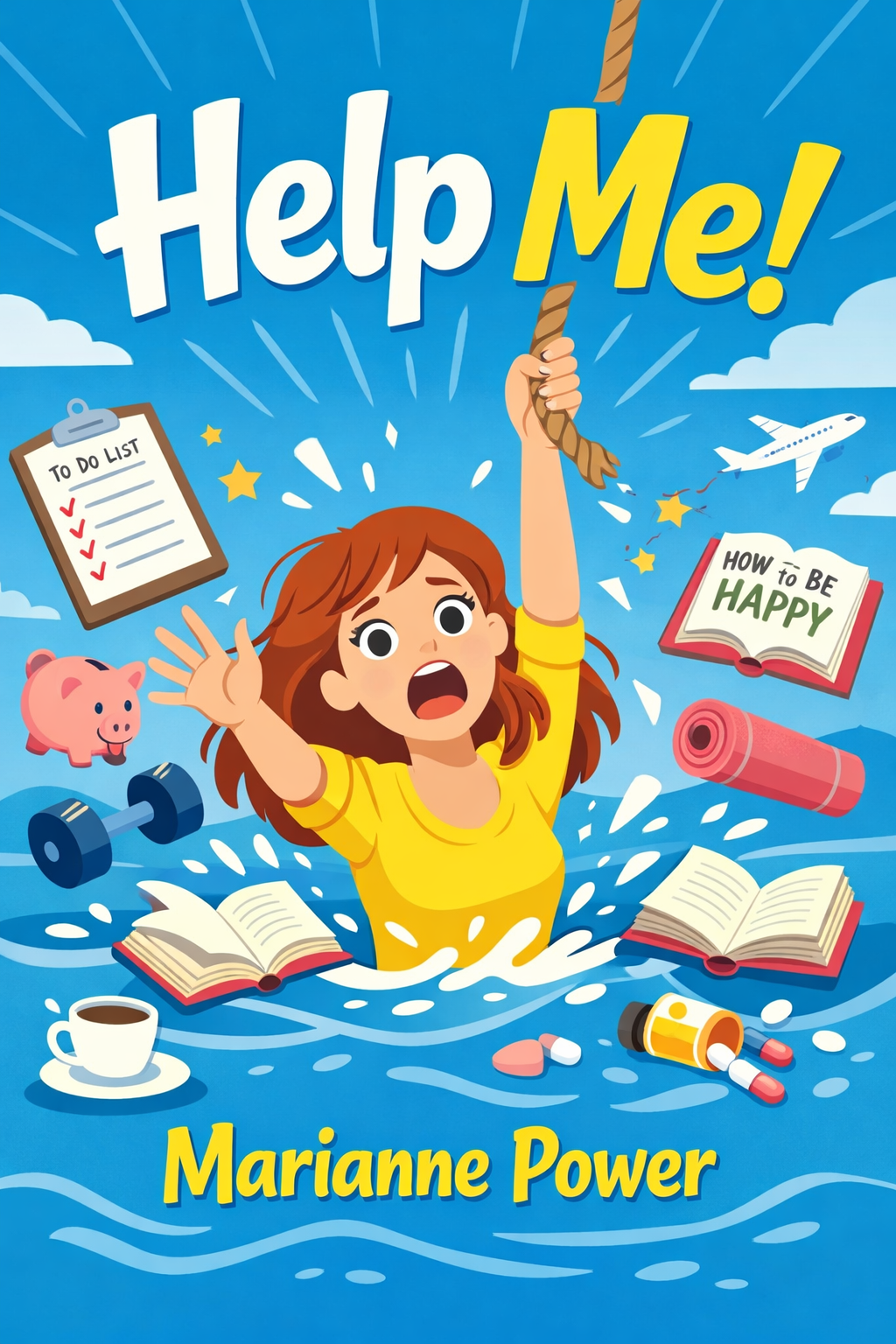
Marianne Power, a successful freelance writer in her mid-thirties, found herself one hungover Sunday morning confronting a deep-seated unhappiness that her career and lifestyle could not mask. While her peers were settling into marriages, homes, and families, she felt adrift and anxious. She realized that for over a decade, she had been an avid consumer of self-help literature, devouring books that promised wealth, love, and success, yet she had never truly implemented their advice. In a moment of hungover clarity, she conceived a radical project: for one year, she would not just read a different self-help book each month, but she would live by its instructions to the letter. Her goal was nothing less than perfection.
She began by confronting her fears, inspired by a classic text. This led her to plunge into icy waters, attempt stand-up comedy, and even skydive. These experiences taught her a powerful lesson in her own capability, but also a crucial distinction: some fears are healthy boundaries, not barriers to be broken. The adrenaline high, however, could not fix her chronic financial disarray. Delving into a book about money, she was forced to examine her bank statements and uncovered significant debt. Through writing exercises, she traced her reckless spending back to a childhood of financial extremes and a deep-seated insecurity that led her to use money to buy affection and self-worth. She committed to new habits, but this fledgling discipline was soon disrupted.
Her next guide promoted the law of attraction and the power of positive thinking. Skeptical but hopeful, Marianne created a vision board. The process itself was revelatory; her initial images of garish mansions felt hollow, leading her to identify a truer, simpler ideal of health, connection, and creative freedom. When work assignments oddly aligned with her new vision, her skepticism wavered. Yet, the book’s focus on magical thinking caused her to abandon the practical financial groundwork she had just started, visualizing wealth instead of managing it.
The project then took a darker turn. Just as she embarked on a month dedicated to seeking out daily rejection to desensitize herself to the sting of failure, a profound family tragedy struck. The loss forced her to question the entire narcissistic premise of her quest for a perfect self. What was the point of all this striving in the face of real grief? Yet, in the aftermath, she continued her rejection challenges, which led to surprisingly positive outcomes, including a published article and a newfound boldness.
Seeking deeper healing, she attended a silent retreat in Italy. The intense isolation and introspection brought moments of profound peace and connection to nature, but also stirred a volcanic eruption of repressed emotion. The retreat’s end revealed a painful cost: her obsessive self-focus had damaged her closest relationships, leaving her feeling more alone than ever. Undeterred, she plunged next into the high-octane world of a mass motivational seminar. For days, she rode a wave of collective euphoria, chanting affirmations and walking on fire, convinced she had been permanently transformed. The crash was inevitable. Returning home to her empty apartment and mounting bills, the manufactured high evaporated, leaving her financially depleted and emotionally bankrupt.
This marked a tipping point. The very tools meant to fix her began to make her ill. Self-help mantras now triggered anger and nausea. She realized her journey had become a spiral of obsession, and in a desperate pivot, she turned her attention outward, volunteering at a homeless shelter. This act of simple service provided a stark and healing contrast to her year of navel-gazing. The final, most dramatic experiment was a guided meditation where she envisioned her own funeral. This macabre exercise precipitated a total psychological breakdown, as she confronted the void of a life lived for a fictional, perfect self. Hitting rock bottom, however, became the catalyst for her real breakthrough.
Exhausted and broken, she finally sought professional therapy and engaged with a spiritual teacher whose gentle wisdom stood in stark contrast to the aggressive positivity she had consumed. They helped her trace her relentless drive for perfection to a core childhood belief that she was fundamentally flawed and needed to earn love through achievement. This was the root of her anxiety, her financial chaos, and her inability to form a lasting romantic connection—a truth hilariously underscored during an awkward date where she performed self-help techniques like a robot, utterly preventing any genuine human interaction.
Marianne’s year-long experiment did not deliver the perfect life the books promised. Instead, it delivered her back to herself, imperfect and whole. She learned that constant self-optimization is a form of violence against the soul, and that true peace comes not from conquering fears but from understanding them, not from manifesting ideals but from appreciating the present, and not from fixing oneself but from connecting with others. Her journey stands as a poignant, funny, and deeply human testament to the idea that the relentless pursuit of a better you can sometimes prevent you from being who you already are.