Description
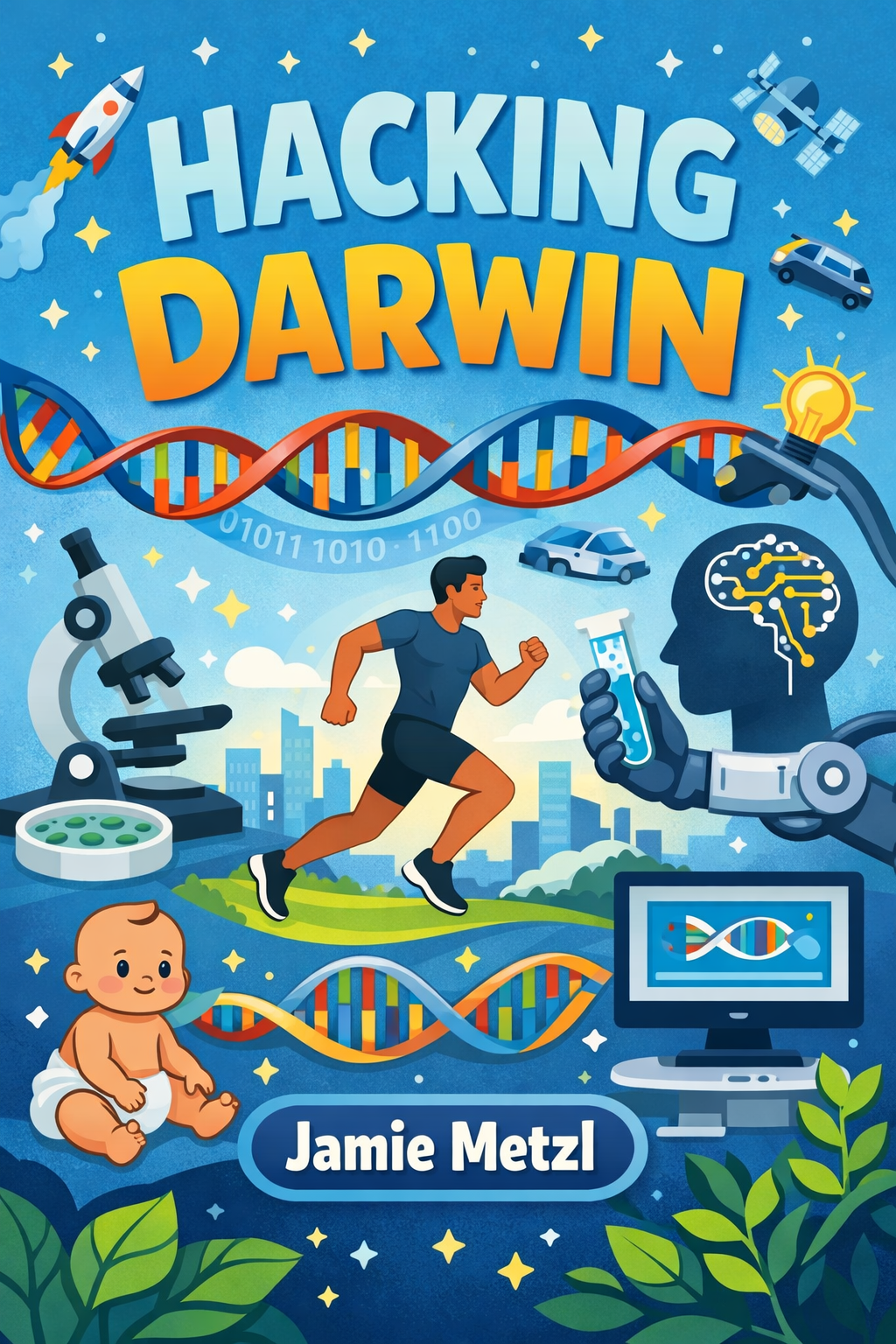
For billions of years, life on Earth evolved through the slow, unconscious process of natural selection. Traits that offered a survival advantage were passed down, while others faded away. This fundamental understanding, pioneered by Charles Darwin and later refined by the genetic discoveries of Gregor Mendel, shaped all of biological history. Our species, Homo sapiens, is a product of this immense and unguided timeline. However, this era of passive biological inheritance is ending. We are standing at the precipice of a new age where we will take direct, conscious control of our genetic destiny.
This revolution is powered by our newfound ability to read and interpret the code of life itself. The human genome, a sequence of over three billion DNA base pairs, is no longer a mysterious manuscript. The cost of sequencing a full genome has plummeted from hundreds of millions of dollars to a mere few hundred, transforming our biology into a form of information technology. This explosion of genetic data is now being deciphered by artificial intelligence and big-data analytics, which can find patterns and connections far beyond human capability. Companies and research initiatives worldwide are building vast genomic libraries, moving us from simply reading the code to beginning to understand its complex programming language for traits, diseases, and potentials.
This knowledge is rapidly being applied at the very beginning of human life through assisted reproductive technologies. What began with in vitro fertilization (IVF) has advanced to preimplantation genetic testing (PGT), allowing prospective parents to screen embryos for severe single-gene disorders before pregnancy. This is just the starting point. As our genomic understanding deepens, we will soon be able to screen for probabilities related to complex traits like height, cognitive aptitude, and disease susceptibility. The author posits a near future where the benefits of such selection become so compelling that IVF, coupled with comprehensive genetic screening, could become the predominant method of human reproduction, perhaps as soon as 2045. The drive to give children the healthiest possible start may render natural conception, with its genetic lottery, a seemingly risky and outdated choice.
The logical endpoint of reading and selecting genes is writing them. Techniques like CRISPR-Cas9 have brought precise genetic editing from science fiction into laboratory reality. This moves us beyond choosing between existing embryonic profiles to actively rewriting the code itself—correcting harmful mutations, enhancing certain functions, and eventually designing novel biological traits. This capability will extend from eliminating heritable diseases to potentially augmenting human physiology and cognition, blurring the line between therapy and enhancement. The long-term vision includes not just editing individuals but engineering entirely new forms of life, reshaping ecosystems, and even guiding the future evolution of our species.
Such unprecedented power will not be met with universal agreement. Society will fracture along new fault lines. Individuals, cultures, and nations will hold vastly different views on the ethics of genetic modification. Some will embrace it as a moral imperative to alleviate suffering and improve the human condition, while others will condemn it as a violation of natural order and human dignity. This debate will be intensified by fierce economic and geopolitical competition. Nations and corporations will race to develop genetic advantages, viewing them as critical to future economic dominance, military superiority, and national prestige. This competitive pressure may outpace the development of thoughtful ethical frameworks and global regulations.
The risks inherent in this unchecked progression are staggering. The genetic revolution could exponentially widen existing social inequalities, creating a world where the genetically enhanced become a permanent upper class, and everyone else is left behind. It threatens to reduce human diversity, a key to our species’ resilience, in favor of homogenized, “optimized” traits dictated by fleeting cultural preferences. The specter of eugenics, now empowered by direct technology, looms large. Furthermore, the potential for unintended consequences—from ecological disruptions to new, engineered diseases—poses existential threats.
Navigating this future requires not just scientific brilliance but profound wisdom. The author argues that averting catastrophe hinges on two pillars: comprehensive public education and robust, adaptive regulation. The public must be engaged in informed dialogue about the possibilities and perils, moving beyond fear and hype. Simultaneously, international coalitions must establish sensible guardrails that promote beneficial innovation while prohibiting dangerous excesses. The goal is not to stop the genetic revolution, which may be inevitable, but to steer it with foresight and humanity. The choices we make in the coming decades will determine whether this awesome power unites or divides our species, and ultimately, what it means to be human in a world where we have become the architects of our own biology.