Description
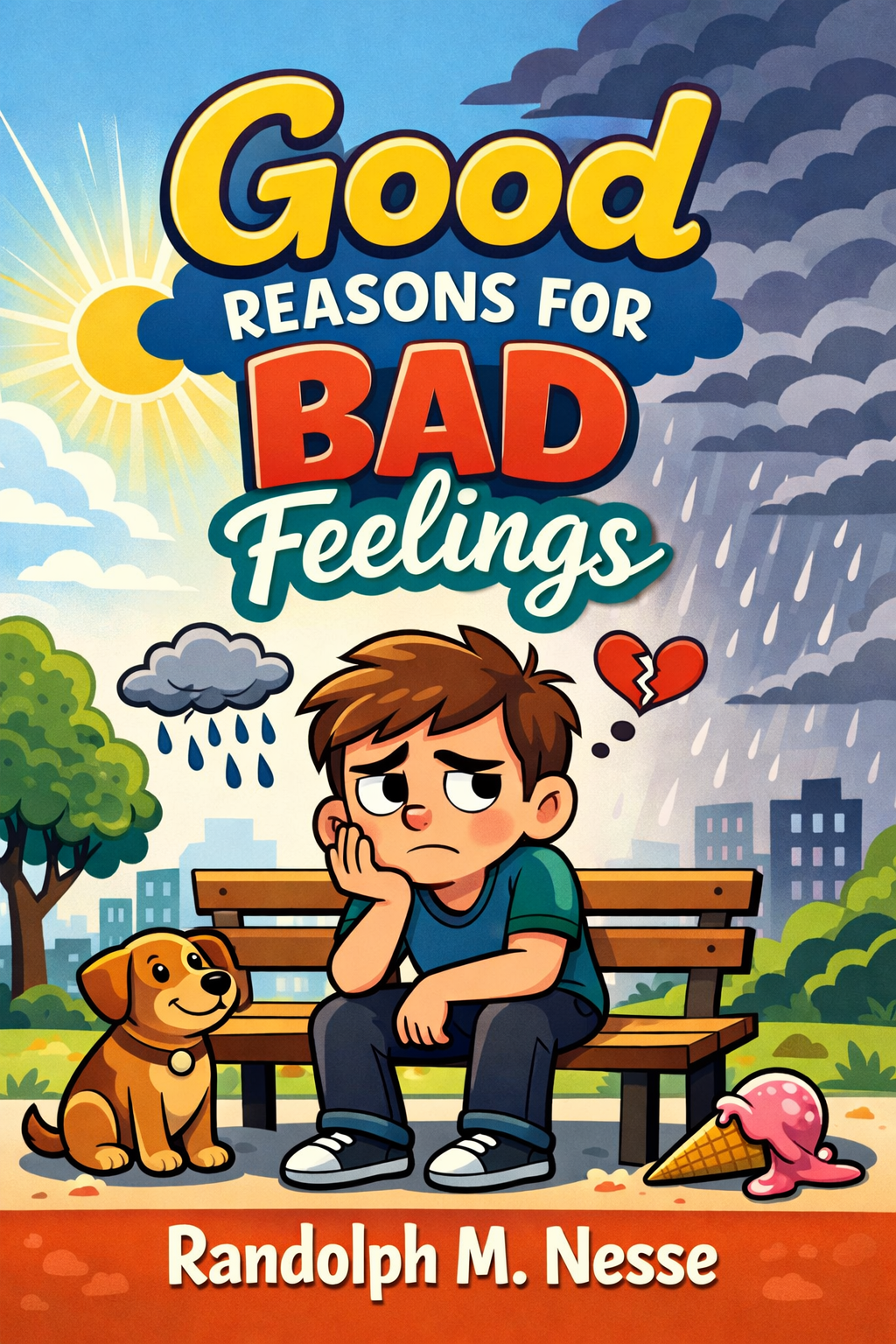
Why do humans, seemingly the pinnacle of evolutionary success, grapple with so much mental anguish? This book proposes a transformative answer: our most distressing feelings are not design failures but ancient, hard-wired strategies for survival. The core insight is that evolution shaped our minds not for happiness, but for genetic propagation. Our emotional systems are like sophisticated software, fine-tuned over millennia for environments vastly different from our own. This mismatch between our Stone Age brains and modern realities explains much of our current psychological strife. Understanding this evolutionary purpose doesn’t make the pain vanish, but it reframes it from a meaningless malfunction into a comprehensible, if often overactive, alarm system. This perspective offers a profound new way to understand ourselves, fostering self-compassion and pointing toward more effective paths to healing.
The process of natural selection has gifted us remarkable advantages—dexterous hands, complex language, ingenious brains. Yet it has also left us vulnerable. Evolution cares little for our long-term health or contentment; its currency is reproductive success. This leads to trade-offs. For instance, our craving for scarce, high-calorie foods was once a lifesaver but is now a liability in a world of abundant processed sugars and fats, contributing to epidemics of obesity and eating disorders. Similarly, our emotional machinery, optimized for small tribal groups facing immediate physical threats, can go haywire in the context of social media, chronic stress, and abstract future worries. These systems weren’t designed for our current environment, and natural selection cannot swiftly correct the mismatch. Our imperfections, including our propensity for mental suffering, are often the inevitable cost of other vital traits.
Emotions, even the most unpleasant ones, are fundamentally adaptive signals. They are evolution’s way of guiding behavior to enhance survival and reproduction. Anxiety acts as a smoke detector, alerting us to potential danger. Sadness signals loss, prompting withdrawal and conservation of energy. Jealousy, for all its destructive potential, can be understood as a fierce guardian of pair-bonds and parental investment, increasing the likelihood that one’s genes are passed on. Positive emotions like joy and enthusiasm, conversely, guide us toward beneficial opportunities and rewards. The problem is that these signals are not precise. A smoke detector that never gives a false alarm is probably broken, but one that is overly sensitive will cause unnecessary panic. Our emotional systems are calibrated for a world of immediate physical threats, not for existential worries or social slights, leading to many modern “false alarms.” A key realization is that negative feelings are often appropriate responses, not diseases to be eradicated. They provide crucial information about our circumstances.
This evolutionary framework demystifies specific conditions like anxiety disorders and panic attacks. When anxiety becomes chronic or erupts into seemingly random panic, it feels like a system failure. But viewed through an evolutionary lens, a panic attack can be seen as a catastrophic but well-intentioned false alarm of the body’s ancient “fight-or-flight” response. The racing heart, shortness of breath, and urge to flee were designed for literal life-or-death emergencies. Understanding this—that your body is mistakenly activating a primal survival program—can itself be therapeutic. It separates you from the panic, allowing you to see it as a misguided protector rather than a personal flaw. Treatment then becomes about recalibrating the system, teaching the brain through therapy and sometimes temporary medication that the modern world is largely safe, thereby reducing the frequency and intensity of these false alarms.
Depression presents a more complex evolutionary puzzle. Why would a state of paralyzing despair and anhedonia persist? One compelling explanation is that mood is a regulator of effort investment. In our ancestral past, mood helped answer critical questions: How hard should I try? When should I cut my losses? A low mood in the face of insurmountable obstacles or irreversible loss signals a strategic retreat, conserving precious energy for a better opportunity later. Depression, then, might be a severe dysfunction of this otherwise useful mood-regulation system—a circuit stuck in the “off” position. It’s like a low-power mode that cannot be exited, even when circumstances change. This view challenges the notion that depression is always a direct chemical imbalance. Instead, it may often be a meaningful, albeit maladaptive, response to perceived hopelessness, chronic stress, or social defeat. The evolutionary approach encourages looking for the “why” behind the low mood—the unmet needs or untenable situations—rather than just suppressing the symptom.
This perspective fundamentally reshapes how we might approach healing. Traditional psychiatry often focuses on symptom relief, which is vital. But an evolutionary lens pushes us to also ask: What is this symptom for? What ancestral need is it screaming about? Treatment becomes more personalized and holistic. For anxiety, it might involve not just medication but also consciously creating environments of safety and mastering realistic threats. For depression, it could mean helping a person not just to feel better, but to build a life with more attainable goals, stronger social bonds, and a sense of purpose—conditions our brains evolved to thrive in. It moves psychiatry toward being a field that treats the root causes of distress within the context of a human being’s entire life story and environment.
Our profound social nature, the source of our greatest joys, is also the root of some of our deepest pains. Our capacity for love, altruism, and cooperation likely evolved through mechanisms like kin selection (favoring those who share our genes) and social selection (where being a valued group member enhanced survival). But this wiring comes with a cost. The same systems that allow us to feel deep love and compassion make us vulnerable to profound grief, worry over loved ones, and the agony of social rejection. These are not weaknesses; they are the inevitable shadows cast by our ability to connect. Our reproductive strategies also involve trade-offs. The evolutionary drive is for efficient reproduction, not necessarily for mutual sexual satisfaction or lifelong harmony between partners. This can create inherent tensions in sexual relationships that are biological in origin, not just cultural.
Finally, our modern world bombards our ancient reward systems in unnatural ways. We evolved in environments of scarcity, where sugary foods, fats, and psychoactive substances were rare. Our brains developed powerful “seek-and-reward” circuits to motivate us to find these precious resources. Today, we have unlimited access to hyper-palatable foods and potent drugs that hijack these same circuits, offering intense pleasure without the ancestral effort. The result is addiction and obesity—conditions that arise because our brains are unprepared for this unprecedented onslaught of reward. Recognizing this mismatch is the first step in designing personal and societal strategies to manage these temptations, not through sheer willpower alone, but through intelligent environmental design and self-compassion.
Ultimately, this book offers a unifying vision: our bad feelings, from everyday worry to clinical depression, have reasons. They are the echoes of ancestral challenges, the price of our incredible social and cognitive complexity, and the symptoms of a profound mismatch between our biology and our world. By understanding these reasons, we can stop blaming ourselves for our emotional pain and start addressing its true sources. This knowledge is empowering, transforming the journey toward mental health from a fight against our own nature into a process of wise realignment with it.