Description
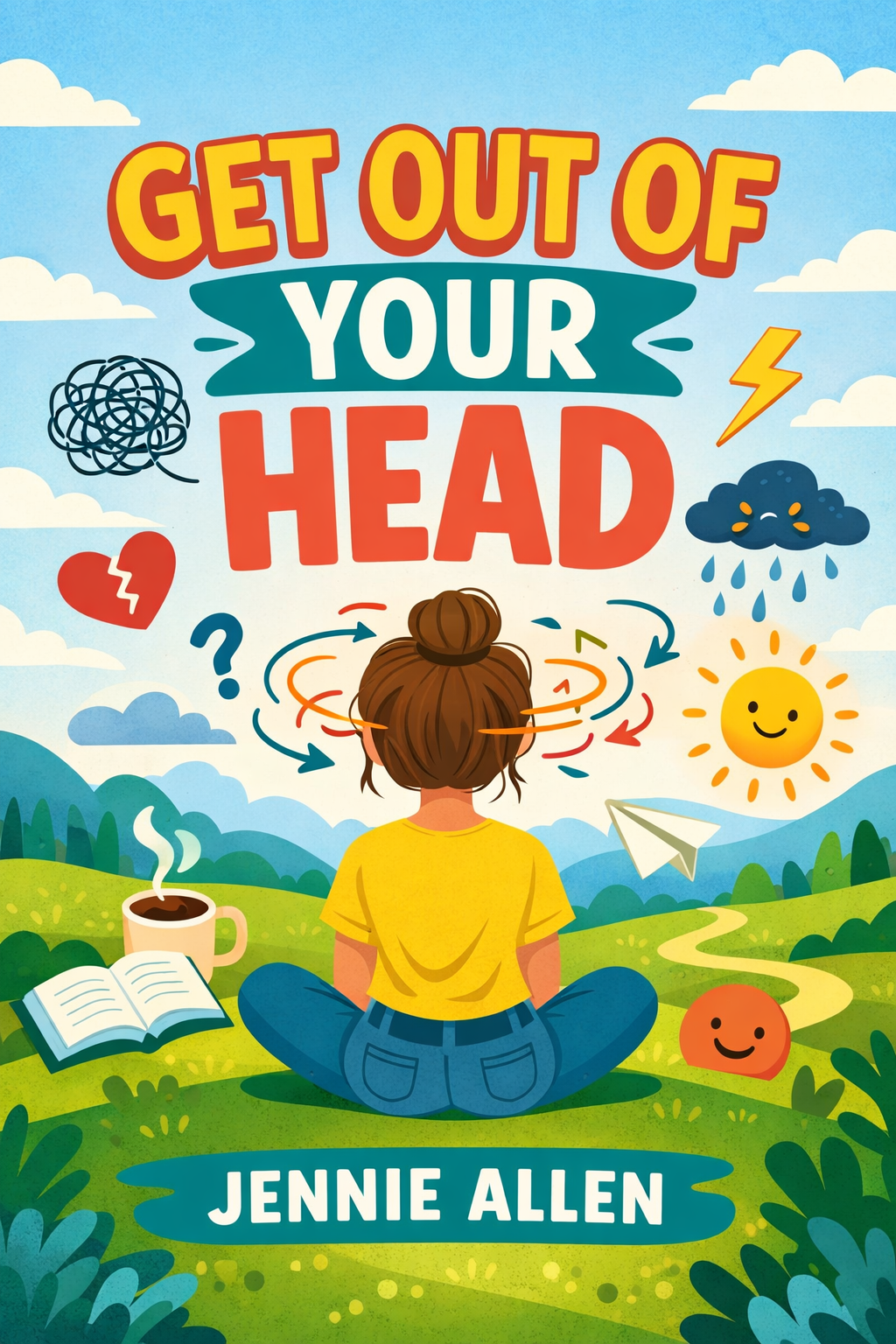
Our minds are powerful engines, capable of incredible creativity and profound compassion. Yet, for many, this inner landscape has become a battleground, a place where thoughts spin into anxiety, resentment, and fear without permission. The central premise of this work is that we are not helpless passengers to this mental chaos. While we cannot always control the initial thought that pops into our heads—a flash of worry, a sting of insecurity—we have a profound and trainable ability to control what happens next. We can choose the path our mind walks down. This book serves as a map and a toolkit for that very journey, moving from being trapped in your own head to finding freedom and grounded peace.
The journey begins with a fundamental recognition: our thoughts are not commands, nor are they unshakeable truths. They are often automatic suggestions from a brain wired for survival, constantly scanning for threat. The first step toward freedom is learning to create space between the thinker and the thought. This is not about suppressing negative ideas but about observing them with curiosity rather than alarm. The author introduces the simple but transformative practice of naming your mental patterns. Are you “catastrophizing,” spiraling into the worst possible outcome? Are you stuck in “rumination,” endlessly chewing on a past event? By giving the pattern a label, you instantly diminish its power. You are no longer the storm; you are the person watching the storm from a sheltered porch. This act of metacognition—thinking about your thinking—is the foundational skill upon which all other strategies are built.
With this awareness established, the book delves into the neurological underpinnings of our mental habits. It explains, in accessible terms, how repetitive negative thought patterns literally carve deep neural pathways, making them the brain’s default routes. The good news, grounded in the science of neuroplasticity, is that these pathways are not permanent. Every time we consciously choose a different response—a path of gratitude instead of complaint, of curiosity instead of judgment—we begin to carve a new, healthier trail. This is mental training in the truest sense. The author emphasizes that we are not trying to erase the old paths, which is often impossible, but rather to build stronger, more attractive alternatives that our minds will naturally begin to prefer.
The core of the book is a collection of these alternative paths, presented not as abstract philosophy but as concrete, actionable practices. One powerful method involves “interrogating” a troubling thought with specific, almost journalistic questions: Is this thought true? Is it helpful? What evidence do I have for it? What evidence contradicts it? This process often reveals our thoughts to be flimsy assumptions, not facts. Another vital strategy is the deliberate redirect of focus from the internal narrative to the external, physical world through the senses. The author guides the reader through grounding techniques that engage sight, sound, touch, and breath, effectively hitting the “pause” button on a racing mind by anchoring it firmly in the present moment, a place where anxiety and regret struggle to exist.
Crucially, the work argues that mental freedom is not a solitary, internal achievement. Our thinking is profoundly influenced by, and influences, our physical bodies and our communities. The book explores the feedback loop between a stressed mind and a tense body, advocating for physical practices—intentional movement, breathwork, even posture changes—as direct lines to calm the nervous system and quiet mental noise. Furthermore, it makes a compelling case that we cannot think our way into lasting change in a vacuum. Isolating ourselves with our negative thoughts only amplifies them. The antidote is intentional connection: practicing vulnerability with safe people, seeking community, and engaging in acts of service. Shifting focus from “me” to “we” is presented as one of the most potent ways to break the cycle of self-referential anxiety.
Ultimately, this guide is about empowerment through practice. It does not promise a life devoid of challenging thoughts or difficult emotions. Instead, it offers a sustainable framework for navigating them with resilience and grace. The goal is to cultivate a mind that is flexible, compassionate, and responsive—a mind that can acknowledge a negative thought without being hijacked by it, that can feel a strong emotion without being drowned by it. By applying its principles, the reader learns to cease being a prisoner to the chaotic chatter within and becomes the architect of their inner world. The final message is one of profound hope: no matter how entrenched your mental patterns feel, your brain has the innate capacity to learn, adapt, and find a new way forward. Peace is not the absence of thought, but the wise and gentle management of it.