Description
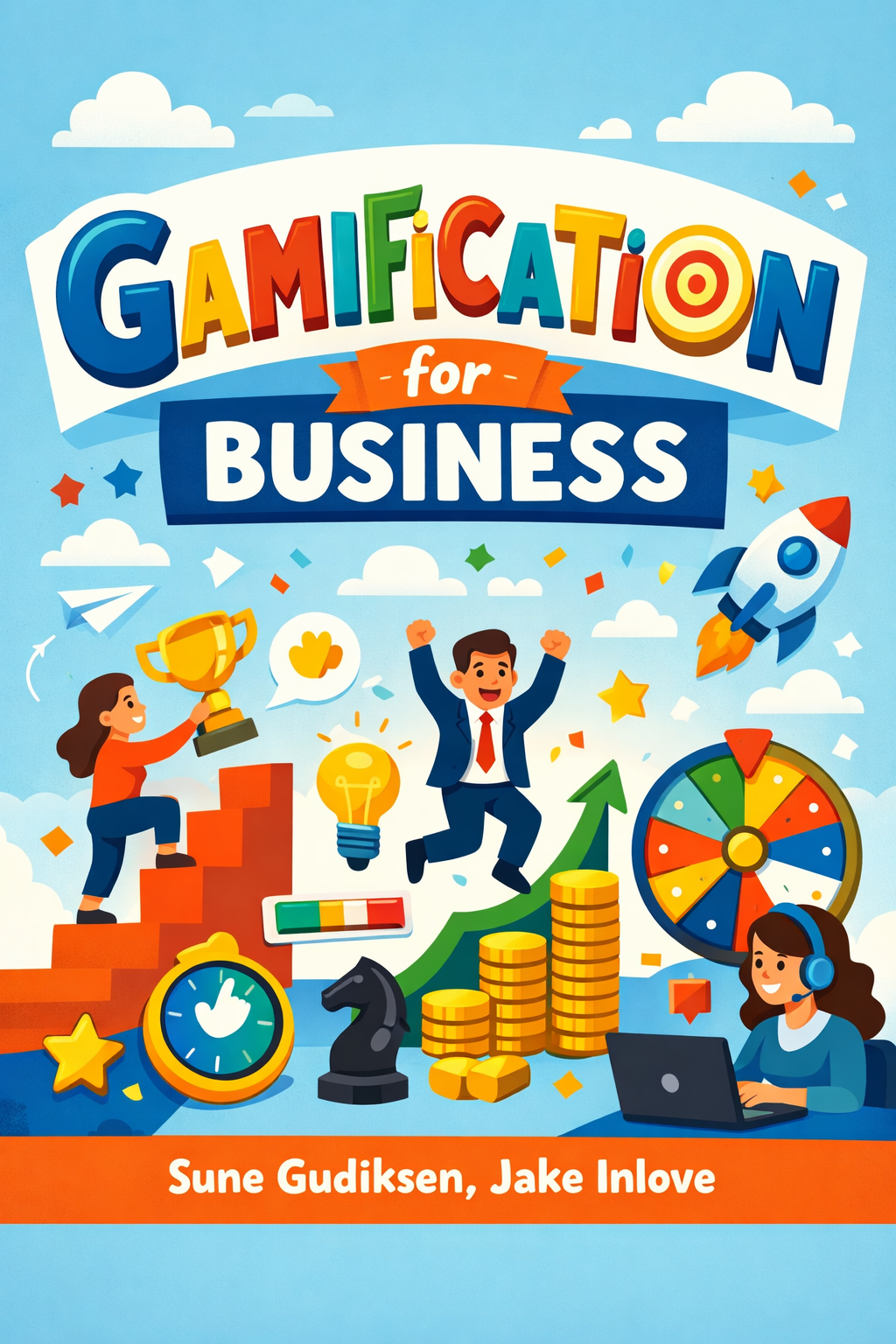
Every organization encounters hurdles, from communication breakdowns and fading motivation to stagnant creativity and unclear goals. Traditional, often rigid, business approaches can sometimes make these challenges feel insurmountable. However, a powerful and engaging solution lies in an unexpected place: the world of games. By applying game design principles to non-game contexts—a process known as gamification—companies can transform how they operate, learn, and grow. Games are more than mere entertainment; they are interactive, inclusive, and immersive systems that can level the organizational playing field, foster genuine collaboration, and unlock creative potential. This approach offers a dynamic toolkit for leaders and teams to tackle core business issues, turning mundane processes into engaging experiences that drive real results.
The foundational power of games lies in how they facilitate learning. Think back to childhood play, where building, imagining, and experimenting were primary ways of understanding the world. This “learning-by-doing” principle, or constructionism, is incredibly effective. Games engage multiple senses and require active participation, helping participants absorb and process information more deeply than through passive listening. Furthermore, games create what experts call a “magic circle”—a temporary space with its own social rules. Within this space, traditional corporate hierarchies can soften. Job titles matter less than the ability to contribute to the game’s objective, allowing fresh ideas to surface from anywhere in the organization. This breaks the stale, unproductive patterns that often plague meetings and training sessions, replacing them with an environment ripe for exploration and new ways of thinking.
A critical challenge for any growing company is maintaining a cohesive identity and aligned purpose, especially as teams expand across regions. When employees become disconnected from the company’s core vision, motivation plummets. The Align game directly addresses this. It is a structured activity where small teams work with cards presenting various business challenges, events, and dilemmas. Players must discuss and decide how to respond to each scenario, but they are scored based on how well their choices reflect predefined company values, such as courage, passion, and customer focus. The collaborative goal is to achieve the highest overall score for the organization’s health across metrics like employee satisfaction and sales. Through play, participants experientially learn what it means to live the company’s values in daily decision-making, forging a stronger, more unified corporate identity.
Team performance hinges on collaboration and communication, yet these are often cited as major workplace pain points. Games provide a safe, structured environment to practice and improve these very skills. LinkXs is a game designed to generate collaborative behavior by creating intentional interdependence. Teams are given separate tasks but only hold fragments of the information needed to complete them. To succeed, they must negotiate, share resources, and help other teams, discovering firsthand the benefits of cooperation over competition. For honing communication, quick exercises like Sudden Survey are invaluable. In this fast-paced activity, small teams must rapidly devise a strategy, interview other participants to gather data on a specific topic, and then synthesize their findings. It sharpens skills in networking, active listening, and concise reporting, all while energizing a group and fostering connections at the start of a session.
Perhaps no business ritual is more universally maligned than the unproductive meeting. These “blah-blah-blah” sessions, where information flows one way and engagement is minimal, are a drain on time and morale. The Meeting Design Game turns meeting planning into a visual and collaborative process. Using cards representing key design elements—like objectives, participant involvement, and venue—individuals or teams physically prioritize and plan an upcoming meeting. By moving cards around, discussing priorities, and building a visual action plan, organizers ensure the meeting has a clear focus and structure that encourages active participation from all attendees. This method transforms meeting preparation from a solitary chore into a strategic game, resulting in gatherings that are purposeful, engaging, and far more likely to yield actionable outcomes.
A constant tension for modern businesses is balancing the demands of ongoing, reliable projects with the need to pursue new, innovative opportunities. The Business Branching game helps visualize and manage this crucial balance. It frames long-term projects and new ventures as different “branches” of a company’s activity. The game guides leadership teams in mapping out their current portfolio of projects and consciously discussing where to allocate finite resources—time, money, and talent. The objective is to strategically prune or nourish different branches, ensuring the organization doesn’t become overextended on legacy projects while starving promising new ideas. This playful yet serious framework facilitates difficult conversations about strategic pivots and resource reallocation, helping companies stay agile and competitive.
When teams feel stuck or ideas have grown stale, a creative jumpstart is needed. The Innovate or Dinosaur game is designed for exactly this. It uses provocative prompts and time-constrained challenges to push participants beyond conventional thinking. The “dinosaur” metaphor represents outdated ideas or processes that must be left behind to make room for innovation. By creating a low-risk, game-based environment where wild ideas are not just allowed but encouraged, teams can break free from cognitive ruts and generate a fresh pipeline of concepts, some of which may lead to the company’s next big breakthrough.
Finally, leadership itself can be developed through gamification. Specialized game-based tools allow managers to practice and refine crucial skills like giving feedback, navigating conflict, and strategic decision-making within simulated scenarios. These tools provide a safe space to experiment with different leadership approaches and receive immediate feedback on the consequences, all without real-world stakes. This experiential learning accelerates leadership development far more effectively than theoretical instruction alone.
In essence, integrating games into business is not about turning work into child’s play. It is a sophisticated strategy to harness the innate human drive for play, problem-solving, and mastery. By thoughtfully applying game mechanics—such as clear rules, meaningful challenges, and immediate feedback—to organizational challenges, companies can foster deeper learning, stronger alignment, more vibrant collaboration, and more innovative thinking. This approach revitalizes company culture, equips leaders with better tools, and ultimately provides a fun and profoundly effective way to navigate the complex journey of business growth.