Description
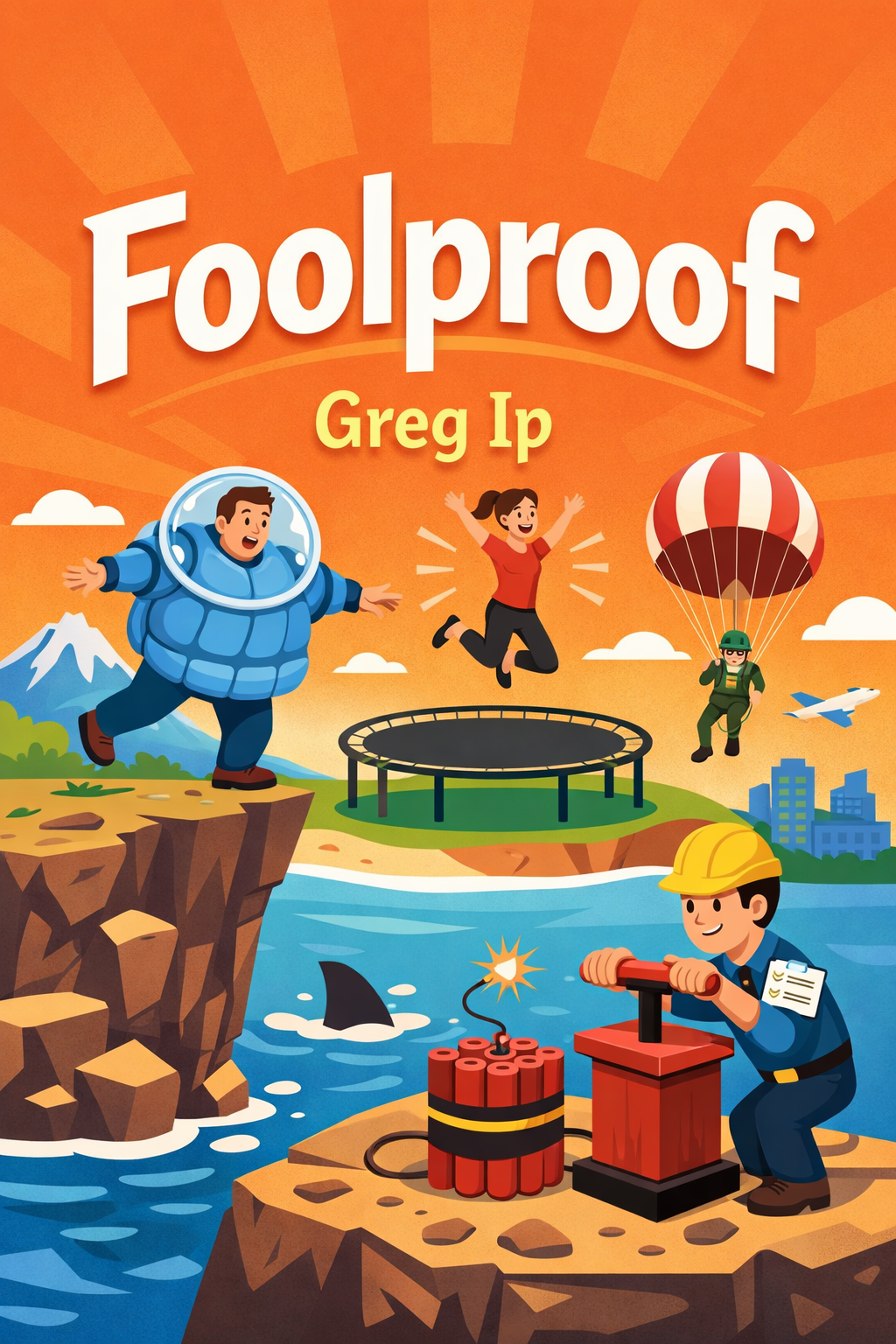
We live in a world obsessed with safety, building systems and regulations designed to shield us from harm. Yet this pursuit often leads us into a paradoxical trap: the very measures we implement to protect ourselves can make us more vulnerable. This book explores the counterintuitive idea that our drive to foolproof our lives frequently undermines our security, inviting us to reconsider our relationship with risk.
Consider the automobile. When anti-lock brakes were introduced, they were heralded as a major advance in vehicle safety, predicted to significantly reduce accidents. Instead, studies revealed a troubling shift in driver behavior. Feeling more secure behind their advanced brakes, drivers began taking greater risks—speeding, braking later, and taking curves more aggressively. The safety feature didn’t just change the car; it changed the person behind the wheel, leading to new types of accidents. This phenomenon, where safety measures encourage riskier behavior, is a recurring theme. In American football, the mandatory introduction of helmets drastically reduced facial injuries but led to a shocking surge in spinal and concussion-related harm. Players, feeling armored, began using their heads as weapons, transforming the nature of the game’s violence. The tool meant for protection became an instrument of greater danger.
This illusion of security extends far beyond the sports field into the very foundations of our global economy. For decades, regulators worked to create a stable banking system, believing that securing traditional financial institutions would safeguard the economy. This stability, however, proved deceptive. As rules tightened around conventional banks, financial activity simply flowed into less-regulated “shadow banking” channels like mortgage companies and investment funds. By the mid-2000s, this vast, opaque network held most of the risk. The widespread belief that the core system was safe bred complacency, allowing excessive risk-taking to flourish in the shadows and ultimately contributing to the catastrophic financial collapse of 2008. A similar story unfolded in Europe, where the creation of the euro brought currency stability. This stability, however, encouraged massive lending from wealthy northern nations to southern ones, allowing underlying economic problems in countries like Greece and Spain to fester unseen until they erupted into a continent-wide debt crisis.
Our attempts to control the natural world follow the same flawed logic. Aggressive forest fire suppression, for instance, saves individual forests in the short term but allows deadwood and underbrush to accumulate, creating the conditions for truly monstrous, uncontrollable infernos later. The real driver of disaster costs, however, is often not nature’s fury but our own choices. We build sprawling cities in fire-prone wooded areas and concentrate immense wealth on hurricane-vulnerable coastlines. When a storm hits a metropolis like Miami today, the damage is astronomically higher than a century ago, not because storms are stronger, but because we have placed vastly more people and property in harm’s way. The risk is manufactured by human settlement patterns, not just by nature.
If prevention so often backfires, what is the alternative? The answer may be a more nuanced acceptance of risk. Scholars studying economic development found that Thailand, despite suffering a severe financial crisis, achieved far greater growth over two decades than a tightly controlled India. The Thai economy’s openness invited volatility but also enabled dynamism and wealth creation that outweighed the cost of its crisis. Similarly, our fear of high-consequence, low-probability events like nuclear meltdowns can push us toward choices that are more dangerous in the aggregate. Phasing out nuclear power in favor of fossil fuels may feel like avoiding a terrifying risk, but it condemns thousands to death from air pollution and accelerates climate change—a certain, slow-motion disaster. Sometimes, accepting a manageable systemic risk is safer than overreacting to a frightening one.
Paradoxically, a healthy dose of fear can be our greatest ally. Activities we perceive as terrifying, like air travel, become extraordinarily safe precisely because that fear motivates an obsessive, zero-tolerance approach to risk. After a British Airways jet lost all engines to volcanic ash in 1982, the global aviation industry banned flight near eruptions entirely—a policy that caused massive disruption during Iceland’s 2010 volcanic event but ensured not a single life was lost. This culture of extreme precaution is what makes flying statistically safer than driving. Companies like Exxon learned this the hard way; after the devastating Valdez oil spill, they implemented a system that empowered every employee to report the smallest hazard, from a major equipment flaw to a colleague not using a stair handrail. This hyper-vigilance, born of past catastrophe, creates genuine resilience.
The goal, therefore, is not a risk-free life—an impossible and counterproductive dream—but intelligent resilience. We must learn to distinguish between risks that can be mitigated and those that are inherent to a vibrant, functioning system. It involves embracing strategies like allowing small forest fires to burn, designing economic systems that can absorb shocks rather than merely trying to prevent them, and cultivating a culture of respectful fear around truly dangerous technologies. The balance lies in avoiding the complacency that comes from a false sense of security while also refusing to let irrational dread dictate our choices. True safety is not a fortress, but a mindful and adaptable dance with the inevitable uncertainties of the world.