Description
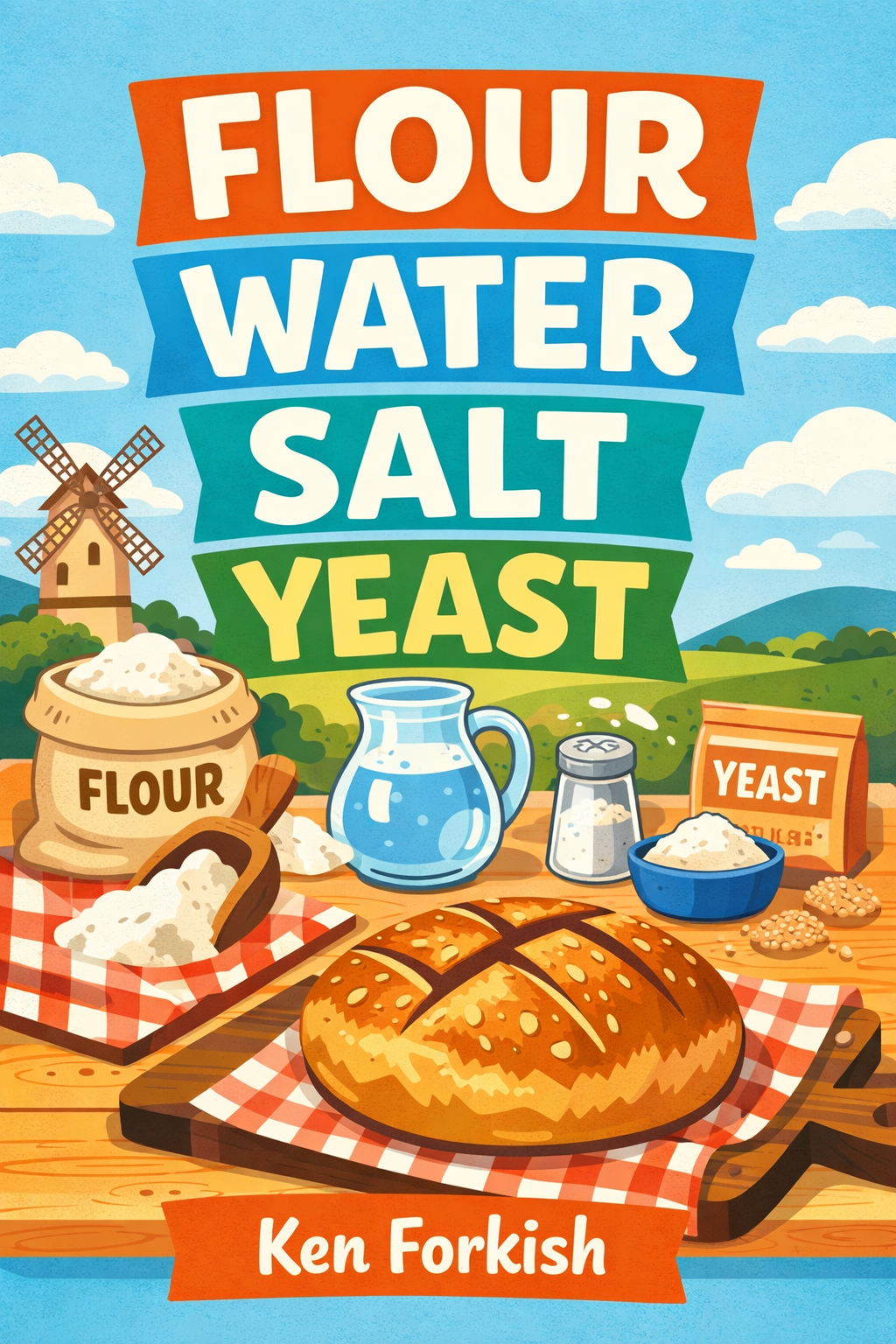
The journey into artisan bread baking begins not with complex recipes, but with a fundamental understanding of a simple truth: great bread is the product of flour, water, salt, and yeast, guided by the twin forces of time and temperature. This book demystifies the process, transforming it from a mysterious art into an accessible and deeply rewarding craft for the home cook. It argues that professional-quality loaves with complex flavors and perfect textures are within anyone’s reach, provided they learn to manipulate these core elements with intention and care. The path laid out is one of principle over prescription, encouraging bakers to develop a feel for the dough and an understanding of the science behind fermentation.
The author’s own story underscores this philosophy. After a long career in the tech industry, he embarked on a second life as a baker, driven by an obsessive attention to detail and a reverence for traditional French methods. He opened a celebrated bakery, proving that a meticulous, principled approach yields extraordinary results. The good news for home bakers is that this level of perfectionism doesn’t require a professional kitchen or pre-dawn work hours. Instead, it requires adopting a baker’s mindset: one that values precision, patience, and a willingness to engage deeply with the process. Success hinges on moving beyond merely following instructions to comprehending how ingredients interact under different conditions.
Central to this comprehension are the six variables: flour, water, salt, yeast, time, and temperature. Each plays a crucial role. Flour is not a monolith; variations between white, whole wheat, rye, and spelt affect absorption and flavor. Hydration—the ratio of water to flour—is a key lever. Wetter doughs, while trickier to handle, produce a more open crumb and richer taste. Salt controls fermentation and strengthens gluten. Yeast can be commercial or cultivated naturally, and its quantity can be adjusted in inverse proportion to time. This relationship is foundational: less yeast with more time creates deeper, more complex flavors, while more yeast speeds up the process. Temperature is the conductor of this symphony, accelerating or slowing fermentation. A warm spot on the counter or a cool refrigerator are powerful tools for scheduling your bake and developing character.
Equipping a home kitchen for this craft is surprisingly straightforward. While a professional bakery might have massive steam-injected ovens, the home baker’s secret weapon is a simple Dutch oven. Its enclosed environment perfectly traps steam, creating the crisp, glossy crust of a bakery loaf. Other essentials include a digital kitchen scale for flawless, consistent measurements by weight—a non-negotiable for accuracy—a probe thermometer to ensure water is at the correct temperature, and a set of transparent tubs for mixing and observing the dough’s rise. A proofing basket gives the loaf structure and a beautiful pattern for its final rise. With these tools, any kitchen can become a micro-bakery.
The soul of artisan baking often lies in pre-ferments and natural yeast cultures. Before the main mix, bakers often create a pre-ferment—a small mixture of flour, water, and a pinch of commercial yeast left to ferment overnight. This “poolish” or “biga” jump-starts flavor development, resulting in a more nuanced taste in the final bread. The ultimate expression of this is a levain, a living culture of wild yeast and bacteria nurtured from just flour and water. This natural starter, often called a sourdough starter, introduces a unique, tangy complexity and remarkable depth that commercial yeast alone cannot achieve. Maintaining a levain is a commitment, but it connects the baker to the oldest traditions of the craft and yields bread with unparalleled character.
The essential method for making bread is a graceful, multi-stage dance. It begins with autolysis, a resting period where flour and water are combined without yeast or salt. This allows the flour to fully hydrate and gluten strands to begin organizing themselves gently, leading to better texture and extensibility. Next, the levain (or commercial yeast) and salt are incorporated through a series of folds during the bulk fermentation—the dough’s primary rise. This critical phase, which can last several hours, is where flavor and structure are built. The baker doesn’t simply wait; they periodically fold the dough, strengthening its network of gluten without vigorous kneading.
Once the dough is lively and aerated, it is divided, shaped into taut loaves, and placed into proofing baskets for its final rise. This stage requires a watchful eye, as the dough must be perfectly proofed—neither under-ripe nor over-ripe—to achieve optimal oven spring. Baking begins with the dramatic transfer of the loaf into a preheated Dutch oven. The sealed environment creates an intense burst of steam, allowing the dough to expand fully before the crust sets. Later, the lid is removed, letting the crust caramelize into a deep, burnished gold. The finished loaf must then cool completely, a final test of patience as the interior structure sets, before it is ready to be sliced and enjoyed.
This foundational method is a template for endless variation. It can be adapted to create a spectrum of breads, from classic country blondes and hearty whole wheat loaves to rustic rye. The same principles elegantly translate to other beloved baked goods. For pizza, a higher-hydration dough is stretched thin and baked at a searing temperature on a stone, yielding a blistered, chewy crust. Focaccia, an olive oil-rich dough, is dimpled and baked to create a soft, porous interior perfect for soaking up flavors. Ultimately, this guide is an invitation to a lifelong practice. It provides the knowledge and confidence to experiment, to learn from each loaf, and to experience the profound satisfaction of pulling a beautiful, fragrant, handmade creation from your own oven.