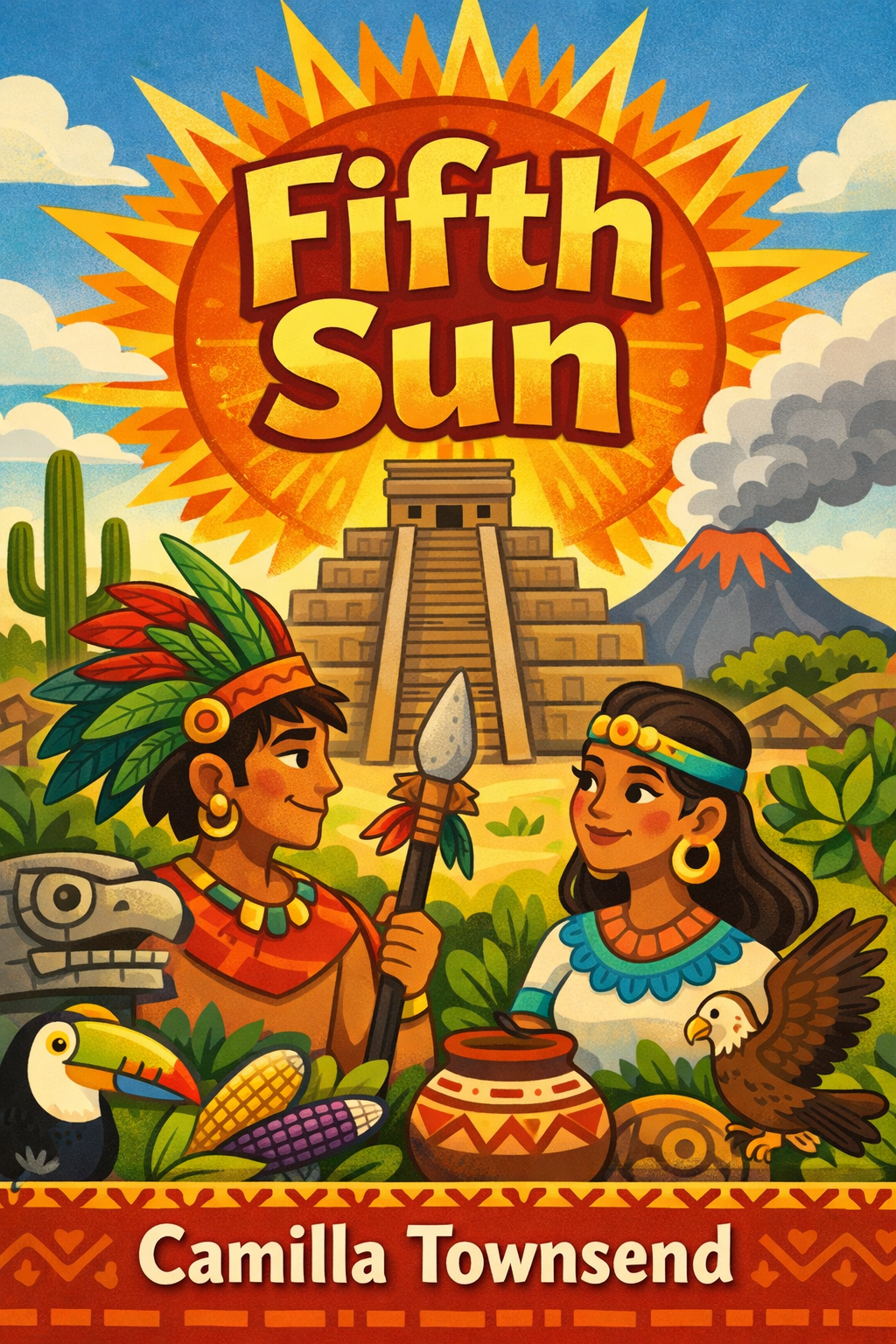
Description
For centuries, the story of the Aztec Empire has been filtered through the accounts of its European conquerors. This narrative offers a profound correction, drawing from the annals written by the Nahua people themselves—the *xiuhpohualli*—to present a history of the Mexica, as they called themselves, from their own perspective. It is a story not of a passive civilization awaiting discovery, but of a dynamic, sophisticated society whose world was irrevocably altered by forces both martial and microscopic.
The Mexica were masterful historians and political architects. Their journey from a wandering tribe to the masters of a vast empire centered on the magnificent island city of Tenochtitlan is a testament to their adaptability and ambition. They cultivated floating gardens, built awe-inspiring temples, and maintained a complex social and political order. Their empire, however, was not maintained through benevolence. It relied on a calculated system of tribute, strategic marital alliances, and the stark political theater of ritual warfare and sacrifice, which served as a potent tool for demonstrating power and subduing rivals. By the dawn of the sixteenth century, they presided over the Fifth Sun—their current era of the world—from a capital of staggering scale and beauty, a hub of a million people that was the heart of a stable, though not always peaceful, realm.
The arrival of Spanish expeditions on the coast was initially interpreted through this existing political lens. The strangers, led by the ambitious Hernán Cortés, were another group to be managed, understood, or potentially leveraged. The crucial figure of Malinche, a Nahua woman given to the Spaniards as a slave, embodies the complex loyalties of the time. Fluent in multiple languages, she became Cortés’s indispensable interpreter. To label her a simple traitor is to misunderstand her world; she was a person navigating the brutal politics of an empire that had itself conquered her homeland. Through her, Cortés learned of the riches of Tenochtitlan and the simmering resentments of the peoples subjugated by the Mexica, which he expertly exploited to build a coalition of indigenous allies.
The encounter between Moctezuma and Cortés was a clash of worldviews. The Mexica emperor, a shrewd leader, attempted to host and contain the Spaniards within his city to assess their strength. This strategy backfired catastrophically. Cortés, driven by greed and a sense of divine mandate, ultimately took Moctezuma hostage. The situation erupted into open warfare. The Mexica fighters, though incredibly brave, faced the devastating technological advantage of steel, guns, and horses. In a legendary nighttime battle, they managed to drive the invaders from their city in a bloody rout, killing hundreds of Spaniards and thousands of their allied warriors. This hard-won victory, however, was swiftly eclipsed by a far greater catastrophe.
The Spaniards had brought with them an invisible army: pathogens like smallpox, to which the Native populations of the Americas had no immunity. As the people of Tenochtitlan celebrated their military triumph, a horrific plague began to spread. It killed swiftly and indiscriminately, claiming the lives of rulers, warriors, and civilians alike, devastating the social fabric and halving the population. When Cortés returned to lay siege to the weakened city, he faced a society already shattered by disease and famine. The final fall of Tenochtitlan was not merely a Spanish conquest; it was a collapse compounded by biological disaster.
Yet, the story does not end with conquest. The Nahua people, their rulers gone and their cities in ruins, faced the monumental task of preserving their identity and history under Spanish rule. Indigenous scholars and nobles, often the educated sons of elite families, learned to wield the Roman alphabet. They began to transcribe their oral histories, songs, and poetry into Nahuatl, creating a written record for future generations. They brought legal cases before Spanish courts, fighting for their lands and rights. This incredible act of cultural preservation ensured that the voice of the Mexica would not be silenced. Their language, Nahuatl, endures, and their descendants carry forward the legacy of the people of the Fifth Sun, a civilization whose true history is one of resilience, innovation, and an unbroken thread of memory that survived the end of their world.