Description
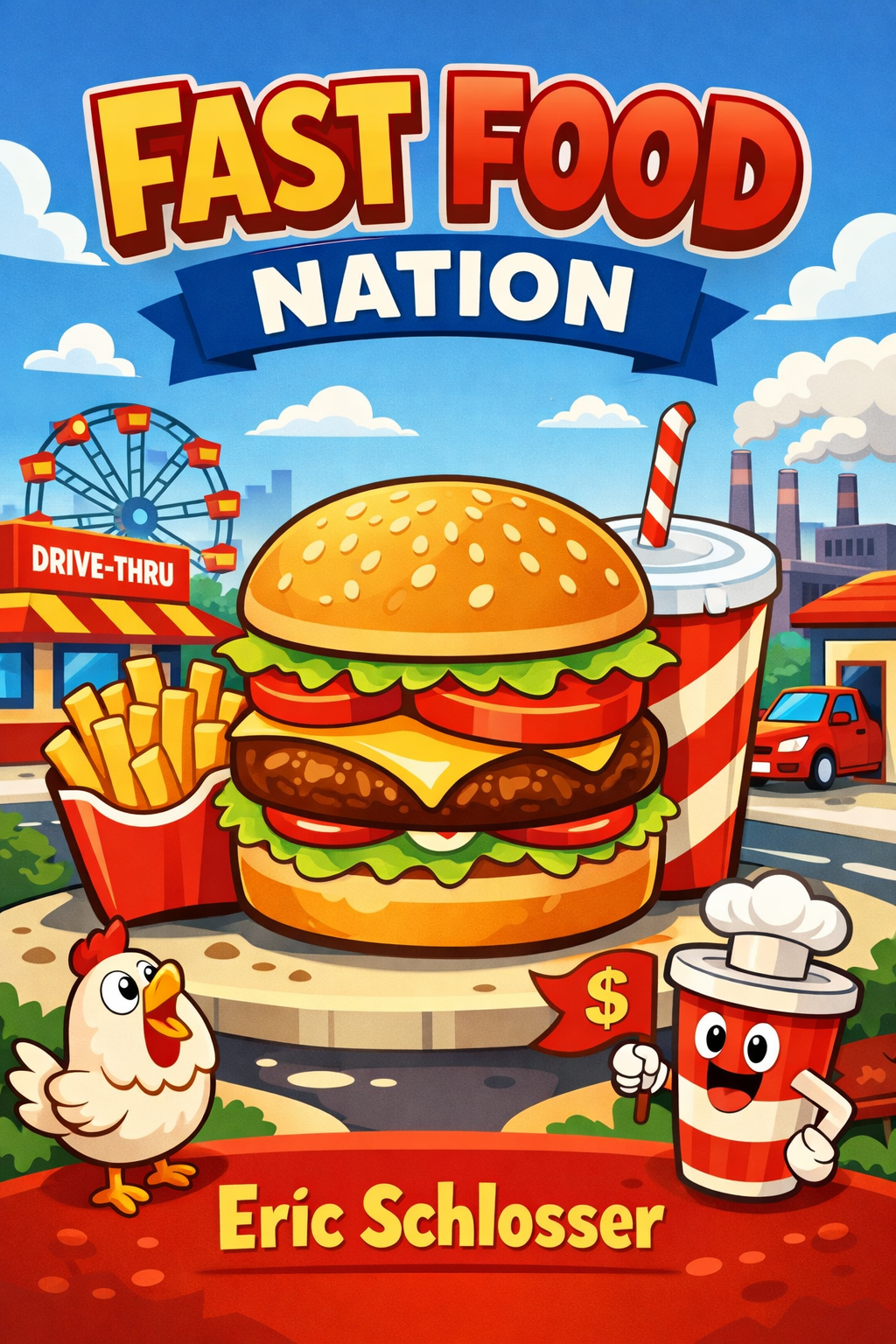
Behind the bright lights and catchy jingles of the fast food industry lies a complex and often troubling reality that touches every corner of modern life. This book peels back the wrapper to reveal a system born from a revolutionary idea that has since grown into a powerful force with profound consequences. It all began with a simple shift in thinking, applying the rigid efficiency of the factory assembly line to the kitchen. This model, pioneered by two brothers, prioritized speed, uniformity, and low cost above all else, creating a template that would spawn a global empire. The success of this system did more than just sell hamburgers; it fundamentally reshaped our agriculture, our labor markets, and even our very tastes.
This industrial approach to food required a steady stream of compliant workers and eager customers. To secure the latter, the industry pioneered marketing strategies that expertly targeted society’s most impressionable members: children. Through toys, playgrounds, and pervasive advertising, fast food chains embedded themselves into childhood, creating brand loyalty from a young age. This infiltration even extended into schools, where tightening budgets opened the door for corporate partnerships and sponsored educational materials, blurring the lines between classroom and marketplace. On the other side of the counter, the workforce is often drawn from vulnerable populations—teenagers, immigrants, and the economically disadvantaged. The jobs are designed to be simple, repetitive, and easily filled, leading to high turnover, low pay, and strenuous opposition to collective bargaining, leaving workers with little power or protection.
The business structure that fuels this expansion, the franchise model, is itself a carefully balanced equation that typically tilts in favor of the corporate parent. While sold as a partnership, franchise owners often bear the brunt of the financial risk and operational headaches, bound by strict corporate mandates without the legal protections afforded to traditional employees or independent business owners. This system ensures brand consistency and corporate profit, even as individual franchisees struggle with market saturation and thin margins.
Perhaps most disconcerting is the journey of the food itself from source to tray. The relentless demand for cheap, uniform meat has radically transformed American agriculture and meatpacking. Vast, centralized feedlots and slaughterhouses have replaced small farms, with devastating effects on rural communities. The drive for efficiency and profit in these facilities has created some of the most dangerous working conditions in the nation, while also increasing the risk of widespread foodborne illness. The meat that emerges from this system is then shaped not by culinary craft, but by flavor science. What we savor in a fast food meal is frequently the product of sophisticated chemical engineering in distant laboratories, designed to deliver a consistent and addictive taste experience that masks the underlying quality of the ingredients.
Ultimately, the story of fast food is the story of a modern paradox. It is a product of post-war American innovation that has achieved staggering worldwide reach, yet its foundations are built on a series of hidden compromises. It offers convenience and affordability while contributing to public health concerns, economic disparity, and environmental impact. This book is not merely an exposé of what goes into the food, but a wide-ranging examination of the intricate web of economic, social, and cultural forces that the fast food industry has woven, challenging us to consider the true price of our meal.