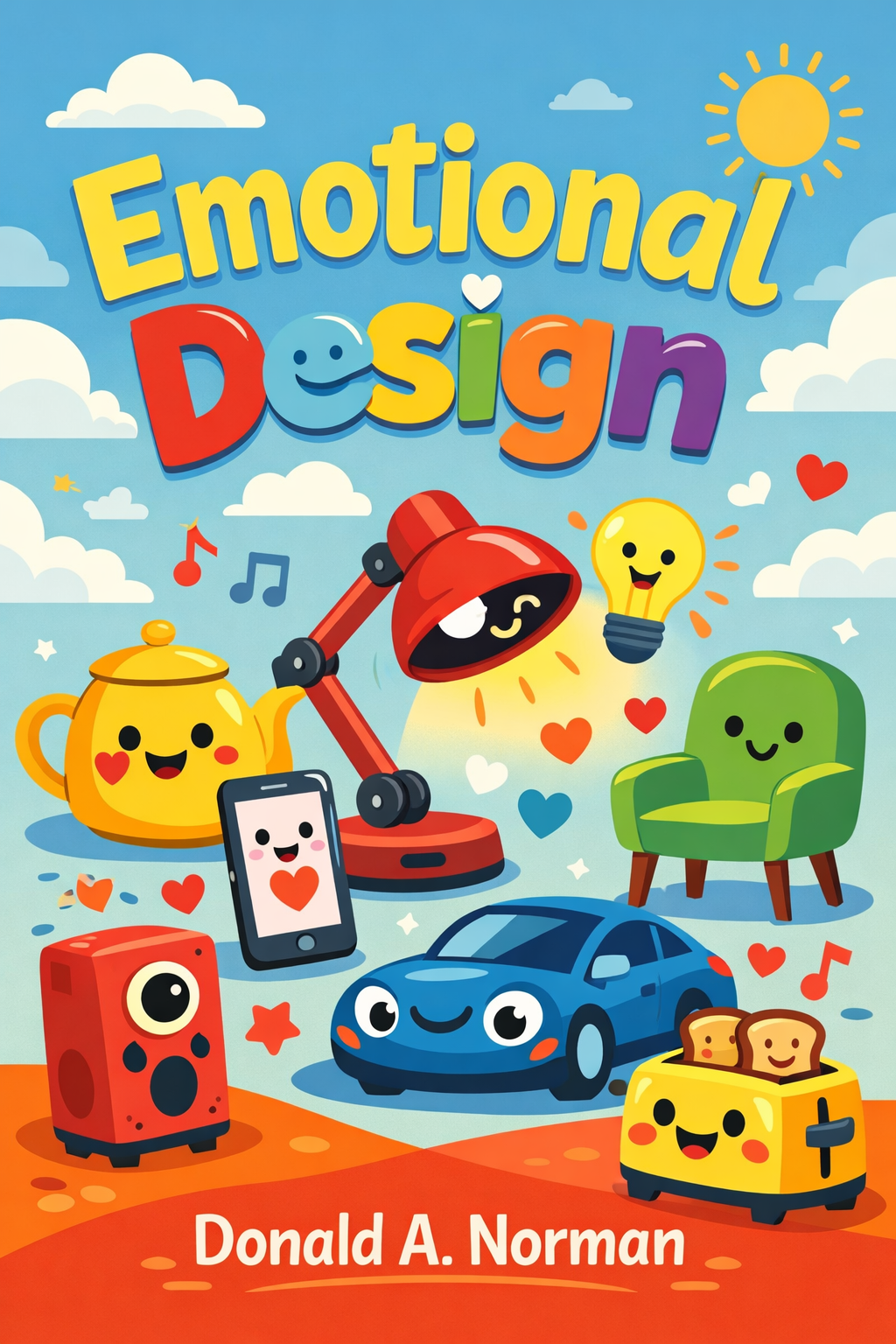
Description
We often think of design as a purely functional endeavor, focused on utility and efficiency. Yet, our deepest connections with the objects around us—from a sleek smartphone to a comforting teapot—are forged not in the realm of logic, but in the world of feeling. This exploration delves into the profound truth that aesthetics are not merely decorative; they are a fundamental component of usability. When an item delights us, it doesn’t just please the eye—it opens the mind, making us more creative, patient, and capable of solving problems. The visceral pleasure of a well-crafted tool can transform a frustrating task into an engaging experience, proving that beauty and brains are not opposites, but partners in creating meaningful interactions.
This journey into the heart of design examines human response on three interconnected levels. The first is the visceral level—our immediate, gut reaction to what we see, touch, and hear. This is the realm of instinct, where bright colors, smooth curves, and satisfying clicks speak directly to our biological wiring, triggering attraction or aversion before a single conscious thought is formed. The second level is behavioral, concerning the experience of use. Does the product function seamlessly? Does it provide clear feedback and a sense of mastery? This is where performance and usability live, and where frustration often breeds when design fails. The third, and most reflective, level is where lasting meaning resides. It’s the story an object tells about its owner, the memories it evokes, or the personal values it represents. A worn-out wristwatch or a family heirloom carries weight far beyond its time-telling function.
The magic happens when these three levels sing in harmony. A kitchen knife with a perfectly balanced handle (behavioral) made from beautiful, warm wood (visceral) that was a gift from a mentor (reflective) becomes more than a tool; it becomes a part of the user’s identity and daily ritual. The book argues compellingly that designers who ignore emotion ignore a core part of the human experience. A sterile, purely functional interface might be technically correct, but it can feel cold and alienating, shutting down the user’s cognitive abilities. In contrast, an interface with personality and charm can create a positive emotional state, fostering the openness and flexibility needed to learn and overcome obstacles.
This principle extends far beyond screens and gadgets. Consider the anxiety-inducing design of many hospital rooms or government forms—their cold functionality can exacerbate stress. Now, imagine a medical device that uses warm, friendly shapes and reassuring sounds, or a complex tax software that guides you with a calm, encouraging tone. The functional goal is the same, but the emotional journey—and thus the outcome—can be radically different. The book is filled with examples, from the joyful bounce of an icon to the trust-inspiring solidity of a car door’s thunk, demonstrating how emotion is woven into the fabric of every interaction.
Ultimately, this is a call to design for the whole person. It champions the idea that creating things people love is not a frivolous luxury, but a serious and essential component of good design. By understanding and designing for our emotional selves—our hopes, our anxieties, our capacity for joy—we can create products, environments, and systems that don’t just work better, but make us feel better, think more clearly, and connect more deeply to the world we shape and that shapes us in return. It’s a reminder that at its best, design is a deeply humanistic practice, a conversation between creator and user where feeling is the most important language of all.