Description
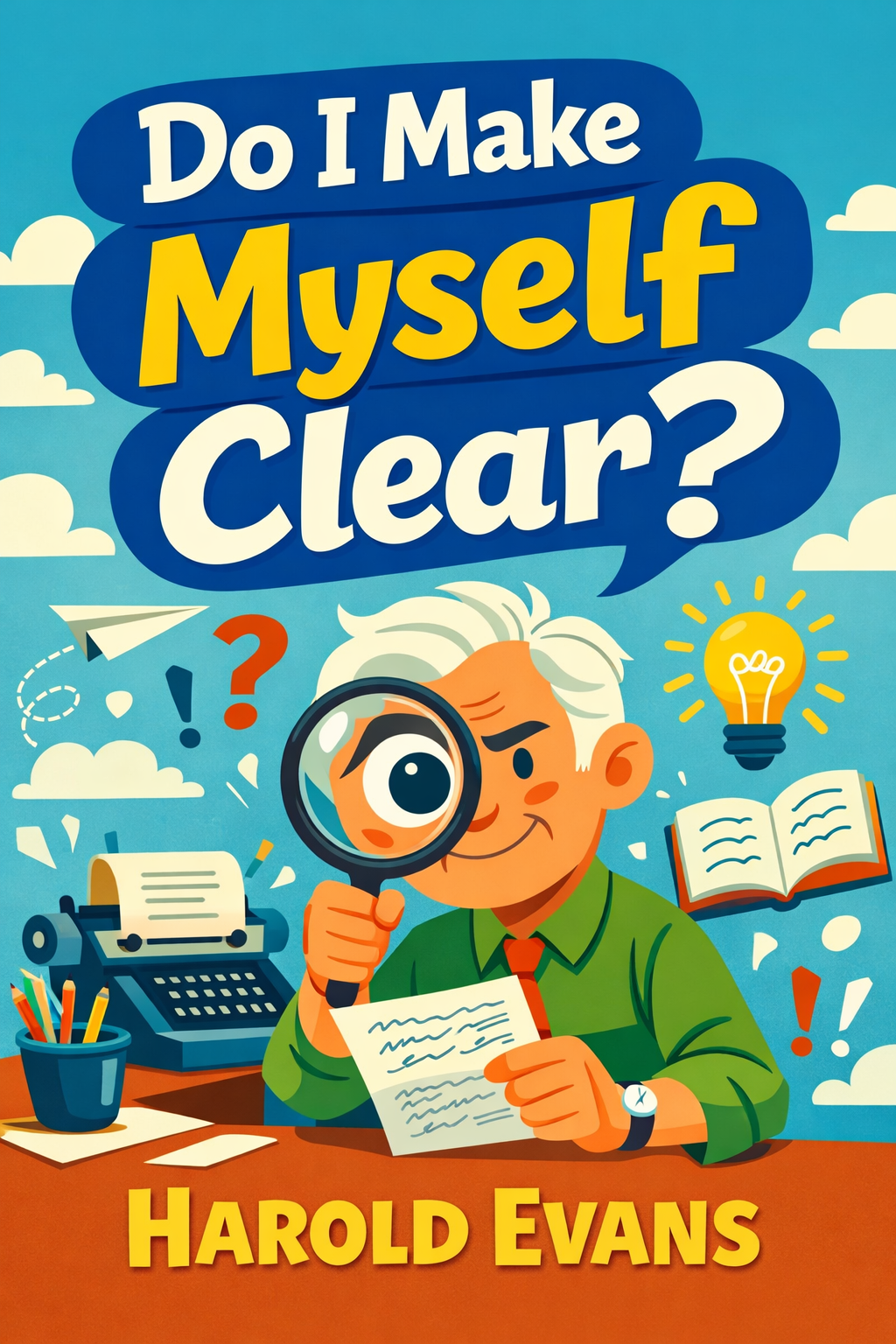
In an age of digital noise, where verbosity and obfuscation are commonplace, the ability to communicate with clarity is a superpower. This book is a compelling manifesto for clear writing, arguing that it is not an innate talent but a skill that can—and must—be learned. The author posits that we are drowning in a sea of bad prose, from corporate jargon and academic obscurity to political spin and lazy online content. This epidemic of poor communication isn’t just an annoyance; it erodes understanding, enables deception, and weakens the foundations of a healthy society. The journey toward clarity is therefore presented as both a personal craft to master and a civic duty to uphold.
The path to clear writing begins with a critical eye. While traditional grammar rules and readability formulas offer useful scaffolding, they are not infallible masters. A paragraph of perfectly structured, short sentences can be mind-numbingly dull. The true goal is to engage the reader while conveying meaning without friction. This requires moving beyond mechanical checklists and developing a feel for the rhythm and flow of language. The writer must become an editor of their own work, relentlessly hunting for the common culprits that muddy meaning.
Two of the most pervasive offenders are identified as front-loaded sentences and the passive voice. A sentence that buries its main point under a pile of introductory clauses forces the reader to do unnecessary work. The active voice, by contrast, delivers energy and directness. While the passive voice has its rare uses—for tact or to shift emphasis—its overuse drains writing of its vitality. The principle is straightforward: put the actor and the action at the forefront.
The next stage of refinement involves a ruthless interrogation of every word. This is the process of distillation, where excess is boiled away to reveal the core message. Adverbs and parasitical prepositions are often mere clutter. Does “meet up” say anything more than “meet”? Does “free gift” need the adjective? The author champions the removal of such linguistic filler. Similarly, abstract nouns like “facilities” or “situation” create vagueness where specificity is needed. The command is to be concrete, to show rather than tell. Instead of describing a scene as “chaotic,” paint the picture with specific details that allow the reader to feel the chaos.
Clarity is further sharpened by embracing the positive and avoiding the trap of dry, mechanical language. Constructions heavy with “not” and “unlikely” create cognitive bumps for the reader. Where possible, stating what *is* rather than what *is not* leads to more assertive and comprehensible prose. Furthermore, engaging writing has a musicality to it. It varies its rhythm by mixing short, punchy sentences with longer, more complex ones. It changes tone by weaving statements with questions, commands, or the occasional exclamation. This variation keeps the reader’s mind alert and invested.
The book also warns against the seductive danger of “zombie nouns” or “flesh-eaters”—those nominalizations that suck the life out of verbs. Turning a vibrant action like “decide” into a static concept like “the decision-making process” creates ponderous, lifeless prose. Stale metaphors and clichés are equally deadly, making writing feel lazy and unoriginal. Clear writing is fresh writing; it finds new ways to express familiar ideas.
Ultimately, the pursuit of clarity is framed as a moral imperative. In a “post-truth” environment, obfuscation is a tool for manipulation. Banks bury risks in impenetrable legalese, and politicians disguise policies in confusing rhetoric. Clear writing, therefore, becomes an act of resistance. It is a commitment to honesty, transparency, and genuine human connection. By choosing precise words, crafting straightforward sentences, and respecting the reader’s time and intelligence, we do more than improve our memos or essays. We champion reason, foster understanding, and build a world where meaning matters. The book concludes that to write clearly is to think clearly, and in doing so, we make ourselves not just understood, but trustworthy and powerful.