Description
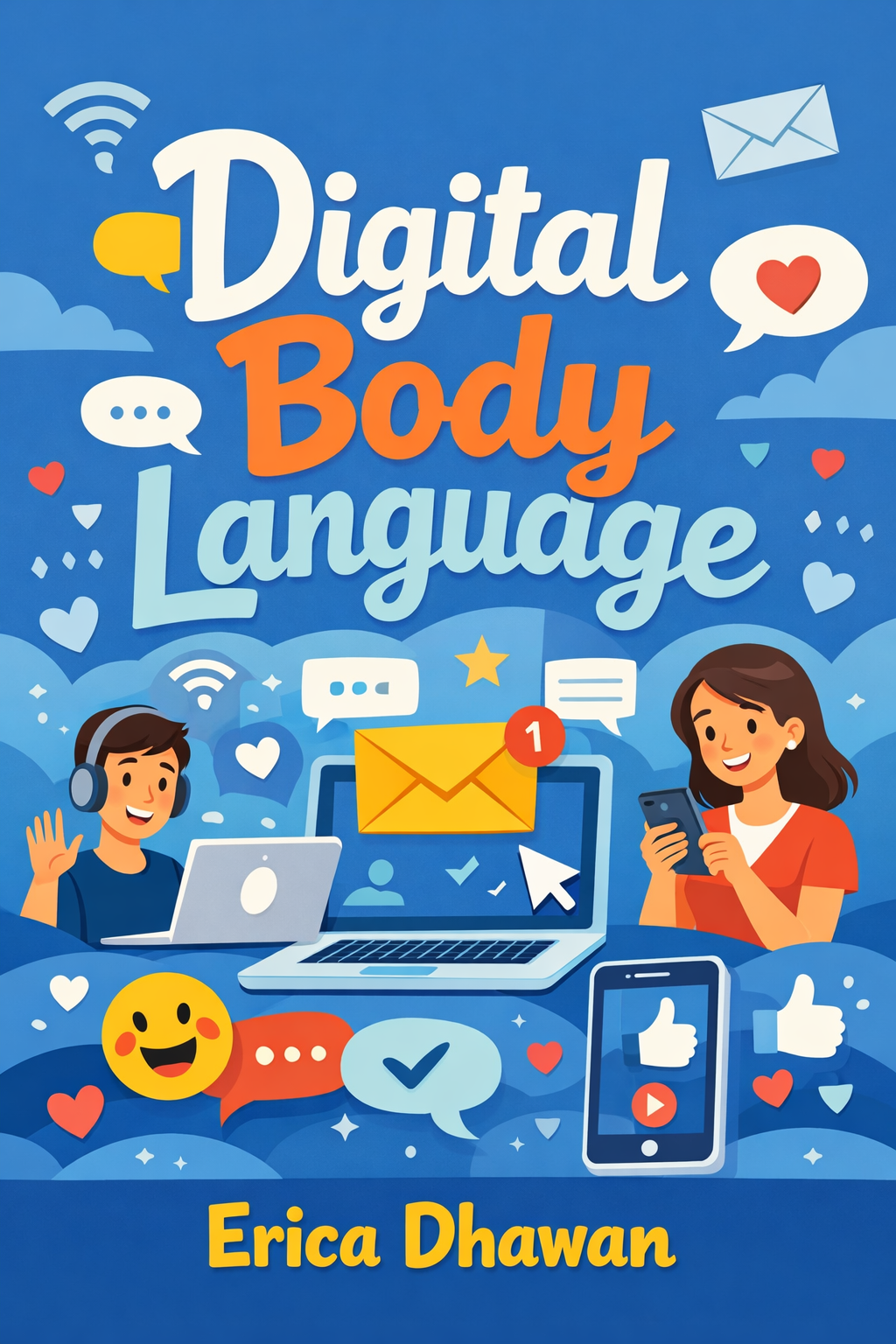
In an era where conversations happen through screens, the nuanced language of face-to-face interaction has vanished. We can no longer rely on a firm handshake, a reassuring smile, or a tone of voice to convey intent and build rapport. This void is filled with a new, often confusing dialect: digital body language. This book argues that every email subject line, text message punctuation, video call hesitation, and even reaction emoji forms part of a complex, unspoken code. Mastering this code is no longer a soft skill but a critical professional necessity for fostering clarity, preventing costly misunderstandings, and building genuine trust in a fragmented work environment.
The core challenge of digital communication is its inherent ambiguity. A simple period at the end of a sentence can be read as passive-aggressive finality. A delayed response can spiral into anxiety about one’s standing on a project. A missing greeting in an email might be interpreted as coldness or disrespect. The author delves into the psychology behind these interpretations, explaining how our brains, wired for social connection, desperately seek cues in the sparse landscape of digital text and pixels. Without the full spectrum of human expression, we default to filling the gaps with our own insecurities, biases, and worst-case scenarios, leading to a phenomenon the book terms “digital paranoia.”
To combat this, the framework moves beyond simple etiquette rules. It introduces a structured approach to sending and receiving digital messages with intention. On the sending side, it emphasizes the concept of “signal clarity.” This involves being deliberate with formatting—using bullet points for complexity, bolding key action items, and structuring messages to guide the reader’s eye. It champions the strategic use of video to rebuild human connection for sensitive or nuanced discussions, arguing that seeing a face, even on screen, reactivates our innate social processing. The book also explores the art of the subject line, reframing it not as an afterthought but as the “front door” to your message, setting tone and expectation before the body is even read.
Perhaps more innovatively, the book dedicates equal weight to the art of reading digital body language—a skill often neglected. It teaches readers to become conscious interpreters, to question their initial, often negative, assumptions about a terse message or a late-night email send. It introduces techniques for “assuming positive intent” as a default setting and for seeking clarification through gentle, open-ended questions rather than silent fuming. The author provides a lexicon for common digital gestures, explaining, for instance, how the “thumbs up” reaction can be a tool for efficient acknowledgment or a frustrating conversation-ender, depending on context and culture.
A significant portion of the analysis is devoted to the rhythms and rituals of communication platforms themselves. The unspoken rules of Slack differ profoundly from those of email or Microsoft Teams. The book decodes these platform-specific cultures: the implied urgency of a Slack direct message versus an email, the meaning of being left “on read” in a messaging app, and the nuanced etiquette of the virtual meeting—from camera-on expectations to the use of the chat function and virtual hand raises. It positions these platforms not as neutral tools but as social environments with their own behavioral norms.
Ultimately, the goal is to rebuild the trust that the digital medium inherently erodes. The book posits that trust is built through a consistent pattern of clear, reliable, and human-centric digital interactions. It’s about responding predictably, acknowledging messages even if only to say a full reply will come later, and using technology to express appreciation and recognition visibly. By consciously crafting our digital body language and thoughtfully interpreting others’, we can close the empathy gap created by our screens. We can transform our digital workplaces from arenas of potential conflict and anxiety into spaces of collaborative efficiency and psychological safety, where ideas flow freely because the fear of being misunderstood has been systematically dismantled.