Description
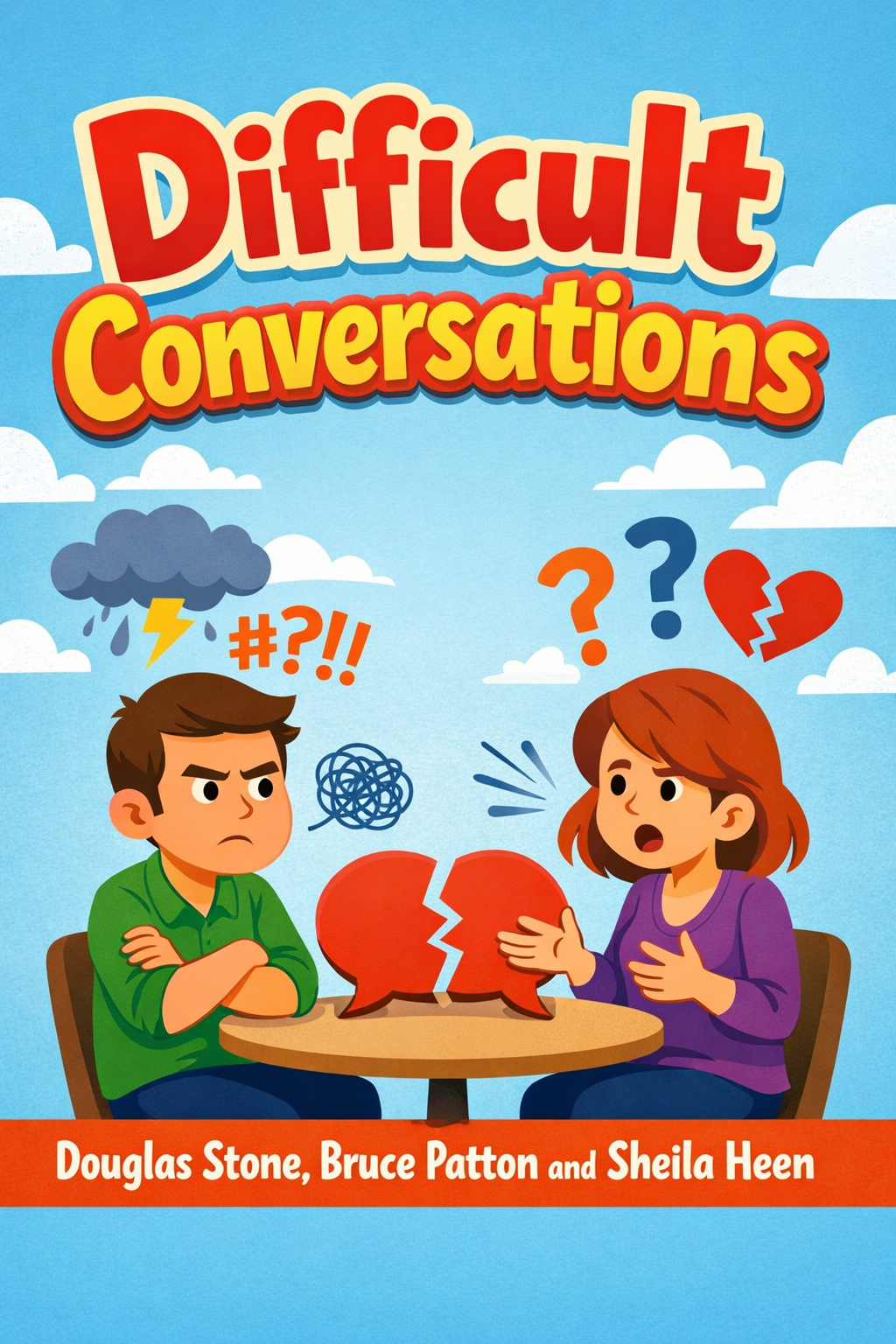
We all face them—those talks we dread, the conversations we rehearse in our heads, the exchanges that leave us feeling frustrated, misunderstood, or defeated. Whether it’s asking for a raise, confronting a friend about a hurtful comment, or discussing a sensitive issue with a family member, difficult conversations are an unavoidable part of life. Yet, we often approach them with a mindset that guarantees struggle: we assume we’re right, the other person is wrong, and our goal is to prove our point or assign blame. This book dismantles that faulty framework and offers a transformative new way to understand and navigate these crucial interactions.
At its heart, the book proposes that every difficult conversation is really three separate conversations happening simultaneously. The first is the “What Happened?” conversation. Here, we typically clash over facts, perceptions, and blame. We believe we have the complete story, but the book reveals a critical truth: we never do. Each person operates from their own unique perspective, informed by personal history, interpretations, and information we may not possess. Moving past the battle for who is “right” requires shifting from certainty to curiosity, exploring each other’s stories without judgment, and acknowledging the contributions of both parties to the problem, not as a tool for blame but as a path to understanding.
The second, and often most powerful, layer is the “Feelings” conversation. This is the subterranean river of emotions that fuels the conflict. Is someone feeling disrespected, unappreciated, or betrayed? We often try to sideline feelings as irrelevant or unprofessional, but unexpressed emotions leak out, poisoning the dialogue. The book guides us to acknowledge and address these emotions—both ours and theirs—constructively. It’s not about emotional outbursts, but about respectfully naming feelings and understanding their rightful place in the discussion. Validating someone’s feeling doesn’t mean you agree with their accusation; it means you acknowledge that their emotional experience is real to them, which can be a profound de-escalator.
The third layer is the “Identity” conversation. This is the internal dialogue about what the situation says about us. Does this conflict threaten our self-image as a competent professional, a loving partner, or a good person? Questions like “Am I being unfair?” or “Does this mean I’m a failure?” can trigger defensiveness and panic, causing us to react irrationally. By learning to recognize these identity triggers, we can separate the issue at hand from our core sense of self, allowing us to engage from a place of greater balance and security.
The practical magic of this approach lies in moving from a stance of “delivering a message” to one of “engaging in a joint exploration.” Instead of charging in to state your case, the book advocates for beginning from a place of genuine inquiry. Invite the other person to share their perspective first. Use phrases that open doors: “I’d like to understand your view on what happened,” or “I’m sensing there might be more to this for you.” Listen to learn, not to rebut. This requires managing your own internal voice—the one preparing its counter-argument while the other person is still talking—and truly focusing on comprehension.
A central, powerful technique is learning to reframe accusations and judgments into contributions to a shared problem. When someone says, “You never listen to me!” instead of defending yourself (“That’s not true!”), you can translate it into impact and inquiry: “It sounds like you’re feeling unheard, which is important. Can you help me understand when you’ve felt that way?” This simple pivot changes the dynamic from a courtroom cross-examination to a collaborative problem-solving session. The goal ceases to be about winning and becomes about understanding the problem from all sides and figuring out how to move forward together.
The book also provides invaluable guidance on preparing for these talks. It encourages us to clarify our true purpose: What do we really hope to achieve? Often, we discover that our deepest goal isn’t to blame but to repair a relationship, change a behavior, or simply feel heard. Starting with a clear, constructive purpose is a compass that keeps the conversation on track. Furthermore, it teaches the art of speaking clearly for yourself without attacking the other person—using “I” statements to express your feelings and perceptions without layering on blame.
Ultimately, this is not a manual for manipulation or tactics to get your way. It is a philosophy for human interaction built on empathy, self-awareness, and courage. It acknowledges that some conversations will remain hard, and some conflicts may not be fully resolved. However, by changing our internal blueprint for what a difficult conversation is, we change everything. We reduce fear and anxiety, we build stronger relationships based on mutual respect, and we find that clarity and resolution are far more possible than we imagined. The skills within these pages turn dreaded confrontations from emotional minefields into opportunities for growth, understanding, and genuine connection.