Description
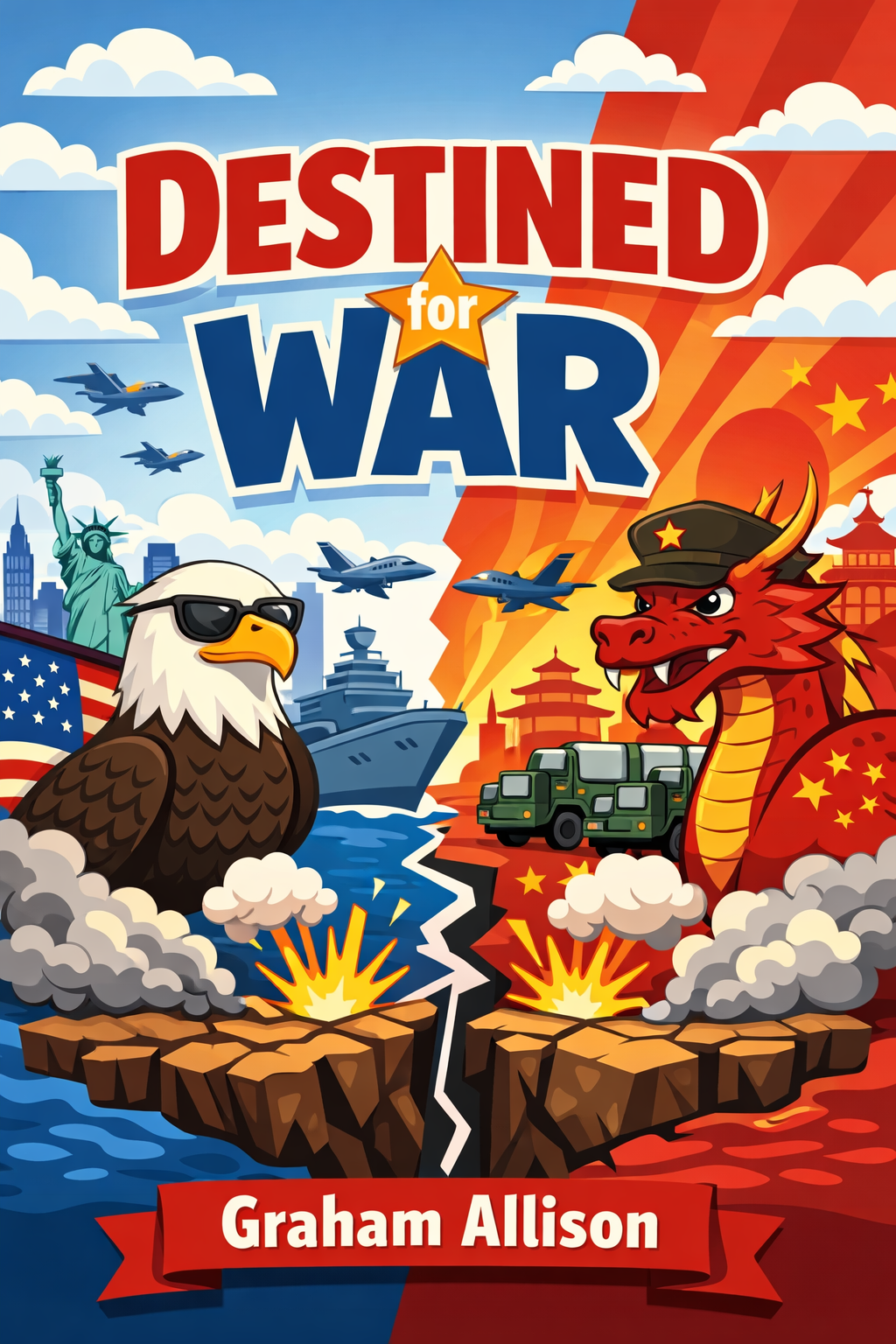
The world stands at a precarious geopolitical juncture, defined by the dramatic ascent of China and the determined supremacy of the United States. This dynamic is not new; it is a pattern as old as history itself, first meticulously documented by the ancient Greek historian Thucydides. He observed that when a rising power threatens to displace an established ruling power, the structural stress created makes war a likely, though not inevitable, outcome. This concept, known as the Thucydides Trap, provides a powerful lens through which to examine the current tensions between East and West. The fundamental question of our age is whether these two giants can navigate this dangerous passage without catastrophic conflict.
China’s transformation is the defining story of the modern era. In a matter of decades, it has evolved from a closed, agrarian society into an industrial and technological behemoth. Its economic growth is staggering, having lifted hundreds of millions from poverty and built infrastructure at a pace never before seen in human history. It is now the world’s foremost manufacturing hub and its second-largest economy, rapidly closing the gap with the United States. This meteoric rise has naturally translated into expanded political ambition and military capability. China seeks not just a seat at the table but to reshape the international order to reflect its own interests and historical sense of destiny. In response, the United States, having enjoyed unchallenged primacy since the end of the Cold War, is recalibrating its global strategy, pivoting its focus to the Indo-Pacific in an effort to manage China’s growth and uphold the existing system.
History is littered with examples of this tense dynamic playing out, often with tragic consequences. The very Peloponnesian War that Thucydides chronicled—between a rising Athens and a fearful Sparta—set the template. Centuries later, a rapidly modernizing Japan, feeling disrespected by established European powers like Russia, engaged in a series of wars to claim its place as a regional hegemon. In nineteenth-century Europe, Otto von Bismarck skillfully manipulated the fears of a established France to provoke a war that unified the German states under Prussian leadership. In most of these historical cases, from the defeat of Napoleonic France by Britain to the outbreak of the First World War, the structural pressure of a power shift resulted in open warfare. These precedents are sobering, suggesting that the mere existence of a rivalry between a rising and an established power creates a tinderbox environment.
In such an environment, it is not necessarily grand strategy or deliberate invasion that sparks conflict. Often, it is a local crisis or a simple accident that escalates beyond control. Between the US and China, several potential flashpoints exist. The South China Sea, where China asserts expansive territorial claims contested by neighbors and patrolled by the US Navy, is a prime arena for an accidental naval collision that could spiral into a larger confrontation. The status of Taiwan remains the most volatile issue; any move by the island toward formal independence could trigger a Chinese military response, forcing the United States to choose between its legal commitments and the prospect of a direct clash with a nuclear peer. Furthermore, actions by third parties, such as a re-militarizing Japan or an aggressive North Korea, could easily draw both superpowers into a conflict they did not initially seek.
Yet, history also shows that war is not a foregone conclusion. The Cold War between the United States and the Soviet Union, arguably the most dangerous Thucydidean rivalry of the twentieth century, ended without direct military conflict. This suggests that with sufficient wisdom, statecraft, and institutional resilience, catastrophe can be averted. The path to peace requires both nations to consciously manage their rivalry. They must establish clear and durable lines of communication to prevent miscalculation, especially during crises. They should seek areas of mutual interest—such as climate change, global public health, and nuclear non-proliferation—where cooperation can build trust and habits of collaboration. Most importantly, leaders on both sides must recognize the profound cost of war and actively work to defy the historical pattern, crafting a new balance of power that allows for peaceful coexistence and managed competition. The future is not written by historical analogy alone; it is forged by the choices made in the present.