Description
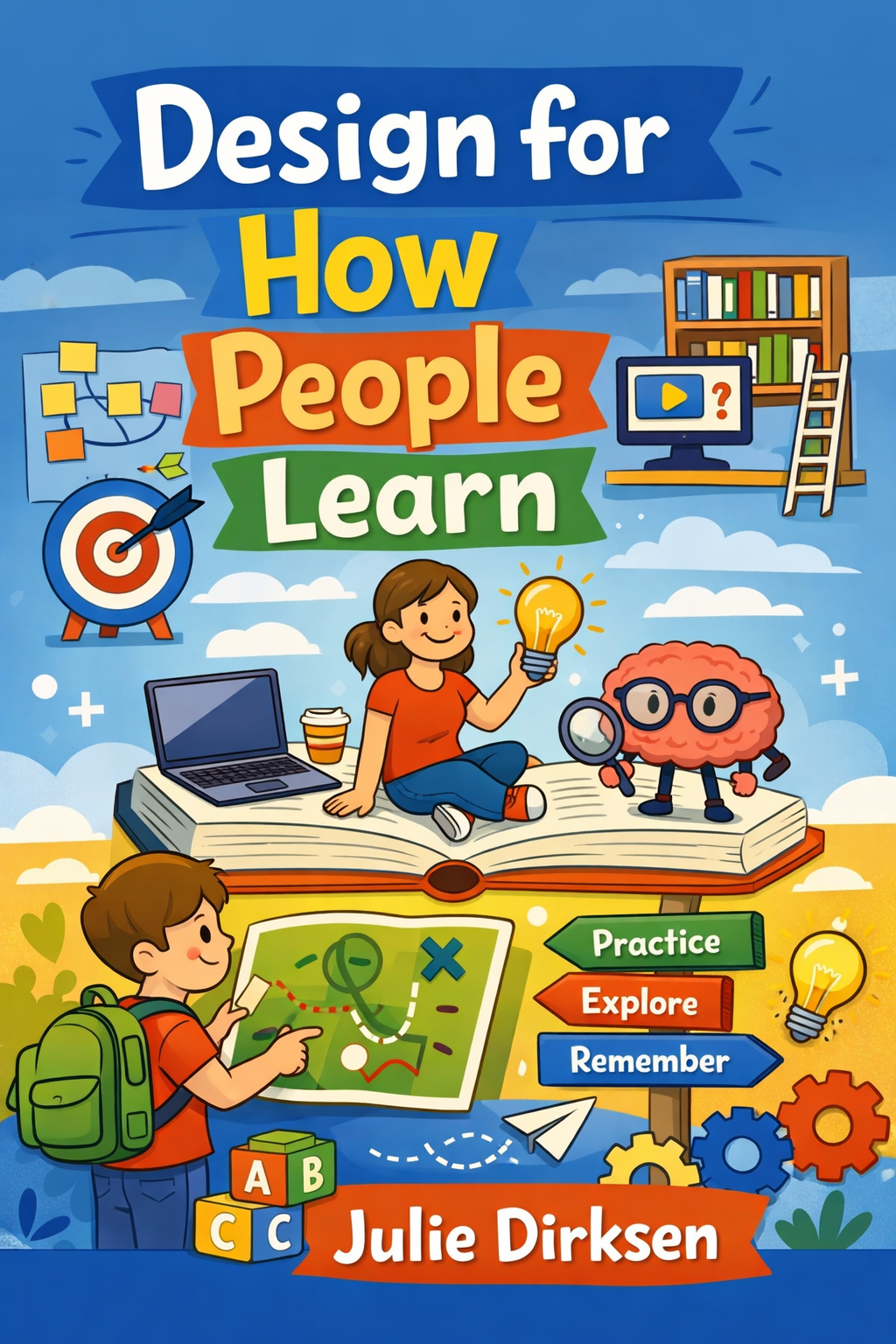
True education extends far beyond the classroom walls. In a world of constant technological and informational change, the ability to design compelling learning experiences is a crucial skill for anyone who teaches, trains, or explains. This book dismantles the myth that expertise in a subject alone makes a great teacher. Instead, it argues that the most effective learning happens when we start not with the material, but with the learner. By exploring the architecture of memory, the engines of motivation, and the principles of clear design, we can transform dry information into lasting knowledge and skills.
The journey begins with a fundamental shift in perspective. Before crafting a single lesson, we must invest time in understanding our audience. Consider a workshop leader who dives into advanced typography concepts without first gauging whether attendees know the difference between a typeface and a font. This approach risks boring the experts and bewildering the beginners. Effective teaching requires diagnosing the specific gap we aim to fill. Is it a knowledge gap, where a learner simply needs new information? Or is it a skill gap, requiring practice and feedback to build competence? A seasoned hiker planning the Appalachian Trail needs knowledge about routes and weather. A novice, however, needs both that knowledge and the foundational skills to hike safely. Tailoring your approach to this gap is the first step. Equally critical is understanding learner motivation. While an inherent passion for the subject is ideal, it’s not always present. The key is to connect the material to the learner’s existing goals and interests, creating relevance where it might not be immediately obvious.
Once we know our learners, we face the challenge of making information stick. Human memory is not a blank slate but a sophisticated filtering system with three key layers: sensory, short-term, and long-term. Most instructional failures occur because information never successfully navigates this system to reach long-term storage. A powerful technique to guide this journey is “chunking.” Our brains struggle to retain long, unstructured streams of data, like a random 12-digit number. However, when that number is broken into smaller, meaningful chunks, it becomes instantly more manageable. This principle applies universally: break complex processes into clear steps, segment lengthy texts with headings, and group related concepts together. By presenting information in digestible pieces, we dramatically increase its chances of passing from short-term into long-term memory.
However, simply depositing information into long-term memory isn’t enough; we must ensure it is stored in a useful and retrievable way. Imagine long-term memory as a vast, sometimes chaotic, closet. Our goal as learning designers is to help learners place new information on well-labeled, organized shelves, and ideally, on multiple shelves for easier access. We do this by connecting new knowledge to what learners already know. Teaching Spanish to an English speaker involves linking to existing shelves for vocabulary and grammar. Teaching a completely unfamiliar concept requires building new shelves from the ground up, aided by strategic repetition. Furthermore, we must consider context. Knowledge is often tied to the environment or emotional state in which it was learned. A receptionist might flawlessly recognize clients at the front desk but draw a blank at a social event. Therefore, the most effective learning experiences simulate the real-world context where the knowledge will be applied. Training for stressful situations, like customer service complaints, should incorporate role-plays that mimic that pressure, ensuring skills are accessible when they’re needed most.
All these insights culminate in the practice of intentional lesson design. Good design is the invisible framework that supports engagement and mastery. Several key strategies can elevate any learning experience. First, design for action. People learn by doing. Instead of merely explaining a nutritional guideline, ask learners to create a meal plan that meets it. Second, embrace “desirable difficulty.” Lessons that are too easy lead to boredom and poor retention. Research shows that learning is optimized when students operate at the edge of their abilities, facing challenges that stretch their skills without overwhelming them. Third, prioritize interactivity. Guide learners to discover concepts for themselves through questions, problems, and exploration rather than simply presenting conclusions. This active processing builds deeper understanding. Fourth, design clear and fair assessments that measure true competence, not just rote memorization. Finally, be prepared to iterate. Gather feedback, observe what works and what doesn’t, and refine your approach. Great teaching is not about performing expertise, but about engineering experiences that guide others to their own moments of discovery and capability. By placing the learner’s mind at the center of our design process, we can create lessons that are not only delivered but truly received, remembered, and used.