Description
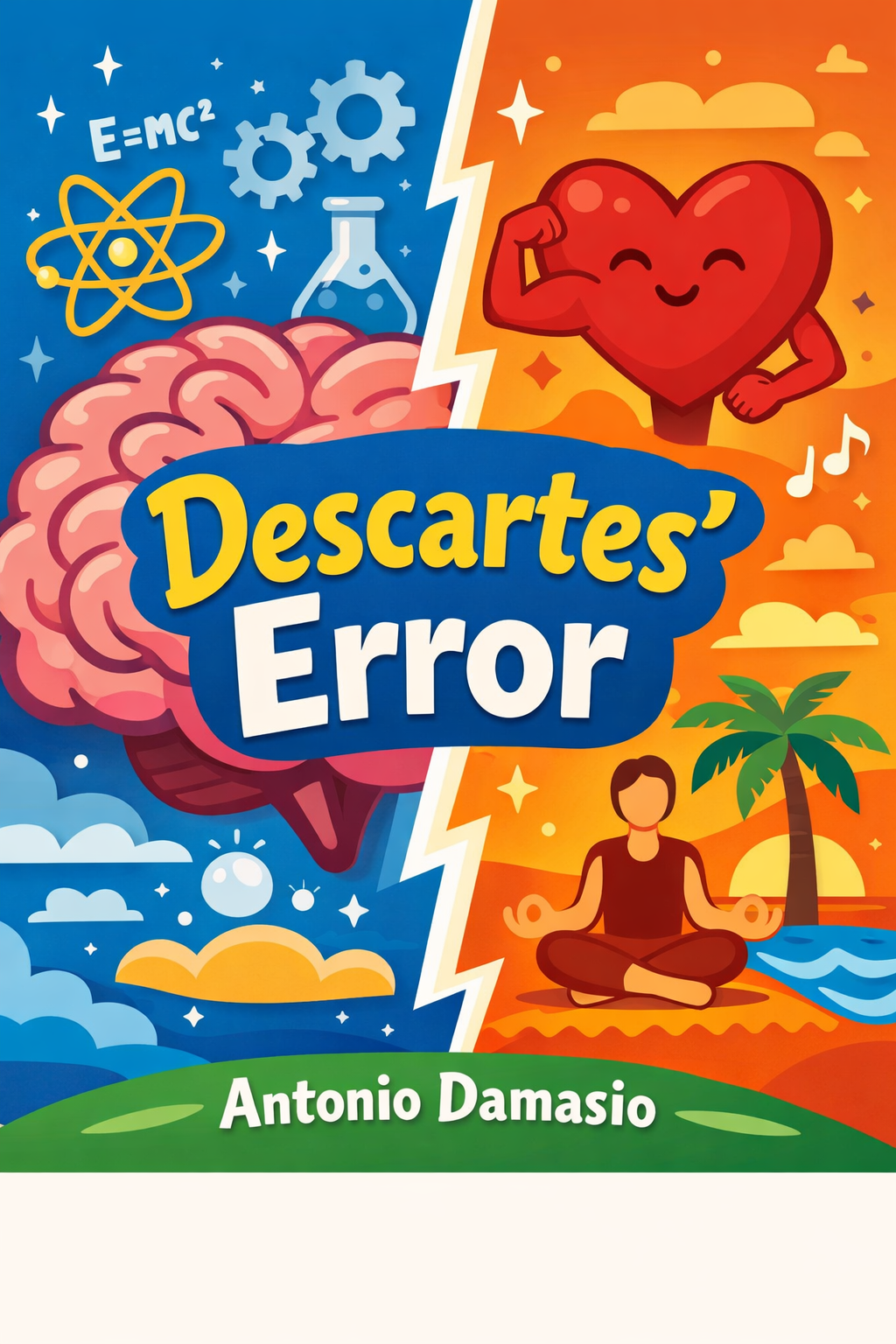
For centuries, people thought the mind and body were separate. The mind was believed to be the seat of logic, reason, and higher thought, while the body was viewed as the home of emotions, instincts, and impulses. Many assumed that emotions cloud judgment and that only clear reasoning could lead to good decisions. But modern science has shown that this is not true. Reason and emotion are not enemies. They are partners, working together inside the human brain and body to shape the way we think, act, and live.
One of the best ways to understand how the brain works is by looking at cases of brain damage. When a specific part of the brain is injured, it often changes only certain abilities. By studying those changes, scientists can figure out what role that part of the brain normally plays.
A famous example is Phineas Gage, a railroad worker in the 1800s. Gage survived a terrible accident in which an iron rod shot through his skull and destroyed part of his brain. Surprisingly, he could still talk, walk, remember things, and think clearly. But his personality changed. He lost his ability to make sensible decisions, control impulses, and plan for the future. Friends said he was no longer the same man.
Later studies suggested that the accident damaged Gage’s ventromedial prefrontal cortex, a part of the brain behind the forehead. This area is crucial for practical reasoning—the kind of decision-making we use every day. Without it, Gage could still think logically in a narrow sense, but he struggled to make sound life choices.
Another case involved a modern patient known as Elliot. Before his brain damage, Elliot was a successful businessman, father, and husband. After a tumor damaged the same brain area as Gage, Elliot could still solve puzzles, do math, and talk intelligently. But in real life, he couldn’t decide which projects to prioritize at work or how to manage daily tasks. He would spend hours on trivial details and lose sight of bigger goals. His personal life also collapsed. He made poor financial decisions, lost his job, went bankrupt, and his marriage ended.
What stood out about Elliot was his lack of emotion. When he spoke about his troubles, he sounded flat, as if they did not bother him at all. Even when shown disturbing images, such as accidents or disasters, he did not feel much. This lack of emotional response gave scientists an important clue: maybe decision-making does not work well without emotions.
Traditionally, many people believed emotions get in the way of good judgment. But Elliot’s case showed the opposite. Without emotions, he was unable to weigh options effectively. His brain could analyze endless details, but he could not decide what really mattered.
To understand this, we need to look more closely at how emotions function. Emotions are not just random feelings. They are signals from the body that help the brain interpret the world. When you feel afraid, your heart races, your muscles tense, and your breath quickens. When you feel happy, your body relaxes, and your face naturally smiles. These physical changes send constant feedback to the brain. Together with mental images—such as memories, sounds, or sights—they form emotions.
There are two kinds of emotions. Primary emotions are basic ones we are born with, such as fear, anger, happiness, and sadness. Secondary emotions are more complex. They develop over time and are shaped by our personal experiences. For example, someone who once had a joyful experience with dogs may feel warm affection whenever they see one, while another person who was bitten may feel fear instead.
Secondary emotions depend on the ventromedial prefrontal cortex. This part of the brain links memories, body signals, and past experiences, turning them into guides for decision-making. Scientists call these guides “somatic markers.” A somatic marker is like a shortcut that tells you how to feel about a choice. For instance, if Monday meetings always stress you out, you may feel a negative gut reaction when asked to schedule something on a Monday. That gut feeling pushes you toward a better decision without wasting endless time comparing small details.
People like Elliot, who lack these emotional markers, cannot narrow down their options. They consider every tiny factor equally, which makes decision-making painfully slow or even impossible. In everyday life, we constantly rely on somatic markers to guide us—whether choosing what to eat, where to go, or whom to trust.
This discovery shows that reason alone is not enough. Pure logic cannot tell us which option matters most. Emotions provide the weight and meaning behind choices. They allow us to act quickly when needed and to prioritize what is truly important. In other words, emotions are not the enemies of reason. They are its foundation.
These findings also show that the brain and body are deeply connected. Our bodies generate signals—heart rate, breathing, gut reactions—that shape our emotions. Our brains interpret these signals and combine them with memories and knowledge. The result is a decision that reflects both logic and feeling. Without the body’s input, the brain’s reasoning can become detached and ineffective.
The story of Phineas Gage and Elliot makes this clear. Both men retained intelligence after their injuries, but without the integration of body signals and emotions, their reasoning broke down. They became unable to make sound choices, proving that emotion is essential for practical reasoning.
The larger lesson of Descartes’ Error is that the old division between mind and body, or reason and emotion, does not reflect how humans truly function. Our bodies influence our emotions, our emotions guide our reasoning, and our reasoning helps us survive and thrive. Trying to separate these parts only leads to confusion.
In daily life, this understanding can help us appreciate the role of feelings in making decisions. Instead of dismissing emotions as irrational, we can see them as valuable guides. A gut feeling may not always be correct, but it carries important information built from past experiences. When combined with careful thinking, emotions can lead to wiser and quicker choices.
In the end, reason and emotion are not opposites. They are partners in the same system, working together to help us navigate the challenges of life. The brain, the body, and the emotions form a web that makes us who we are. Ignoring any part of that web leaves us incomplete.