Description
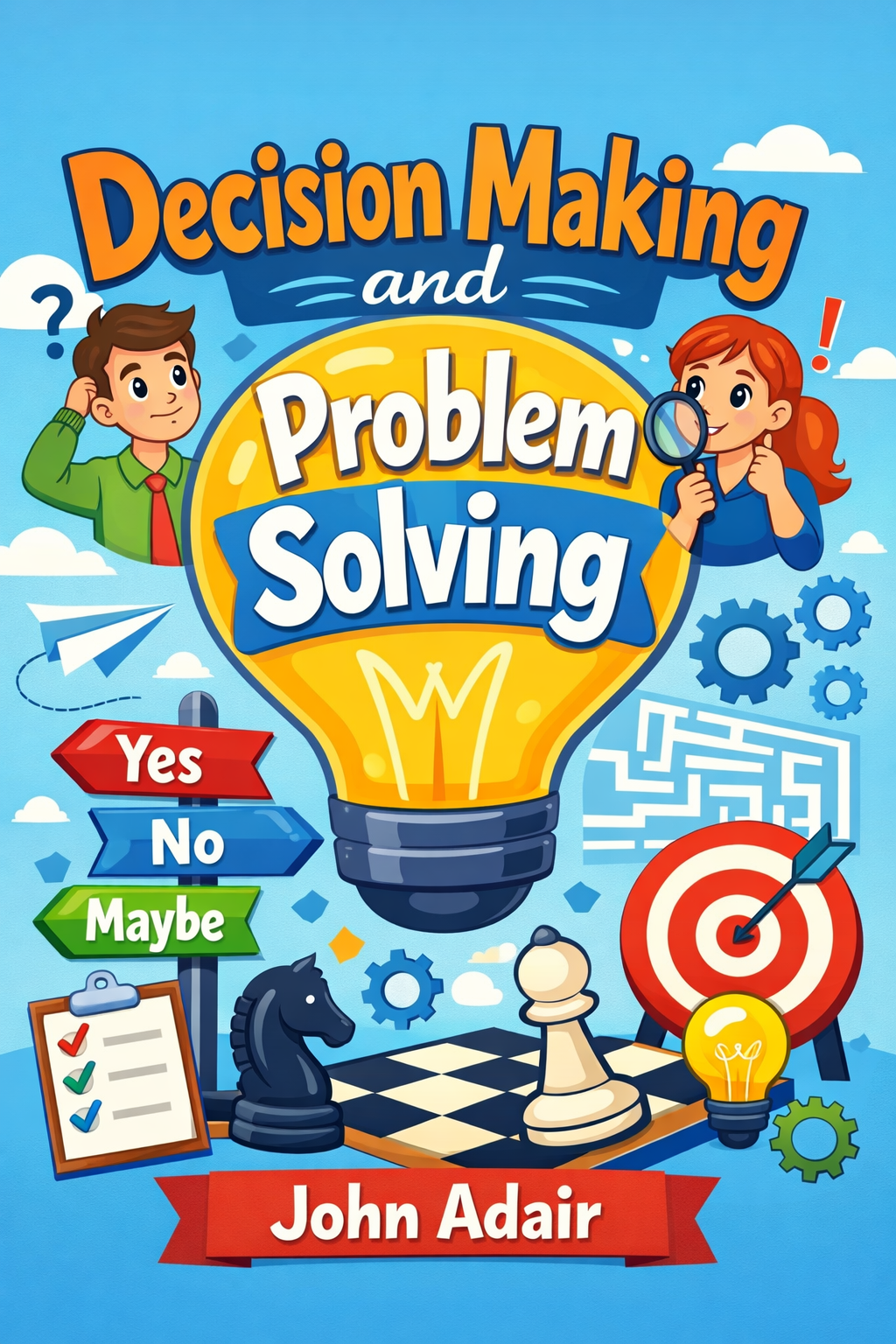
The ability to think clearly and effectively is a uniquely human skill, yet many of us feel confined by labels like “logical” or “creative,” as if these are fixed traits. This book dismantles that myth, presenting practical thinking as a set of skills that can be learned and strengthened. At its core are three intertwined types of applied thinking: decision-making, the process of choosing a course of action; problem-solving, the act of finding answers to obstacles; and creative thinking, the generation of new ideas and connections. Far from being separate, these modes of thought work in concert. An engineer needs creativity to innovate, just as an artist needs logic to master their materials. The journey to improving these skills begins with understanding the fundamental operations of your own mind.
Our conscious thinking employs three key metafunctions: analyzing, synthesizing, and valuing. Analysis involves breaking a complex issue down into its component parts to see how they interconnect, like loosening a knot to trace the strands. Synthesis is the opposite act of building up, assembling pieces—whether facts, concepts, or materials—into a coherent whole, much like constructing a model from Lego bricks. Valuing is the function of judgment, where we weigh options, assess importance, and make ethical or practical evaluations. Effective thinking consciously engages these functions, using analysis and synthesis to explore possibilities and valuation to select the best path forward. However, conscious thought is only part of the picture. A profound resource lies in what the text calls the Depth Mind—the powerful subconscious processing capacity we all possess.
Have you ever struggled with a difficult problem, only to have the solution appear suddenly while you’re taking a walk or waking from sleep? This is your Depth Mind at work. While your conscious attention is limited, your subconscious can sift through vast amounts of information, make novel connections, and present insights to your conscious awareness. Cultivating this ability is a critical skill. You can train your Depth Mind by deliberately building pauses into your thinking process. Instead of relentlessly grinding on a problem, step away. Take a walk, engage in a mundane task, or sleep on it. These intervals allow your subconscious to process and synthesize, often leading to breakthroughs that forced conscious effort cannot achieve. Learning to trust and employ this inner resource transforms practical thinking from a strenuous activity into a more fluid and intuitive partnership between your conscious and subconscious minds.
With this foundation of how the mind works, we can turn to the structured improvement of decision-making. A reliable method mirrors the scientific approach and involves five key steps: defining your objective clearly, gathering all relevant information, generating a range of feasible options, making the choice, and finally, implementing and evaluating the result. This framework is not a rigid straight line; our minds naturally jump between steps. However, consciously ensuring each stage is addressed, perhaps by jotting down notes, guards against oversight. It also highlights a crucial distinction: the difference between a wrong decision and a bad one. A wrong decision is one that, in hindsight, didn’t work out due to unforeseen circumstances or missing information at the time—like parking in a spot where the “no parking” sign had blown over. A bad decision, however, stems from a flaw in the process itself, such as ignoring known risks or failing to consider alternatives. By diligently following a sound method, you systematically avoid bad decisions and turn even wrong ones into valuable learning experiences.
Problem-solving is a close cousin to decision-making, often embedded within it. Its focused process has three stages: accurately defining the problem, generating possible solutions, and selecting the best one. The key difference is that problem-solving concludes with the choice of a solution; the act of implementing it falls into the realm of decision-making. Life often presents them in sequence: you might decide to drive to a holiday gathering (a decision), only to encounter a severe storm (a problem). Your problem-solving skills then kick in to define the obstruction and generate options—turn back, seek shelter, or proceed with extreme caution. Selecting the best option requires valuing safety against your goal. This example shows how dynamic thinking navigates the real world, where decisions create new situations and problems demand swift, clear-headed solutions.
Ultimately, strengthening these core skills feeds directly into enhancing creative thinking. Creativity isn’t a mystical gift but a practical ability to see new relationships and possibilities. It flourishes when you combine a broad knowledge base with the disciplined use of the thinking tools already discussed. Techniques like brainstorming, where judgment is suspended to encourage a free flow of ideas, or asking probing questions to challenge assumptions, can systematically stimulate creative output. The Depth Mind is particularly potent here, as it excels at making unexpected connections. By regularly engaging in creative exercises, seeking diverse experiences, and giving your mind the space to wander and incubate ideas, you build creative muscle. The integration of sharpened decision-making, systematic problem-solving, and unleashed creative thinking forms a complete toolkit for navigating complexity, turning challenges into opportunities, and approaching both work and life with greater confidence and ingenuity.