Description
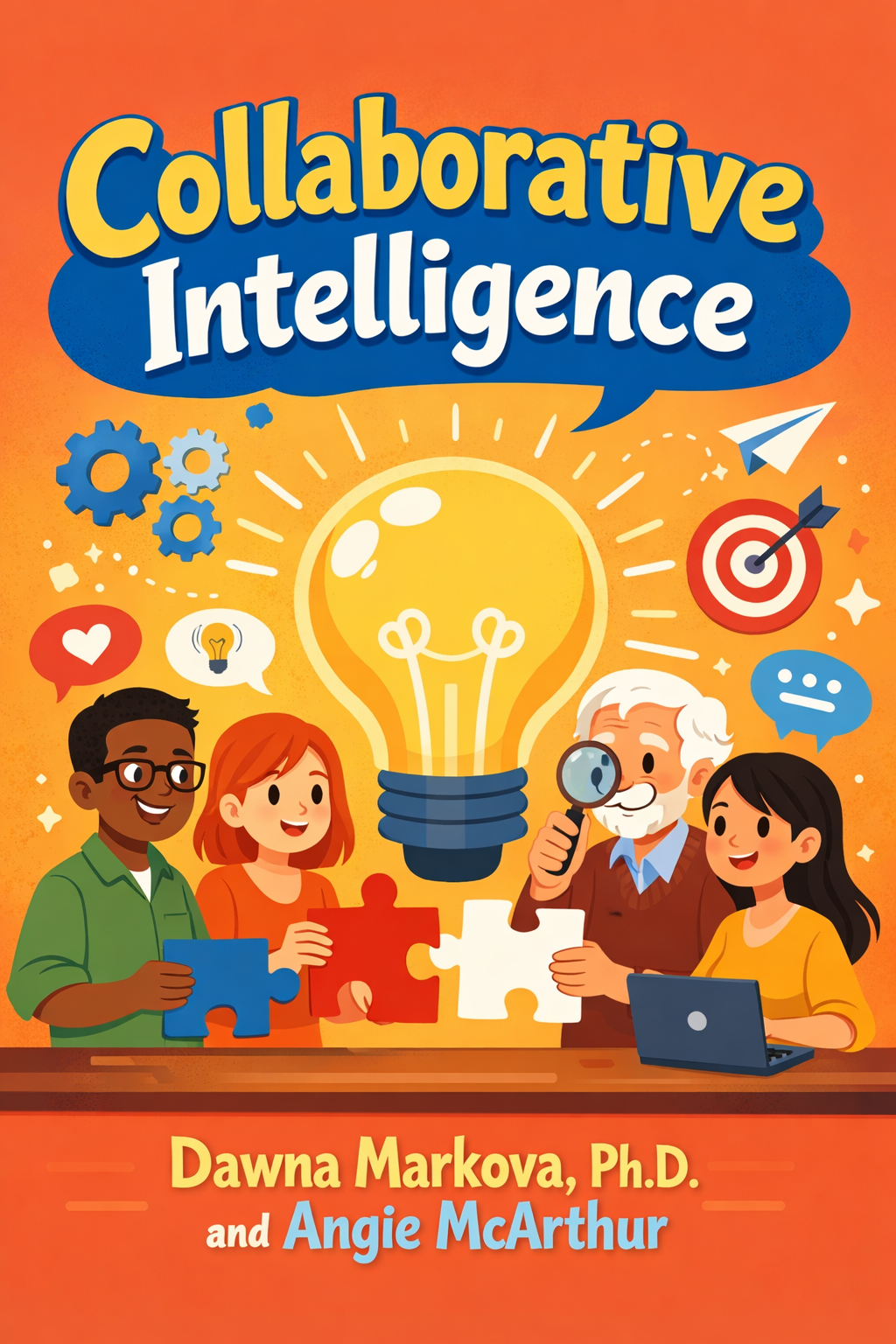
The landscape of success is shifting. We are moving from a purely competitive, market-share economy, where value is measured in owned assets and individual dominance, toward a mind-share economy, where the greatest wealth lies in ideas, relationships, and the ability to co-create. In this new environment, the premium skill is no longer simply out-performing your rivals, but learning how to think and innovate alongside them. This book provides a practical framework for developing that essential skill: your collaborative intelligence. It argues that true collaboration isn’t about forced consensus or suppressing individuality; it’s about strategically combining diverse minds to achieve something no single person could alone.
The journey begins with a fundamental resource we all possess but rarely examine: our attention. Most of us are taught that relentless, narrow focus is the key to productivity. However, effective collaboration requires fluency in three distinct types of attention. Focused attention allows for deep, uninterrupted work on a single task. Sorting attention enables us to weigh options, analyze information, and shift perspective between internal reflection and external input. Open attention is a diffuse, receptive state where new connections are made, memories surface, and creative insights emerge. A collaborative mind knows when to deploy each type, understanding that a team stuck only in focused mode may miss the big picture, while one constantly in open mode may never decide on anything.
Underpinning our use of attention is our unique neurological wiring, or “mind pattern.” We each have preferred channels for processing information—some of us think best in vivid images (visual), others through sounds and dialogue (auditory), and others through physical sensations and movement (kinesthetic). These channels combine with our attention styles to create a personal cognitive fingerprint. One person might be visually focused, easily picturing complex systems but prone to tuning out during long verbal discussions. Another might be auditory-sorting, needing to talk through ideas to clarify them. Recognizing your own pattern is the first step to managing your energy and avoiding mental dead ends. More crucially, it allows you to decode the communication styles of others. By adapting your approach—perhaps using a whiteboard for a visual thinker or allowing walking meetings for a kinesthetic learner—you can bridge cognitive gaps and ensure ideas flow freely.
Beyond how we process information lies the content of our thought: our innate thinking talents. These are the mental activities that energize us and come naturally, such as creating order from chaos, forging deep interpersonal connections, logical analysis, or motivating a group to action. Most people possess a unique combination of about five core talents. Yet, in a culture obsessed with fixing weaknesses, these strengths are often obscured or even perceived as flaws—the logical questioner seen as a nitpicker, the big-picture dreamer labeled as impractical. The key to collaborative contribution is to name, contain, and aim these talents. This means consciously identifying your gifts, communicating them to your team (“I have a talent for seeing potential risks, so let me play devil’s advocate for a moment”), and directing them purposefully toward shared objectives. When individuals operate from their talents, they contribute their best energy and creativity.
Bringing diverse minds together productively requires navigating the inevitable blind spots and uncertainties. Different cognitive styles and thinking talents mean we all have inherent gaps in our perception. The logical thinker might miss emotional undercurrents; the relationship-builder might avoid necessary conflict. Effective collaborators actively seek out these missing perspectives by asking powerful, open-ended questions. Instead of questions that seek confirmation (“Do you agree?”), they ask questions that unlock new terrain (“What are we not seeing here?” or “What would success look like from our customer’s perspective?”). This practice of “question thinking” embraces uncertainty as a source of innovation, transforming confusion into a collective search for insight.
Ultimately, collaboration coalesces around a common goal. The final piece of the puzzle is the ability to focus a group’s collective attention on a shared intention. This is more than just stating an objective; it involves creating rituals and structures that repeatedly orient the team’s mental energy. It could be starting every meeting by revisiting the core mission, using visual roadmaps that everyone can see, or establishing clear protocols for decision-making. When a group’s attention is aligned, the mindset shifts from “me” to “we.” Competition becomes a healthy driver within a framework of cooperation, as seen in platforms that both compete and collaborate with traditional industries to mutual benefit. By mastering these principles—managing attention, understanding mind patterns, leveraging thinking talents, inquiring skillfully, and uniting around a common goal—you can transform any group from a mere collection of individuals into a genuinely intelligent, collaborative force.