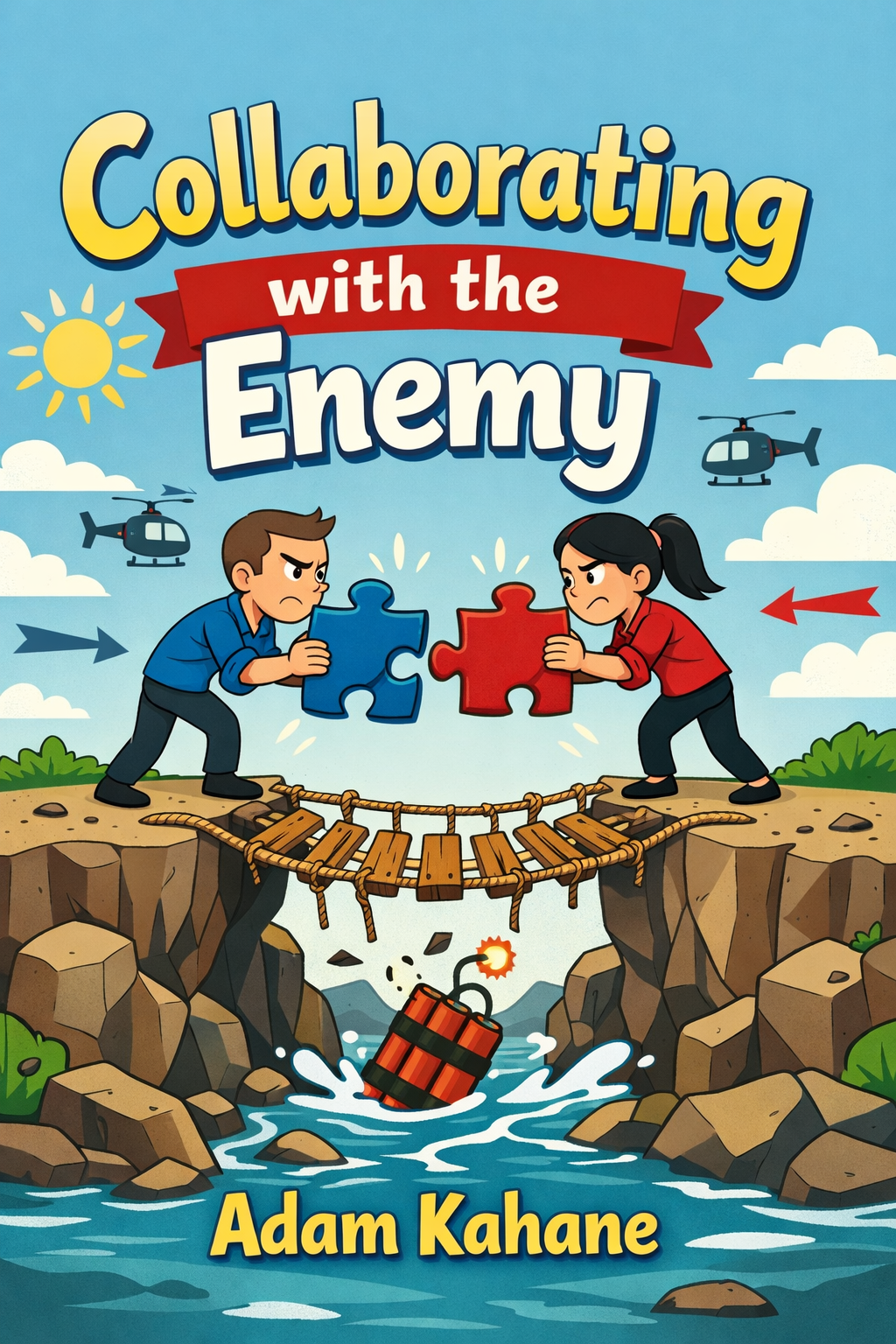
Description
In a world often defined by polarization and entrenched positions, the ability to work constructively with those we view as adversaries is not just a nice skill—it’s a critical necessity. This book presents a radical rethinking of collaboration, moving beyond the comfortable confines of like-minded teams to engage with the discomfort of genuine opposition. It argues that our toughest challenges, whether in business, community, or global affairs, cannot be solved by any single faction. The solutions lie in the messy, fertile ground where conflicting perspectives meet. This isn’t about fake harmony or surrendering your principles; it’s a disciplined practice of engaging with difference to unlock outcomes that are more robust, innovative, and sustainable than anything one side could produce alone.
The journey begins by upending our instinctual aversion to conflict. We are taught to see disagreement as a problem to be resolved, a noise disrupting the signal of progress. This book invites us to flip that script. Conflict, when approached not as a battle to be won but as a dynamic energy to be harnessed, becomes a source of immense creativity. The friction between opposing views can generate the heat needed to forge entirely new ideas. Consider the city planner who, instead of silencing angry community voices, structures a forum to amplify them, discovering unstated fears about displacement that, once addressed, lead to a better housing plan for everyone. Or the tech team leader who stops forcing consensus between arguing designers and engineers and instead facilitates a session to air their grievances, sparking a breakthrough product feature born from their technical debate. These stories illustrate that the goal is not to eliminate conflict but to step into it with curiosity, asking what hidden opportunities and deeper understandings this tension might reveal.
A pivotal skill in this practice is the counterintuitive art of stepping back. In the face of a stalemate or a heated exchange, our impulse is often to push harder, argue more persuasively, or tighten control. True collaborative power, however, often comes from the opposite move: a deliberate pause. Stepping back is an act of strategic reflection, not retreat. It involves creating space to examine our own reactions, assumptions, and emotional triggers. A nonprofit director, stuck in a bitter partnership, takes a day away from the fray to journal and realizes her own defensiveness is part of the problem. A developer, ready to quit over clashes with his manager, reflects on his communication style and sees how his technical certainty comes across as dismissive. This self-awareness is the bedrock. By understanding our own role in the dynamic, we regain agency. We learn to respond thoughtfully instead of reacting reflexively, to see the system of the conflict rather than just our position within it.
With this foundation of reframed conflict and personal awareness, the work of building practical bridges can begin. This is the craft of communication that connects across chasms of mistrust. It goes far beyond simple talking. It requires empathetic listening, where the sole focus is to understand the other person’s world—their fears, their hopes, their unspoken constraints—without mentally preparing a rebuttal. It involves using language that de-escalates, such as “I” statements that own your perspective (“I feel frustrated when deadlines shift”) rather than accusatory “you” statements that blame (“You keep missing deadlines”). It means finding and naming shared intentions, however small, to establish a sliver of common ground from which to build. A community mediator doesn’t start by solving the dispute; he starts by ensuring each person feels profoundly heard, often discovering that beneath opposing stances on a new park lie a shared love for the neighborhood’s children.
Ultimately, this leads to a new mode of problem-solving. Traditional collaboration often seeks a compromise that dilutes strong positions. The collaboration described here seeks a synthesis that transcends them. It’s a creative, iterative process where the group, having navigated conflict and built some trust, experiments together. They prototype small actions, learn from the results, and adapt. The answer isn’t in anyone’s back pocket at the start; it emerges from the collective process. This might look like a corporate cross-functional team running a small pilot program that blends marketing’s bold vision with finance’s risk constraints, creating a launch strategy neither department initially imagined. The final outcome is more than a solution to a specific problem. It is the development of a shared capacity—a muscle for working through difficulty. The real success is a team, community, or partnership that has learned how to learn together, becoming more resilient and adaptable for the next inevitable challenge. This book is a masterclass in turning the enemies in your professional and personal landscape into your most unlikely and powerful allies.