Description
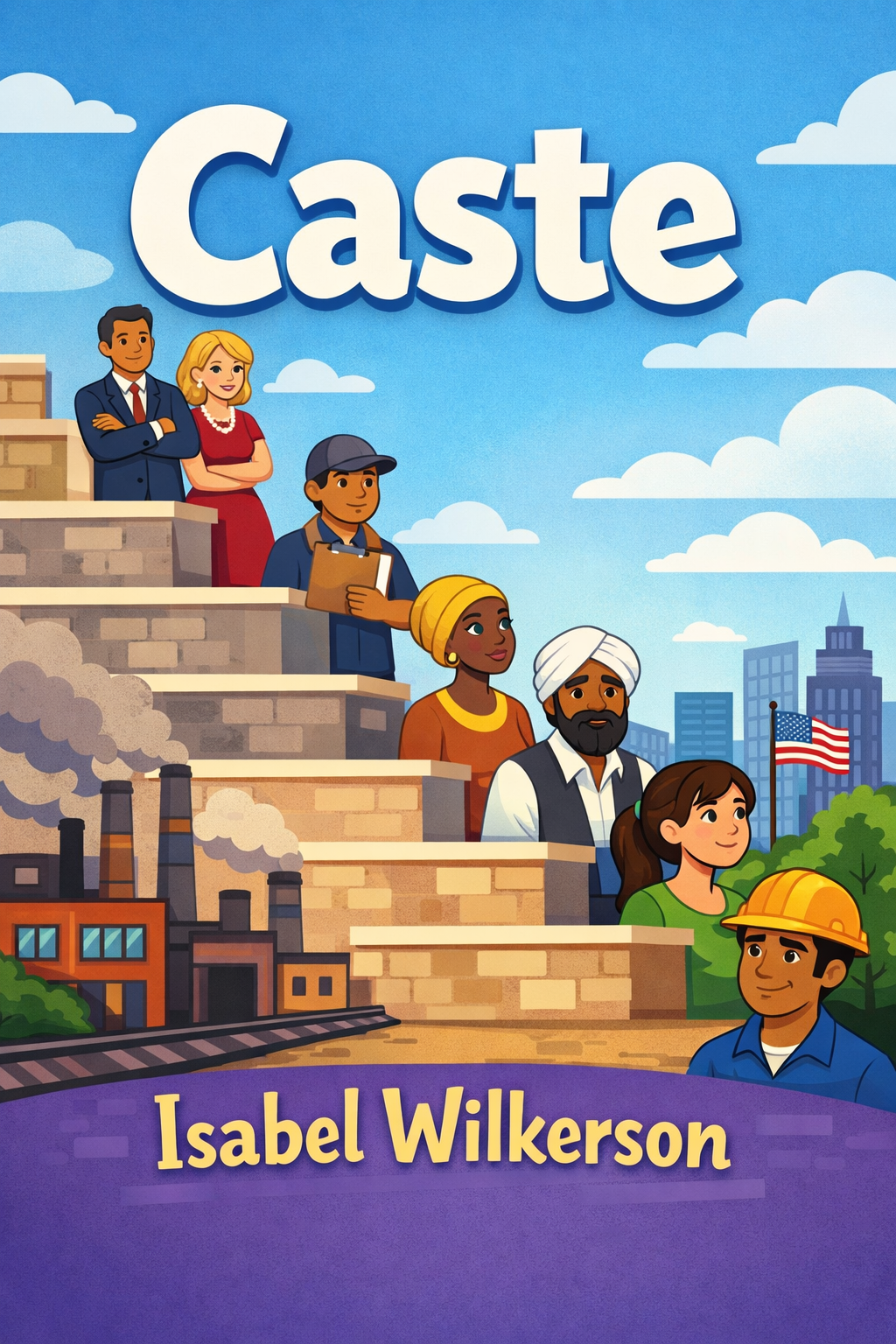
In “Caste,” Isabel Wilkerson presents a seismic reframing of American history and society, arguing that the persistent inequalities and racial tensions in the United States are best understood not merely through the lens of racism, but through the ancient and pervasive structure of a caste system. She posits that while race is the visible tool used to implement this hierarchy, caste is the underlying, enduring grammar—the subconscious architecture of human ranking that dictates a person’s standing, respect, and assumed worth from birth. This system, she reveals, is an internalized ranking that influences every interaction and opportunity, creating a societal order as rigid and defining as those historically associated with India and Nazi Germany.
Wilkerson begins by establishing the metaphor of America as an old house with a cracked foundation. Generations of inhabitants may redecorate and make surface repairs, but the fundamental, centuries-old stress fractures in the structure remain, threatening the entire edifice. These fractures manifest as glaring wealth gaps, disparate health outcomes, and persistent police violence. To understand why these problems are so resistant to change, despite legal and social progress, one must diagnose the foundational flaw: a baked-in caste system that began with the colonization of America and the enslavement of Africans. This system assigned roles and human value, placing those deemed “white” at the top and those deemed “Black” at the bottom, with other groups arranged in between. The longevity of this structure—246 years of formal slavery versus less than 160 years of nominal freedom—has embedded its codes deep into the national psyche.
The author meticulously distinguishes caste from class. Class is fluid, influenced by education, wealth, and profession; one can theoretically rise or fall. Caste, however, is a fixed state, an inherited social standing that is meant to be permanent. It is the container, she argues, and race is the label on that container. To illustrate the arbitrary nature of the racial labels that underpin the American caste, Wilkerson delves into the unscientific origins of racial categorization, such as the term “Caucasian,” invented by a German anatomist based on his fondness for a single skull from the Caucasus Mountains. These invented categories were then hardened into immutable law and social practice to maintain economic and social control, creating a hierarchy where the dominant caste could justify its position through a fabricated sense of inherent superiority.
The core of the book lays out the eight pillars that uphold any caste system, drawing powerful and unsettling parallels between the United States, India, and Nazi Germany. These pillars include divine will and laws of nature (using religious texts to justify the hierarchy), heritability (ensuring caste is passed down through generations, in America notably through the “one-drop” rule and the condition of the mother), and endogamy (strict control of marriage and mating to maintain “purity” between castes). Wilkerson details how the obsession with pollution and purity led to brutal enforcement of segregation, from Jim Crow laws forbidding shared water fountains to the horrific violence inflicted upon Black men for even the alleged glance at a white woman.
Further pillars include dehumanization and stigma (reducing the subordinate caste to less-than-human status to justify cruelty), occupational hierarchy (reserving the most degrading jobs for the lowest caste), terror and cruelty as enforcement (lynchings, police violence, and the constant threat of humiliation), and the ideology of inherent inferiority versus superiority. The final pillar is the instinct of the dominant caste to maintain its position, often reacting with intense backlash when the subordinate caste seeks advancement, as seen during Reconstruction and the Civil Rights Movement. Wilkerson shows how this backlash is not merely about individual prejudice but a systemic defense of the caste order itself.
In examining the mid-twentieth century onward, Wilkerson describes how the pillars adapted rather than crumbled. When legal segregation ended, the mechanisms of enforcement evolved into more subtle but equally effective forms: redlining in housing, discriminatory lending, mass incarceration, and voter suppression. The caste system proved resilient, morphing to maintain the existing hierarchy. She also explores the psychological toll on all members of society—the trauma and rage of the subordinate caste, and the unearned, often unexamined entitlement and fragile ego of the dominant caste, which lives in constant, often unconscious, fear of losing its perch.
Ultimately, “Caste” is not just a diagnosis but a call for a profound reckoning. Wilkerson argues that until America acknowledges the full depth and nature of its caste system, it cannot truly heal. She points to post-war Germany’s deliberate and ongoing confrontation with its Nazi past as a model for national atonement, contrasting it with America’s tendency toward historical amnesia and the veneration of monuments to caste enforcers. The path forward, she suggests, requires radical empathy, a conscious rejection of the ingrained rankings we carry, and a collective commitment to dismantling the pillars, brick by brick. It is about building a new foundation for the old house, one that can finally bear the weight of the nation’s professed ideals.