Description
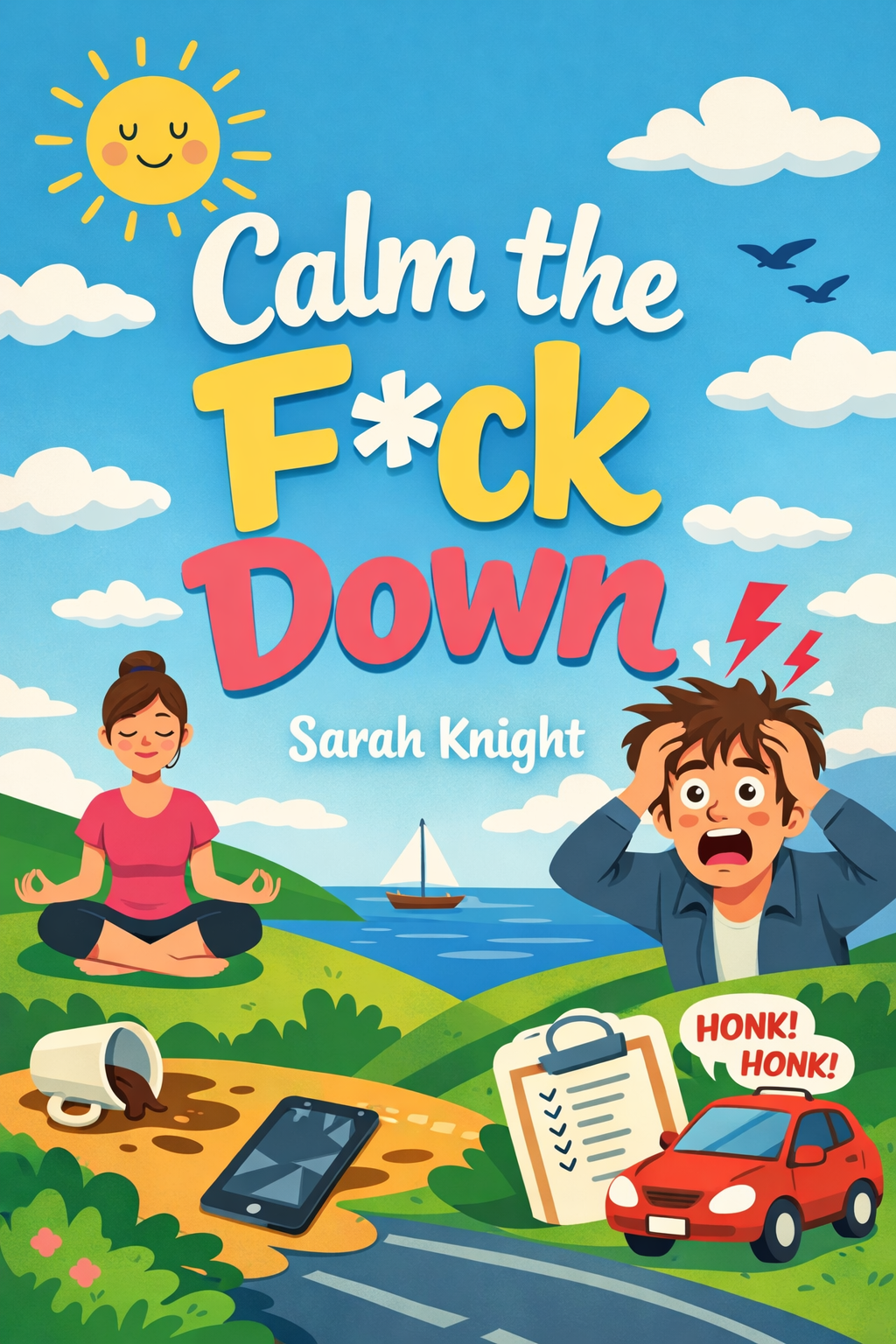
In a world that feels increasingly frantic and demanding, the relentless chatter of worry can become a deafening internal noise. This book serves as a blunt, compassionate, and immensely practical intervention for the anxious mind. It cuts through the fluffy self-help jargon to address the core issue: your brain’s alarm system is stuck in overdrive, and it’s time to manually reset it. The approach is not about achieving a state of perpetual zen or eliminating stress entirely—an impossible goal—but about changing your relationship with your anxious thoughts. It’s about moving from being controlled by your fear to becoming a curious, sometimes amused, observer of it.
The foundation lies in understanding anxiety for what it truly is: a misfire of your body’s ancient survival mechanism. Your brain, designed to protect you from immediate physical threats like predators, now interprets emails, social obligations, and existential uncertainties with the same primal urgency. The book guides you to recognize the physical and cognitive signatures of this false alarm—the racing heart, the tight chest, the spiral of catastrophic “what if” scenarios. This act of recognition is the first and most crucial step toward disempowering the anxiety. By naming it, you begin to separate your core self from the temporary storm of symptoms.
From this place of understanding, the guide dives into a toolkit of actionable, grounded strategies. A central theme is the concept of “present-moment anchoring.” When anxiety pulls you into a terrifying future or a regretful past, the simplest yet most powerful antidote is to firmly plant your awareness in the immediate now. This isn’t about complex meditation, but about using your five senses as lifelines: noting five things you can see, four you can touch, three you can hear, two you can smell, one you can taste. It forcibly drags your brain out of its abstract panic and into the tangible, often benign, reality of your current surroundings.
The book also tackles the pervasive habit of catastrophic thinking—the mind’s tendency to leap from a minor concern to a life-ruining conclusion. It offers cognitive techniques to challenge these distorted thoughts, not with naive positivity, but with a forensic, almost sarcastic curiosity. You learn to ask your anxiety questions: “What’s the actual evidence for this thought?” “Is this truly a life-or-death situation, or is it merely uncomfortable?” “What’s a more realistic, less terrifying story?” By interrogating your worries, you rob them of their assumed truth and see them for the often-ridiculous fabrications they are.
Another critical area is the cultivation of self-compassion, framed here not as self-indulgence but as a necessary survival skill. Anxious minds are often cruel inner critics, berating themselves for feeling anxious in the first place. The guide encourages you to treat yourself with the same basic kindness you would offer a frightened friend. This involves acknowledging the pain without judgment, speaking to yourself gently, and understanding that struggling does not equate to failing. This shift from self-flagellation to self-support creates a safer internal environment, making it harder for anxiety to take root.
Practical lifestyle adjustments are presented not as cure-alls but as essential supports for a less reactive nervous system. The book discusses the non-negotiable role of sleep, nutrition, and movement, explaining how deficits in these areas directly fuel anxiety’s fire. It advocates for setting ruthless boundaries—with your time, your energy, and the demands of others—to create psychological space. Furthermore, it normalizes the need for professional help, framing therapy or medication not as a last resort for the broken, but as a smart tool for the overwhelmed, much like hiring a guide for a treacherous hike.
Ultimately, the message is one of empowerment and gritty realism. Calm is not a passive state you stumble into; it’s a daily practice you choose, often moment by moment. It’s about accepting that anxiety may be a lifelong passenger, but refusing to let it grab the steering wheel. The book’s blunt tone is its greatest strength, acting as the wake-up call and the steadying hand on the shoulder. It assures you that you are not broken, your feelings are valid but not always truthful, and that with a set of simple, practiced tools, you can build a life that is not dictated by fear, but defined by your own choices and values. You learn to calm down not by fighting the storm, but by learning to stand steady within it.