Description
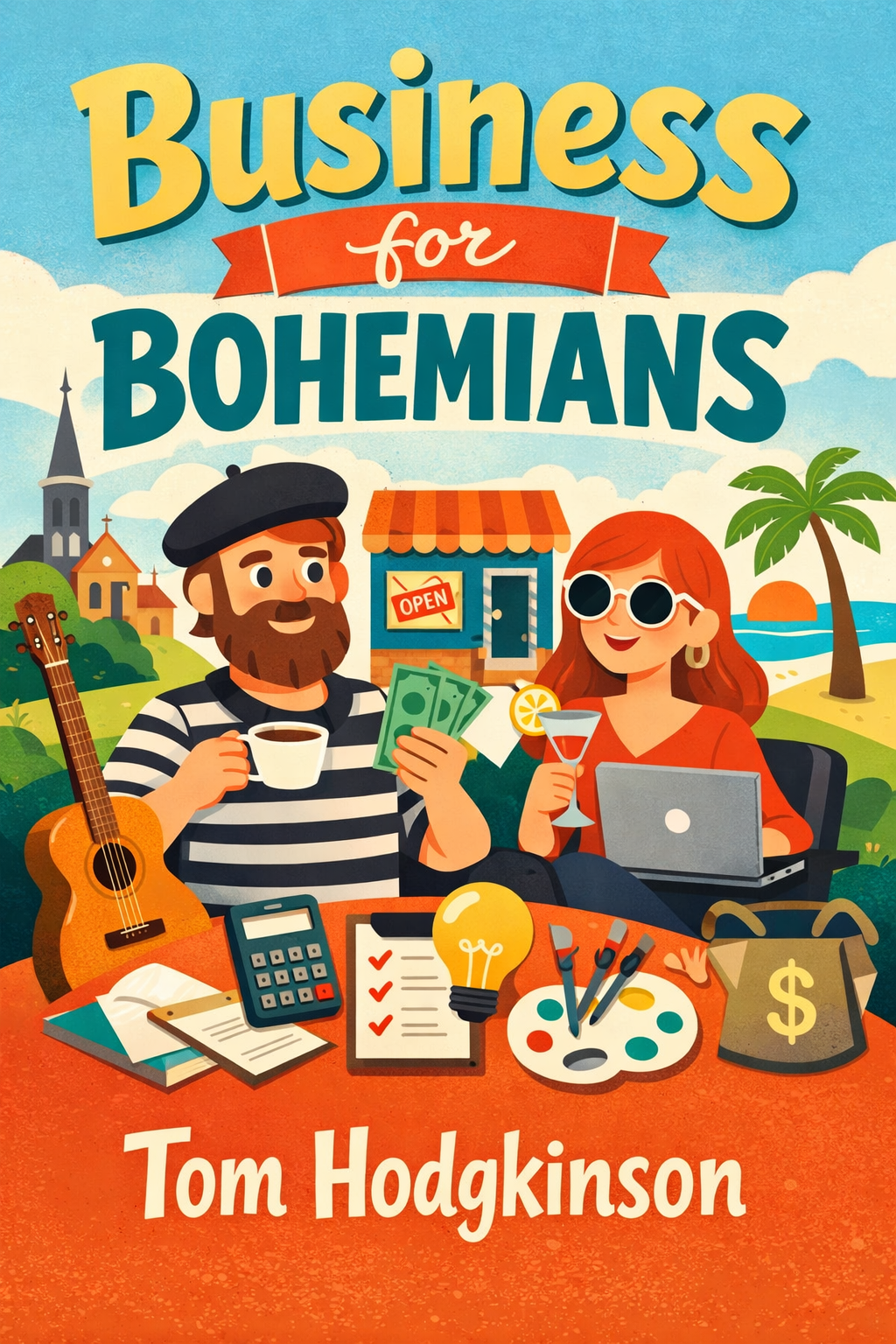
The romantic image of the bohemian—the artist in a garret, the philosopher in the café—often clashes with the practical demands of earning a living. This creates a false choice: either sacrifice your creative freedom for a conventional job or embrace poverty in the name of art. This book proposes a liberating third path: building your own business as the ultimate act of bohemian self-determination. Far from being a betrayal of your values, a thoughtfully crafted enterprise can become the very engine that funds your freedom, allowing you to live on your own terms while making a meaningful contribution.
At its heart, the argument is that for the free-spirited individual, entrepreneurship is a more authentic route to autonomy than traditional employment. A job, no matter how well-paid, inherently involves trading your time and labor under someone else’s direction—a form of “luxurious servitude” that stifles the independent spirit. Starting your own venture, whether as a freelancer, shopkeeper, or founder, reclaims that authority. You decide what you create, how you work, and who you work with. This isn’t merely a bourgeois pursuit of profit; it’s an anarchistic, revolutionary act of building your own world instead of inhabiting someone else’s. It turns the yearning for freedom into a tangible reality.
Crucially, your business can and should be a reflection of your personal ethos. The goal isn’t necessarily to build a corporate empire—in fact, that vision might be your nightmare. Instead, consider the “lifestyle business,” a small-scale, sustainable operation designed to generate enough income and free time to support your version of the good life. This could be a boutique, a consultancy, a studio, or a cozy café. Alternatively, you might have a larger mission that requires scaling up, but this growth can be intentional and values-led. The aim is to build a platform that amplifies your message or craft, perhaps involving a small core team and a network of collaborators, all aligned with a purpose beyond mere profit. The enterprise becomes an extension of your creativity, not its opposite.
However, the journey is not a simple escape from drudgery into perpetual leisure. The freedom of being your own boss comes with a daunting array of responsibilities. Customers must be served, finances managed, logistics handled, and a thousand daily details—from stocking inventory to cleaning bathrooms—must be addressed. Underestimating this relentless operational reality is a common pitfall. The romantic vision of serving coffee while discussing poetry can quickly devolve into a stressful scramble over milk alternatives and negative margins. The business, if not managed, will consume all the time and energy you hoped to liberate.
This is where a seemingly un-bohemian concept becomes essential: embracing traditional business practices. The instinct to “wing it” and reject conventional structures is strong, but it is a shortcut to chaos. Established practices for hiring, management, planning, and accounting are not corporate shackles; they are time-tested tools for creating order and efficiency. Implementing clear job descriptions, conducting proper interviews, and maintaining basic financial systems aren’t betrayals of your spirit—they are the very foundations that prevent you from spending your days putting out preventable fires. They create the structured space in which your bohemian freedom can actually flourish. Discipline in service of your enterprise is what protects your time for art, philosophy, and merriment.
Two of the most critical tools in this regard are the business plan and a robust accounting system. To the creative mind, these may sound like tedious constraints. In reality, they are sources of clarity and liberation. A business plan is not a rigid, unchangeable contract but a living document that forces you to think through your vision, your market, your operations, and your finances. It answers fundamental questions: Who are you serving? How will you reach them? What does success look like? This process illuminates the path ahead, revealing potential pitfalls and opportunities you might otherwise miss in a cloud of inspiration.
Similarly, accounting is the sobering lens of truth for your venture. It moves you from vague feelings about how things are going to precise, actionable knowledge. A proper system tells you exactly where your money comes from, where it goes, what is profitable, and what is draining your resources. It informs crucial decisions, from pricing your services appropriately to understanding when you can invest in a new project. Without this financial clarity, you are navigating in the dark, vulnerable to the quiet crisis of underpricing your work or the sudden shock of a cash shortfall. Knowing your numbers is the difference between building a sustainable dream and presiding over a beautiful, failing experiment.
This financial wisdom leads directly to two pivotal decisions: pricing and funding. There is a natural, often self-defeating, tendency for creatives to undervalue their work, setting prices based on insecurity or a desire to be liked rather than on value and costs. Charging too little erodes your profits, burns you out, and ultimately undermines the viability of the very freedom you seek. Setting fair, confident prices is an act of self-respect and a cornerstone of a healthy business. Likewise, choosing where to get funding requires careful thought. Taking on debt or investors brings external pressures and obligations. Whenever possible, growing organically from your own profits allows you to retain control and stay true to your original vision, preserving the independence that was your goal from the start.
The path of the bohemian entrepreneur is therefore a marathon, not a sprint. It demands resilience, patience, and a stubborn commitment to your vision. There will be difficult days, slow sales, and frustrating setbacks. The key is to persist with adaptability, learning from mistakes and refining your approach. Yet, this perseverance must be balanced with clear-eyed realism. Sometimes, the noble act is not to stubbornly continue, but to consciously quit a venture that no longer serves your life or values, freeing yourself to begin anew. Whether you persist or pivot, the ultimate aim remains the same: to craft a life of authentic freedom, where your work and your spirit are in harmonious, sustainable alignment.