Description
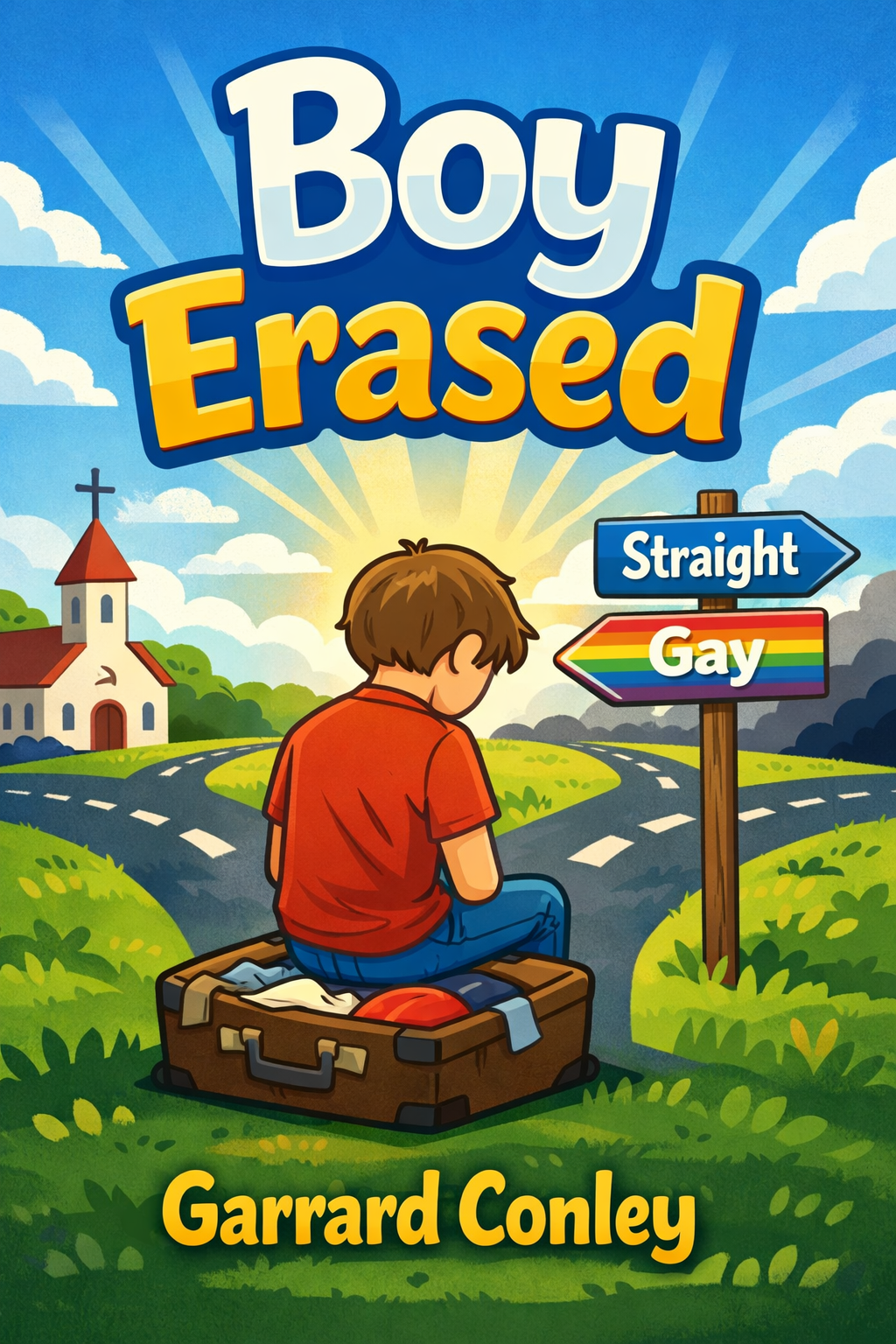
Boy Erased is the true story of Garrard Conley, a young man growing up in a conservative, deeply religious family in the American South. His father was a Baptist preacher, his mother a loyal churchgoer, and his small community was filled with traditional values and strict beliefs. From the start, Garrard felt pressure to live up to expectations he could never fully meet. While many young people enjoy freedom to explore who they are, Garrard’s path was shaped by fear, secrecy, and the constant worry of being discovered as different.
As a teenager, Garrard realized that he was gay. But in his world, being gay was described as sinful, dangerous, and shameful. In church sermons and family conversations, he often heard that homosexuality led only to misery, disease, and eternal punishment. These messages filled him with guilt and fear, even before anyone else knew about his sexuality. He carried a heavy secret, worried that revealing his true self would cost him the love of his family and his place in his community.
His worst fears came true during his first year at college. A fellow student, whom Garrard thought he could trust, raped him. This traumatic event was painful enough, but the attacker also exposed Garrard’s sexuality to his parents. Shocked and devastated, his mother pulled him out of school, while his father confronted him with an ultimatum: change, or lose their support completely. In his parents’ eyes, the only solution was a Christian program that claimed to “fix” homosexuality.
That program was called Love in Action, one of many groups at the time promoting so-called “conversion therapy.” The idea was simple but cruel: they treated being gay like a disease or an addiction that could be cured. The program operated like a strict rehabilitation center, filled with rigid rules and daily exercises designed to break down the participants’ identities.
When Garrard entered Love in Action at 19 years old, he was told to surrender anything that expressed his individuality. Clothes, jewelry, books, and even music could be judged as “sinful” or “false images.” A simple notebook of stories he had written was confiscated, because creative expression was seen as suspicious or too feminine. Anything outside the Bible and the program’s handbook was forbidden. Even normal interests like classical music or fantasy games were banned. The goal was to strip participants of any personal identity, leaving only what the program defined as “acceptable.”
The treatment followed a strict system, similar to addiction recovery programs. Participants had to confess their “sins,” write down past sexual thoughts, and share them in group sessions. They were told their attraction to the same sex was no different from alcoholism, drug abuse, or even criminal behavior. They had to admit that the devil had influenced their lives, and only by turning fully to God and rejecting their desires could they hope for salvation. Every night, Garrard was required to reflect on moments of temptation and present them the next day, opening himself up to public shame and judgment.
Behind these rules lay a culture of fear. Most of the people in the program came from the Bible Belt, where religion was not just personal faith but a force shaping every aspect of life. Many participants had been forced there by parents, threatened with homelessness, or cut off from their families unless they agreed to attend. Some were minors, unable to refuse. Others had so deeply absorbed the hatred they heard about gay people that they genuinely believed they were broken and needed fixing.
But instead of healing, the program inflicted deeper wounds. Vulnerable young people who had already suffered bullying, rejection, or violence were pushed to blame themselves for simply existing. Instead of support, they were taught shame. Some were told it would be better to die than live openly as gay. Stories spread of participants who took their own lives after leaving, unable to reconcile what they had been told with who they really were.
For Garrard, the pressure was unbearable. Already traumatized from his assault and the betrayal of his attacker, he now had to endure an environment where his most personal pain was treated as evidence of sin. The leaders of the program claimed to know why he was gay: he hadn’t played enough sports as a boy, he lacked healthy male bonding, or he had been influenced by Satan. None of this rang true, but resisting meant risking his family’s support.
After two weeks, Garrard realized he could not go on. The program was pushing him toward despair, not healing. He left, despite his parents’ disapproval, choosing survival over complete erasure of himself.
Although the program and its larger umbrella organization, Exodus International, eventually shut down, the scars of those years remained. Garrard struggled for a long time with intimacy, trust, and even faith. The God he had once believed in had been used as a weapon against him, and it took years before he could imagine a spiritual life that did not condemn him. His relationship with his mother improved with time, as she came to regret her role in sending him to the program. But his bond with his father stayed distant and cold, reduced to short, emotionless exchanges.
The story of Boy Erased is not only about Garrard but also about a generation of young people harmed by conversion therapy. It reveals how deeply prejudice can wound, especially when reinforced by family, faith, and community. It shows the emotional cost of being told that your true self is unacceptable, and the lasting damage that forced “treatments” can inflict.
Yet, the book is also a testament to resilience. By telling his story, Garrard gives voice to countless others who went through similar experiences but never spoke out. He shows that survival is possible, even after rejection and trauma, and that self-acceptance is ultimately stronger than fear.
In the end, Boy Erased is both heartbreaking and hopeful. It is a warning about the dangers of trying to change people’s identities, but also a reminder of the courage it takes to be honest about who you are.