Description
In the global imagination, technological advancement is often pictured as gleaming devices emerging from sterile labs in Silicon Valley or Seoul. *Blockchain Chicken Farm* invites us to look elsewhere, to the villages and fields of rural China, where the digital future is being forged in unexpected, pragmatic, and deeply human ways. This exploration moves beyond the skylines of megacities to understand a country where the ancient rhythms of agricultural life are colliding with artificial intelligence, blockchain ledgers, and e-commerce platforms. It is here, in the interplay between the urban and the rural, that a complex portrait of modern China comes into focus, one where tradition is not discarded but wired into new systems.
The relationship between China’s cities and its vast countryside is fundamental, a dynamic dance of migration and mutual dependence. Each year, the Spring Festival sees hundreds of millions of urban workers reverse this flow, returning to their ancestral villages in one of the largest human migrations on Earth. These rural areas are not merely nostalgic backwaters; they have long been engines of economic adaptation and resilience. From the small-scale factories of the past to today’s digital marketplaces, the countryside has consistently absorbed and redirected national ambitions. Today, government policy actively seeks to bridge the digital divide, pouring infrastructure into remote regions with the goal of creating a unified, technologically-enabled nation where data and goods flow as freely as people.
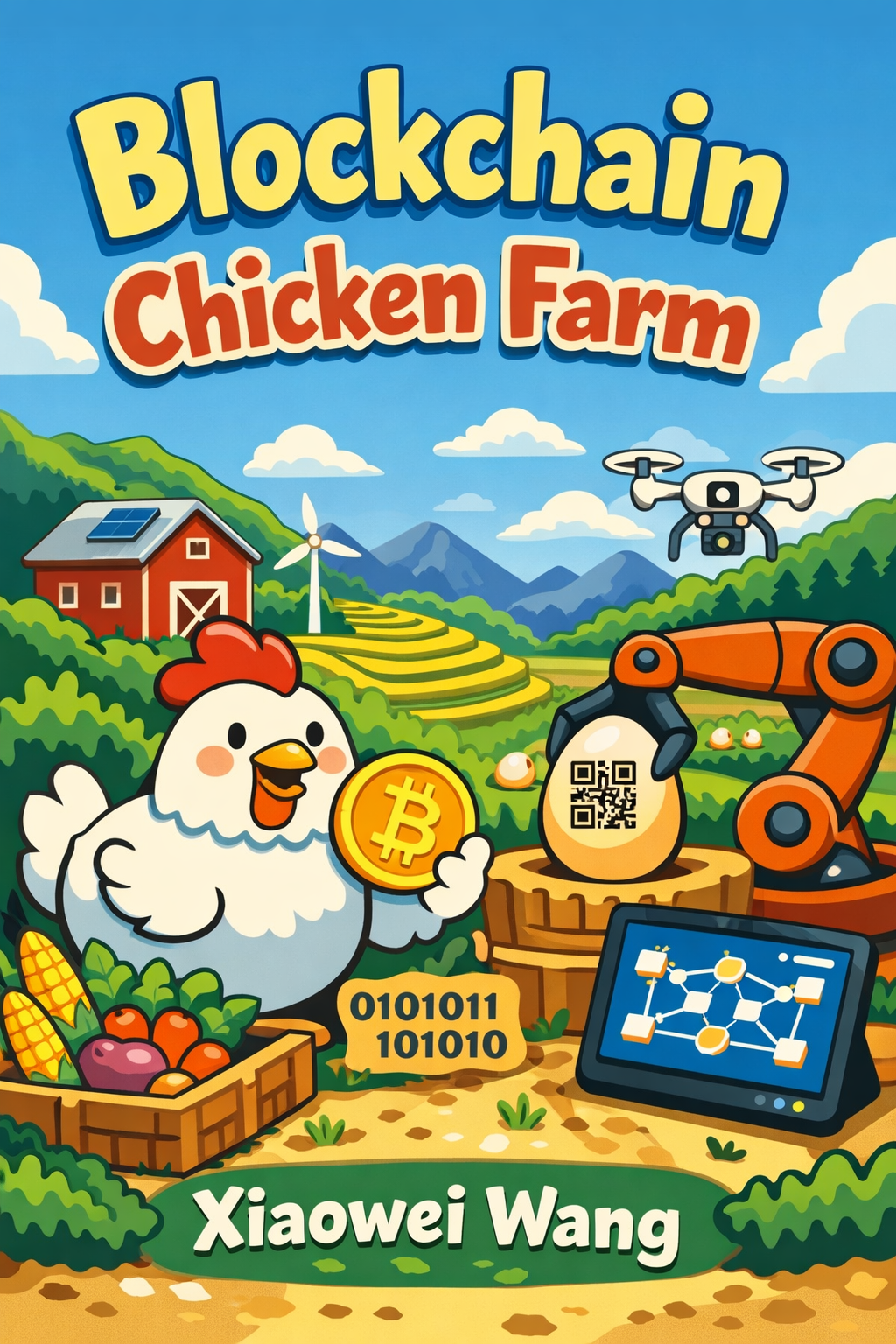
This technological integration is tackling some of China’s most pressing challenges, such as food safety. In a nation historically scarred by contamination scandals, trust is a commodity as valuable as the food itself. Enter the blockchain chicken farm of the book’s title, located in a poor mountainous region. Here, free-range poultry are fitted with sensors, their every movement and meal recorded on an immutable digital ledger. Wealthy urban consumers can scan a code on their packaged chicken and trace its entire life story, from hatchling to dinner plate. This is not just a marketing gimmick but a profound attempt to use technology to rebuild trust in a decentralized and often opaque food system. It represents a fusion of premium, traditional farming with cutting-edge verification, a solution born of specific local pressures.
Education, too, is being transformed by digital connectivity, offering new lifelines to rural youth. The story of a young man from Anhui province illustrates this shift. With only a vocational high school background, he used online forums and courses to teach himself to pilot drones, eventually finding skilled work in the emerging field of precision agriculture. Companies now train rural residents to operate drones that map fields and deliver targeted pesticides, providing income and technical careers that were previously unimaginable. Meanwhile, experiments in livestreaming classes from elite urban high schools to remote classrooms show both the promise and the pitfalls of digital education, offering a tantalizing glimpse of opportunity while highlighting the deep structural divides that remain.
When it comes to innovation itself, China often defies Western narratives. The concept of *shanzhai*—once a derogatory term for pirated goods—is re-examined as a culture of adaptive, grassroots engineering. In sprawling electronics markets, you find not just counterfeit phones but a vibrant ecosystem of tinkerers who deconstruct, remix, and improve upon existing technology. This culture of open modification and DIY repair fosters a unique kind of innovation, one that prioritizes accessibility, modularity, and rapid iteration over proprietary secrecy. It is a testament to a pragmatic approach where sharing and tweaking ideas can lead to a stunning diversity of new tools and devices, from modular smartphones to custom 3D printers.
This rapid digitization of everyday life inevitably intersects with the state’s capacity for surveillance. The implementation of a vast “Social Credit” system and the proliferation of facial recognition technology present a dual reality. In practical terms, these tools can streamline services, manage crowds, and even help locate missing children. For many citizens, they represent convenience and order. Yet, this infrastructure also enables unprecedented social control, raising profound ethical questions about privacy, autonomy, and the boundaries of state power. The book navigates this tension without easy judgment, presenting a system that is simultaneously a practical governance tool and an architecture of potential oppression.
Perhaps the most visible transformation is in commerce, where e-platforms have woven remote villages directly into the global economy. A single rural entrepreneur can now livestream sell local handicrafts or specialty foods to millions of urban consumers, bypassing traditional distribution chains entirely. Villages can specialize, becoming hubs for specific goods, from knitted sweaters to antique furniture replicas. This digital connectivity empowers individuals and communities, generating new wealth and preserving local crafts. Yet, it also binds them to the volatile rhythms and demands of the global market, creating new dependencies and pressures.
Underlying all these technological shifts is the human experience, particularly for China’s youth. They navigate a world of dizzying opportunity alongside intense anxiety, caught between the ambitions fostered by a booming economy and the pressures of hyper-competition, social scrutiny, and environmental uncertainty. Their cultural expressions, memes, and online behaviors—like the subversive, smoking Peppa Pig that became an unlikely symbol of rebellion—reveal a generation grappling with these contradictions, using humor and digital fluency to carve out space for individuality.
Ultimately, *Blockchain Chicken Farm* argues that to understand the future, we must look to places where that future is being lived and built in real time, often in response to immediate, local needs. China’s journey shows that technological advancement is not a linear path toward a single, universal model. It is a messy, creative, and deeply contextual process, where blockchain can verify a chicken’s diet, drones can empower a farmer, and an online livestream can sustain a village. The book leaves us with a nuanced vision of a world where the digital and the physical, the urban and the rural, the innovative and the traditional, are forever intertwined, reshaping each other in profound and ongoing ways.