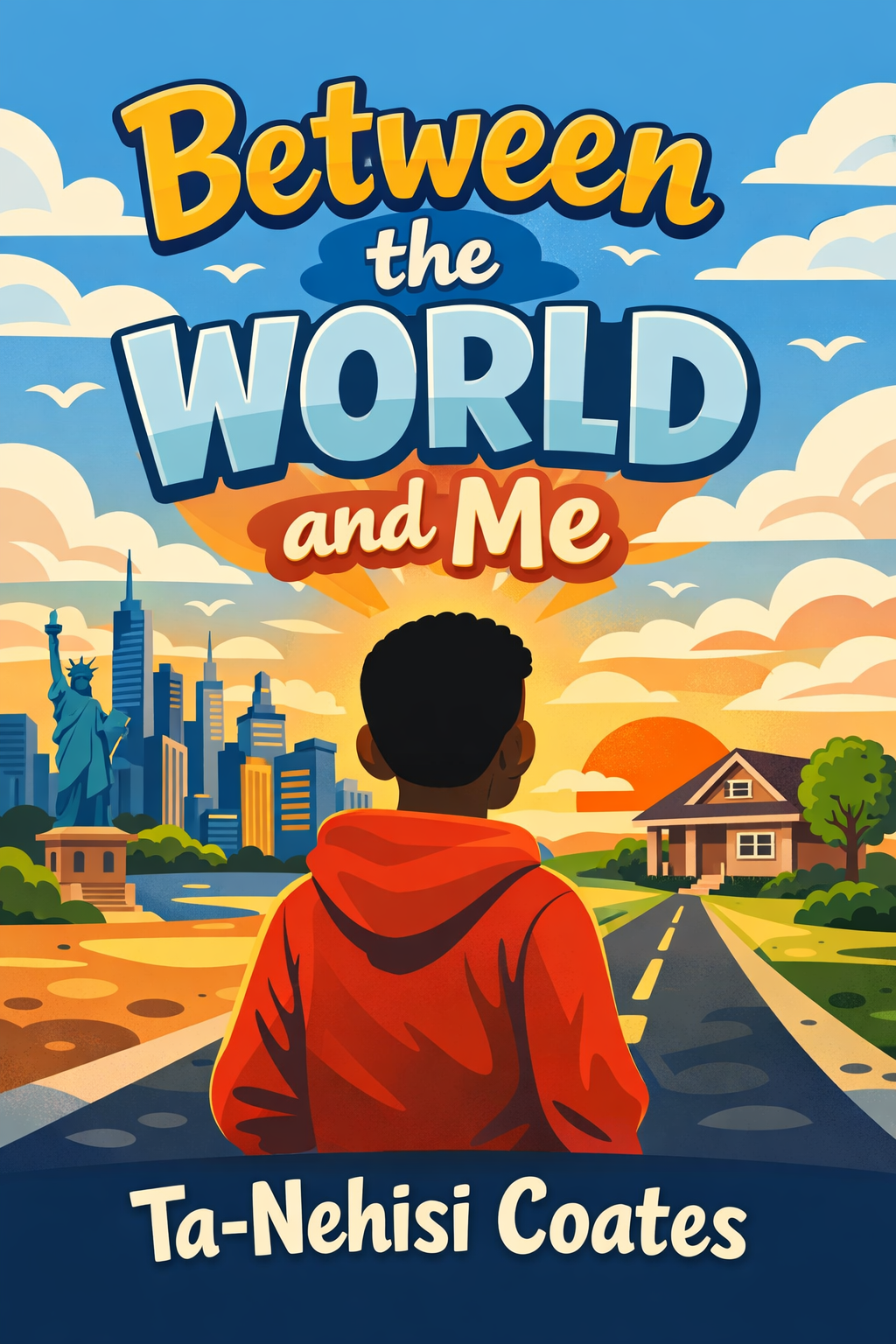
Description
Between the World and Me is a profound and intimate work, structured as a letter from the author to his adolescent son. It grapples with the inescapable realities of being black in America, framed not as a sociological treatise but as a deeply personal transmission of lived experience, fear, and hard-won understanding. The narrative moves fluidly between the author’s own coming-of-age in the tough streets of Baltimore, his intellectual awakening at Howard University—which he calls “The Mecca”—and the contemporary tragedies of police violence that have claimed black lives, including a friend from college. This is not a story of hope in a conventional sense, but a stark examination of the structures—the Dream, as he terms it—built upon the subjugation of black bodies.
The author recounts his childhood, governed by a code of the streets and a constant, simmering fear. He describes the rules for survival, the necessity of projecting a certain toughness to navigate a world where his body was always perceived as a threat. This fear was not abstract; it was a physical, daily consciousness. School offered little refuge, often feeling like a training in compliance rather than an avenue of liberation. His salvation came through discovery—the discovery of black history, literature, and art at Howard University. There, he encountered a vast tapestry of black life and intellect that shattered monolithic stereotypes and revealed the true depth and diversity of his heritage. This period was a reclamation of his own mind.
Central to the work is the concept of “the Dream”—the author’s term for the comforting, willful narrative of American innocence and prosperity, which is sustained by ignoring the brutal history of plunder and violence against black people. He argues that this Dream requires the segregation of its dreamers from the harsh realities imposed upon others. The “people who believe they are white,” as he carefully phrases it, are invested in this Dream, and the system protects their belief at all costs. The black body, therefore, exists in a precarious state, vulnerable to destruction to maintain the Dream’s sanctity. This is presented not as metaphor but as historical and present-day fact, illustrated by the visceral grief he feels upon learning of his friend’s death at the hands of a police officer.
The author wrestles with the question of how to live within this reality. He rejects facile optimism and easy answers, instead embracing a struggle defined by questioning and a relentless search for truth. He finds a form of resilience not in the promise of eventual acceptance into the Dream, but in the rich, complex culture of black America itself—in its music, its scholarship, its communities, and its enduring will to create beauty in a hostile world. The letter to his son is ultimately about arming him with this unflinching knowledge, not to crush his spirit, but to make him see clearly. It is about teaching him to protect his body while freeing his mind, to live with the tension of loving a country that does not love him back in the same way, and to find his own meaning and dignity within the struggle.
The prose is lyrical, philosophical, and often devastatingly direct. It blends memoir, history, and critical analysis into a singular, powerful stream of consciousness. There is anger here, but it is a refined, crystalline anger, channeled into precise dissection. There is also immense love—for his son, for his family, for his people. This love is what fuels the urgency of the message. The book does not aim to provide comfort to the reader; it aims to disrupt comfort, to force a confrontation with a national mythology that has caused profound damage. It is a testament to the weight of history carried in the everyday life of a black family and a guide to navigating a world where that history is constantly, and sometimes fatally, present.