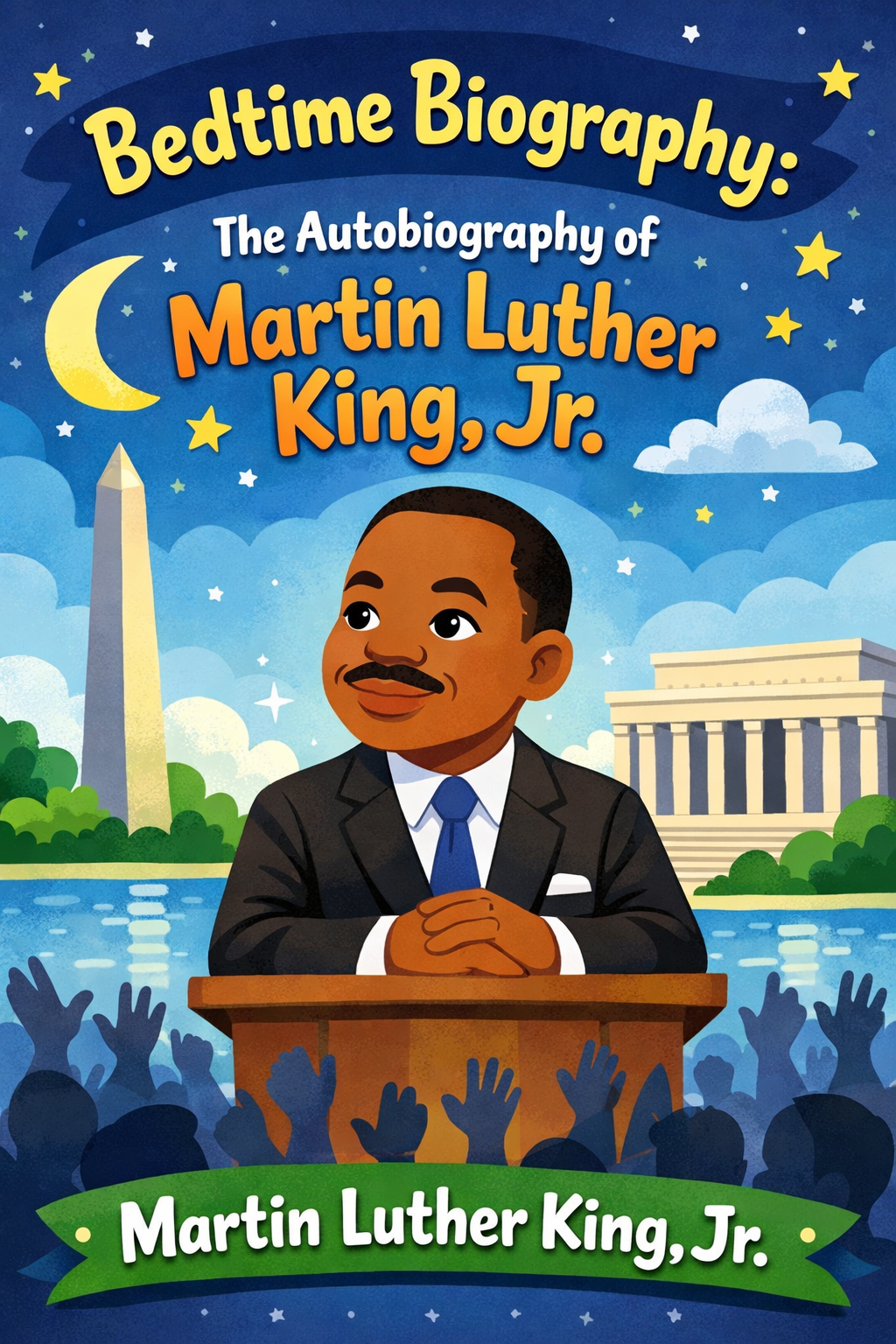
Description
From the earliest moments of his life in the segregated South to the world-changing stages of the Montgomery Bus Boycott and the March on Washington, this narrative weaves together Martin Luther King Jr.’s own reflections, sermons, and letters. It is not merely a chronicle of events, but an intimate exploration of the inner life of a man thrust into history. The story begins in the warm, nurturing environment of his family home in Atlanta, where the young “M.L.” first encountered both the deep faith of the Black church and the harsh, humiliating reality of Jim Crow laws. These twin forces—a profound belief in a loving God and a direct experience of systemic hatred—would become the crucible in which his worldview was formed.
The narrative follows his intellectual and spiritual development, detailing his years at Morehouse College, Crozer Theological Seminary, and Boston University. Here, he grappled with the teachings of Gandhi, Thoreau, and the Social Gospel, slowly synthesizing a personal philosophy that married Christian love with a powerful, disciplined method of social protest: nonviolent resistance. This was not passive acceptance, but active, soul-force confrontation designed to expose the moral bankruptcy of segregation. The book vividly recounts the sudden, unexpected call to leadership in Montgomery, Alabama, after Rosa Parks’ arrest. King describes the fear and doubt he felt, the weight of responsibility for a community’s hope, and the transformative moment when, in his kitchen late one night, he felt the presence of God, cementing his resolve to continue no matter the personal cost.
Through his words, we experience the strategic brilliance and immense physical and emotional toll of the campaigns that followed. The patient, painful organizing of the boycott, the searing violence of mobs in Birmingham and Selma, the haunting sound of bombs exploding at his home, and the constant, grinding pressure of threats against his life and family are rendered with palpable immediacy. He does not shy away from depicting the moments of deep despair, such as during the Albany Movement, which he considered a failure that taught crucial lessons about focus and confrontation. The book also illuminates the evolution of his mission, expanding from desegregation in the South to a national fight against economic injustice and the moral catastrophe of the Vietnam War, positions that drew criticism from allies and enemies alike.
Central to the narrative is King’s recurring meditation on the concept of *agape*—selfless, redemptive love for all humanity, including the oppressor. He argues this is the fuel for nonviolence, the only force capable of breaking the chain of hatred without creating new bitterness. We see this philosophy tested in the most extreme circumstances, as when he forgave the woman who stabbed him, or pleaded for nonviolence in the wake of his own home being bombed. The book gives full voice to his famous speeches and writings, from the “Letter from Birmingham Jail,” a masterful defense of moral urgency against the counsel of patience, to the transcendent “I Have a Dream” address, revealing the careful thought and deep wells of faith from which they sprang.
The concluding sections carry a tone of sober reflection and urgent prophecy. Exhausted and increasingly aware of his mortality, King speaks with piercing clarity about the “giant triplets of racism, extreme materialism, and militarism” threatening the soul of the nation. His final campaign in Memphis, in support of striking sanitation workers, underscores his unwavering commitment to economic dignity. The account does not detail his assassination, but ends with his eyes fixed on the mountaintop, his vision rooted in a hope that was, as he often said, “not a preference but a demand of the universe.” The autobiography ultimately presents King not as a marble monument, but as a thoughtful, weary, yet relentlessly hopeful human being who answered a call, guided by faith and reason, to challenge a nation to live up to its own founding creed. It is the story of how a man, and the movement he helped lead, sought to bend the arc of the moral universe toward justice.