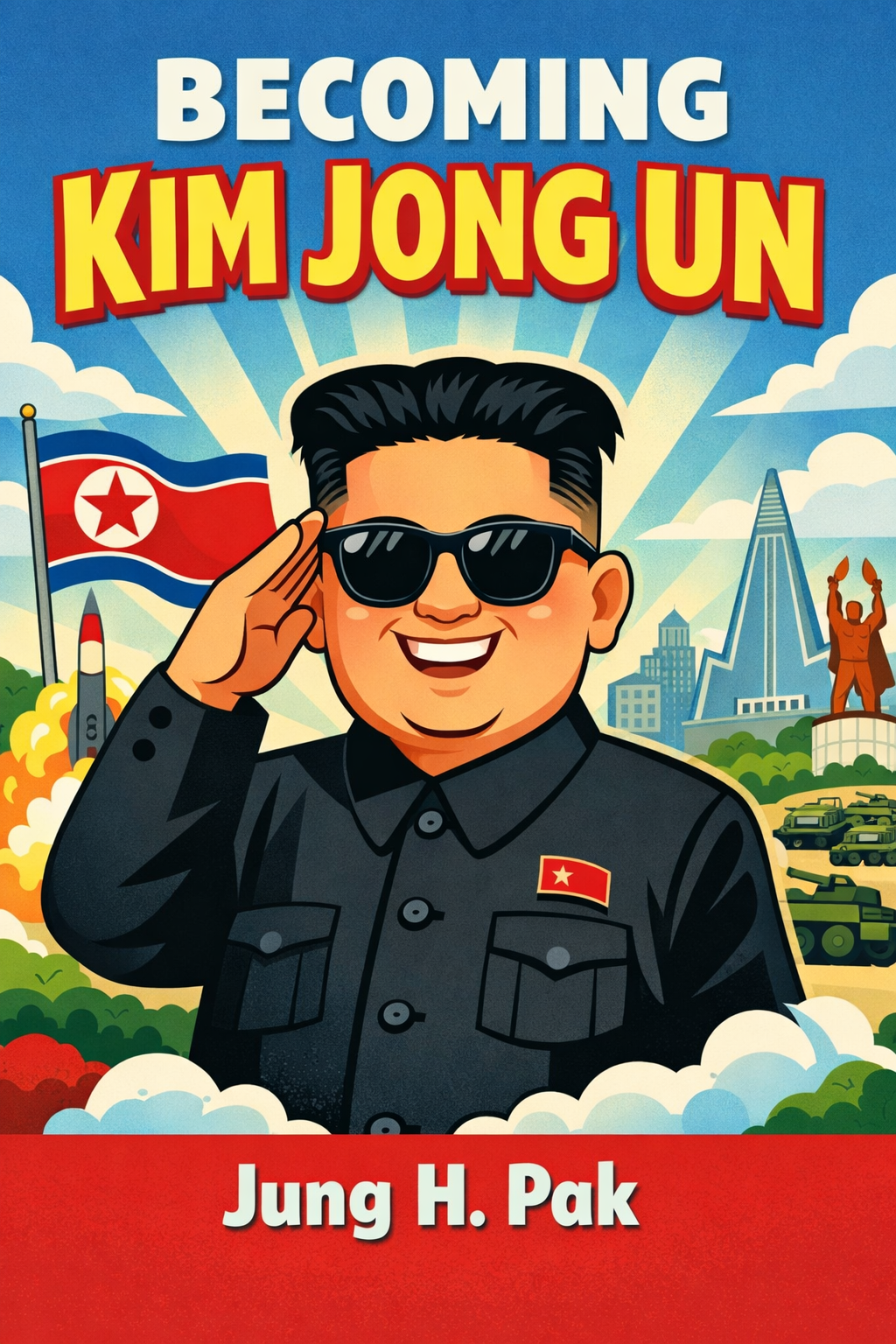
Description
The ascent of Kim Jong Un to the leadership of North Korea was not merely a dynastic handover but the careful cultivation of a new kind of dictator. Born into immense privilege as the grandson of the nation’s founding mythmaker, Kim Il Sung, and the son of the reclusive Kim Jong Il, his early life was shrouded in secrecy and speculation. His education in Europe, far from the rigid control of Pyongyang, provided a window to the outside world that would later inform both his ambitions and his paranoia. The question of why he was chosen over his older brothers remains partly unanswered, but hints point to a perceived toughness and a willingness to uphold the family’s revolutionary legacy without the reformist tendencies that disqualified his siblings. From the moment of his political debut, a young man in a general’s uniform at a military parade, it was clear a new era was beginning—one that would blend the old doctrines of absolute control with startlingly modern methods of power.
Upon his father’s death in 2011, Kim Jong Un moved with startling speed and ruthlessness to secure his position. He systematically purged potential rivals, including his own uncle and half-brother, sending a chilling message of zero tolerance for dissent. This internal consolidation was matched by an aggressive foreign policy centered on one overarching goal: the rapid and irreversible development of nuclear weapons and advanced cyber capabilities. For Kim, nuclear arms are not just deterrents but the ultimate currency of international respect and leverage. His strategy became a predictable yet effective cycle of provocative tests, followed by diplomatic overtures for concessions, and then further provocations, keeping the world off-balance. Simultaneously, he built a formidable cyber army, using it for everything from financial theft to punishing foreign entities, like the attack on Sony Pictures, demonstrating a willingness to project power far beyond his borders.
Domestically, Kim embarked on a ambitious project to rebrand North Korea. He promoted a policy of “byungjin,” or parallel development, promising his people both economic prosperity and nuclear might. The showcase for this is a dramatically renovated Pyongyang, a city of gleaming high-rises, amusement parks, and department stores—a “socialist fairyland” designed to project an image of modern success. This carefully crafted facade, however, masks a grim reality. Beyond the capital’s showcase districts, much of the country remains impoverished, reliant on foreign aid, and locked in a system of brutal repression. The state security apparatus is omnipresent, with a vast network of political prison camps where perceived enemies vanish. The regime controls all information, sealing the population off from the outside world while inundating them with propaganda that deifies the Kim family.
Kim Jong Un has also meticulously crafted his own personal image, departing from the reclusive style of his father. He presents himself as a man of the people, a jovial leader photographed at factories, sporting events, and riding roller coasters with his wife, a formerly unseen display of public familial normality. He engages in high-stakes summit diplomacy with world leaders, from South Korea to the United States, using these staged events to claim legitimacy and stature on the global stage. These performances are calculated to portray him as a reasonable, modern statesman, even as his government continues its oppressive practices. The summitry, while creating moments of dramatic headlines, has largely failed to achieve lasting denuclearization, instead allowing Kim to cement his regime’s status as a permanent nuclear power.
Ultimately, understanding Kim Jong Un requires seeing beyond the caricatures. He is a complex figure: a product of intense dynastic conditioning who is also a shrewd, adaptive strategist. He is a dictator who employs twenty-first-century tools—cyber warfare, media manipulation, and summit theatrics—to uphold a twentieth-century totalitarian system. His rule is defined by this contradiction: a push for visible economic progress and international engagement exists alongside an unshakable commitment to military-first politics and horrific human rights abuses. The future he is building is one where the Kim dynasty’s grip is strengthened through a potent mix of fear, manufactured consent, and the unassailable threat of the ultimate weapon. Dealing with this reality demands a clear-eyed recognition of his objectives and the oppressive system he sustains, moving beyond cycles of escalation and temporary diplomacy to a consistent, nuanced strategy that addresses both the threat he poses and the suffering of the people he rules.