Description
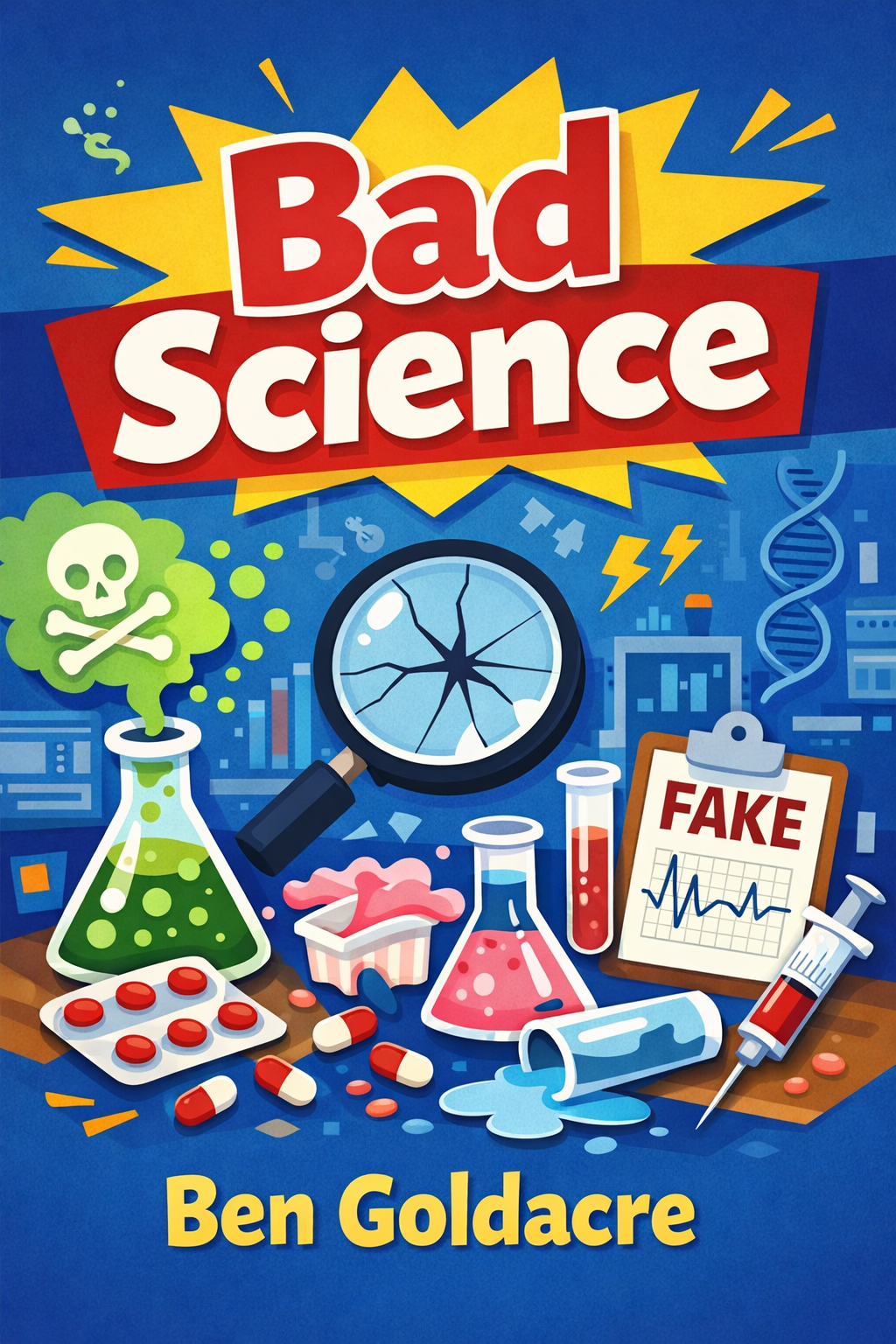
In a world saturated with claims of scientific breakthrough and miracle cures, it is increasingly difficult to separate genuine discovery from clever deception. This book serves as an essential field guide to navigating this confusing landscape, arming readers with the critical thinking tools needed to challenge authority and question sensational headlines. The journey begins in the marketplace, where the language of science is routinely hijacked to sell us hope in a jar. Advertisements for beauty creams boasting “DNA repair” or detox footbaths that promise to draw out toxins prey upon a public awe of scientific terminology, trusting that few will investigate the empty evidence behind the jargon. The brown water in the detox bath, for instance, is not bodily poison but simple rust from an electrode, a basic chemical reaction disguised as a biological purge. These industries flourish not because of complex science, but because of our willingness to outsource our skepticism to figures in white coats.
This exploitation extends far beyond cosmetics into the realm of nutrition and wellness, where self-styled experts often make bold, life-altering recommendations based on flimsy or distorted evidence. The case of multivitamins and their purported benefits reveals a pattern of overextrapolation, where a single, narrow laboratory finding is presented as a universal truth for human health. More dangerously, this distortion can have deadly consequences. The book details how fraudulent claims that vitamins could cure HIV influenced policy in South Africa, leading to the withholding of proven antiretroviral drugs and contributing to hundreds of thousands of preventable deaths. Here, bad science is not merely a consumer nuisance; it becomes a matter of life and death, revealing how charismatic figures can manipulate incomplete data to support dangerous agendas.
The problem is not confined to fringe practitioners. The very heart of modern medicine—the pharmaceutical industry—is also shown to have systemic flaws in how evidence is generated and shared. With the astronomical cost of drug development largely borne by private companies, there exists a powerful incentive to shape the narrative around a new treatment. This leads to publication bias, where studies with positive results are prominently published while those showing a drug is ineffective or harmful are buried. Sometimes, the same positive trial data is even repackaged and published multiple times to create an illusion of overwhelming consensus. Furthermore, known side effects can be downplayed or omitted from official literature, leaving doctors and patients in the dark about the full impact of a treatment. This commercial influence corrupts the pipeline of information, making it difficult for even medical professionals to access a complete, unbiased picture.
To understand what constitutes reliable evidence, we must first appreciate the mysterious power of the placebo effect. The simple act of believing we are receiving treatment can trigger real physiological improvements, a phenomenon influenced by everything from the color of a pill to the cost of the treatment. This effect is so potent that it forms the gold standard for testing new interventions: a treatment must prove itself more effective than a placebo. This standard exposes many alternative therapies, like homeopathy, which perform no better than a sugar pill in rigorous comparisons. Yet the placebo also raises profound ethical questions about deception in research, tragically highlighted by historical atrocities like the Tuskegee syphilis study, where the promise of treatment was used to deny care.
The integrity of any scientific finding hinges on the design of the study itself. Flaws in this design can render results meaningless or, worse, dangerously misleading. A cornerstone of good research is randomization—the fair assignment of participants to either a treatment or control group. However, if this process is opaque or manipulated, the trial can be biased from the start. A researcher, consciously or not, might steer patients with a poor prognosis away from the treatment group to improve the apparent success rate. Without clear and rigorous methodology, even a study published in a reputable journal can be little more than a dressed-up opinion.
Furthermore, the mathematical language of science—statistics—is itself a tool that can be wielded to confuse rather than clarify. Numbers can be cherry-picked, data massaged, and graphs drawn in misleading ways to support a predetermined conclusion. A classic example is the misuse of correlation to imply causation, such as suggesting that because two trends appear to rise together, one must cause the other. The book illustrates how flawed statistical reasoning has even led to wrongful convictions, showing that a poor grasp of probability can have devastating consequences far beyond academic journals.
Our vulnerability to bad science is compounded by innate cognitive biases. We are naturally drawn to information that confirms what we already believe and are quick to see patterns even in random noise. This makes us susceptible to compelling narratives from charismatic authorities, regardless of the strength of their evidence. The media, operating under pressure for clicks and headlines, often amplifies these weaknesses. Complex, nuanced research is stripped down to sensational, black-and-white headlines. Preliminary findings from small studies are presented as definitive truths, and scare stories about everyday risks are prioritized over calm, evidence-based reporting. This cycle creates a public misunderstanding of how science actually works—not as a source of immutable facts, but as a slow, self-correcting process of inquiry.
Ultimately, this book is a call to arms for intellectual self-defense. It argues that in an age of information overload, scientific literacy is not a luxury but a necessity for democratic participation. By understanding the common tricks of the trade—from flashy advertising to biased trials and sensational journalism—we can reclaim our autonomy. We learn to ask crucial questions: Who funded this research? Was the trial properly randomized and controlled? Does the evidence actually support the dramatic headline? Equipped with this mindset, we can better discern the genuine innovations that improve our world from the cheap imitations that seek to exploit our hopes and fears.