Description
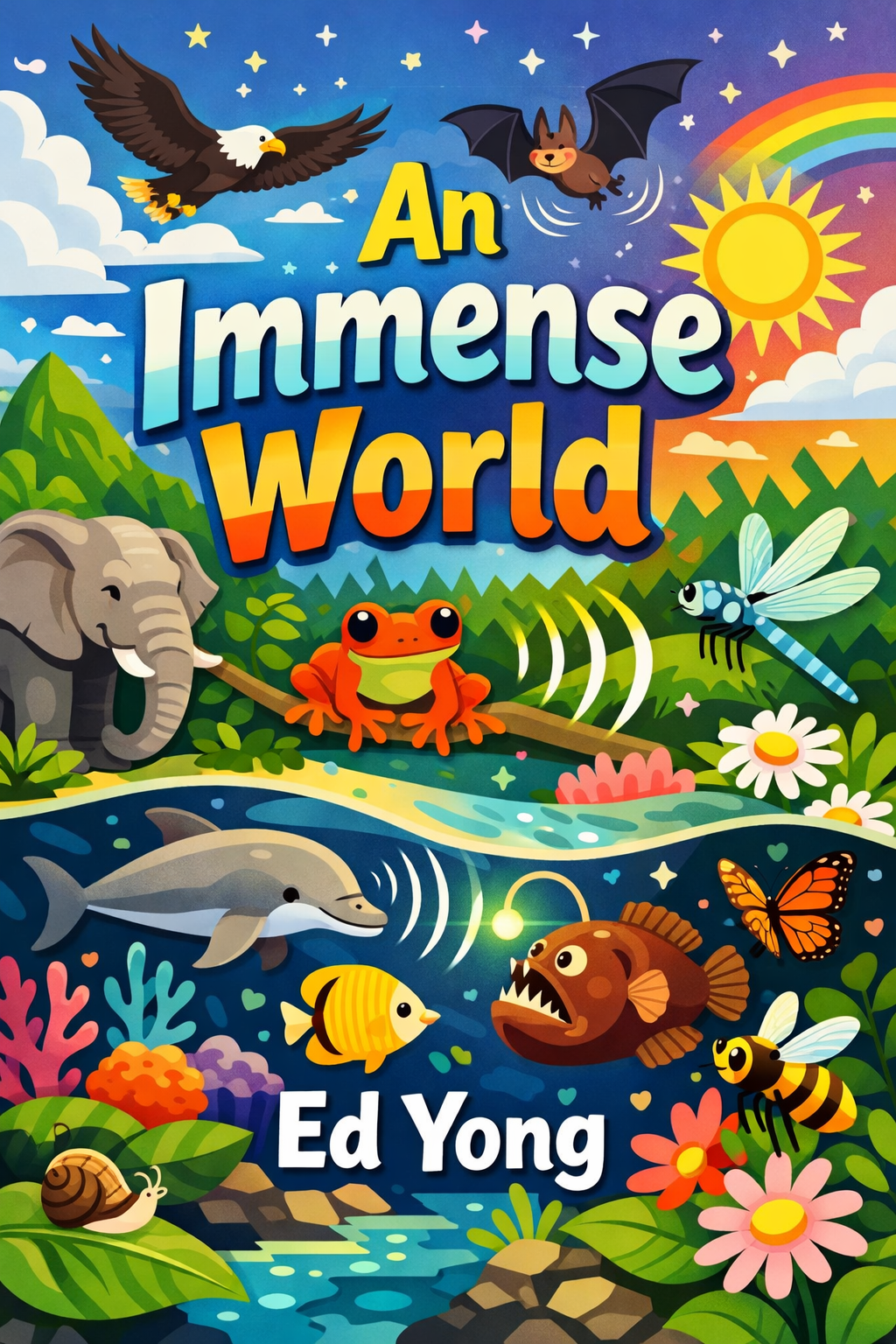
Our human experience is built upon a familiar set of five senses, a framework so ingrained we rarely question its limits. Yet, this framework is merely a narrow window onto a reality teeming with perceptions we can scarcely imagine. The animal kingdom lives in a vastly richer sensory universe, where the world is painted in colors we cannot see, mapped with sounds we cannot hear, and navigated by forces we cannot feel. This exploration invites us to step outside the “human bubble” and consider the multitude of ways life perceives its surroundings, challenging our very understanding of what it means to sense the world.
Consider vision, the sense upon which we so heavily rely. Human sight, with its three color cones, is sophisticated, but it is not the pinnacle. Many animals possess a visual spectrum far exceeding our own. Birds and insects see ultraviolet light, revealing patterns on flowers and feathers that are completely invisible to us, turning a simple meadow into a dazzling neon signboard. But sight is not the only way to build a picture of the world. Bats and dolphins use echolocation, painting their surroundings with precise clicks and interpreting the returning echoes. This sonar is so refined it allows a bat to pluck a fluttering moth from a pitch-black sky or a dolphin to identify a shape it has only ever “seen” through sound. Remarkably, this ability is not locked away in the animal kingdom. Humans like Daniel Kish, who lost his sight as an infant, have taught themselves to navigate using tongue clicks, perceiving the density and texture of objects in a blurry but functional form of echolocation, proving that our sensory potential can adapt in extraordinary ways.
The chemical senses of smell and taste weave a complex narrative of the world. For us, these senses are often secondary, but for many creatures, they are a primary language. Ants construct their entire social order on scent trails, using pheromones to coordinate raids, identify kin, and even care for intruders that smell like their own young. The scale of this perception is humbling; an ant’s world is a rich tapestry of chemical signals we are utterly blind to. Our own experience of flavor—a fusion of taste and smell—hints at this complexity. When a cold stifles our smell, food becomes bland, demonstrating how these senses are intertwined to create our subjective reality. For other animals, like sharks who can detect a single drop of blood in an Olympic-sized pool, the chemical landscape is not just informative, it is overwhelmingly vivid.
Touch, too, extends into realms we barely perceive. The star-nosed mole, a creature nearly blind, explores its tunnels with a fleshy, star-shaped nose that taps the ground dozens of times a second. This rapid-fire touch builds a detailed mental map, allowing it to identify and consume prey in a fraction of the time it takes a human to blink. Elsewhere, touch becomes a medium for communication. Crocodilians possess incredibly sensitive bumps on their jaws, feeling the faintest ripple from a struggling fish or the vibrational calls of a mate through the water. On land, tiny treehoppers send intricate messages by vibrating the stems they stand on, conducting conversations in a language of tremors that pass entirely beneath our notice.
Beyond these familiar senses lie perceptions that seem almost magical. Some beetles hunt forest fires from dozens of miles away using specialized organs that detect infrared radiation, seeking out smoldering trees to lay their eggs. Others navigate using the Earth’s magnetic field, a sense called magnetoreception. While birds famously use this internal compass for migration, sea turtles are born with a magnetic map imprinted, guiding them on their transoceanic journeys. Even more astonishing are the electric fields perceived by creatures like sharks and the weakly electric fish of the Amazon. These fish generate a personal electric field around their bodies; when another object distorts that field, they “see” its shape and location, navigating murky waters with a form of perception that is entirely alien to us.
Ultimately, this journey through sensory diversity is more than a catalog of biological curiosities. It is a profound lesson in humility and ecological connection. Every creature inhabits its own unique sensory bubble, its *umwelt*, perceiving only the slices of reality necessary for its survival. The bee sees the UV bullseye on the flower, the bat hears the shape of the tree, the turtle feels the pull of the magnetic field—all in the same physical space we occupy, yet in parallel worlds of experience. Recognizing this immense, hidden world deepens our understanding of life’s ingenuity and reminds us that our human perspective is just one among countless ways of being. It encourages us to listen, look, and feel a little more carefully, pondering the unseen realities that unfold all around us, every moment of every day.