Description
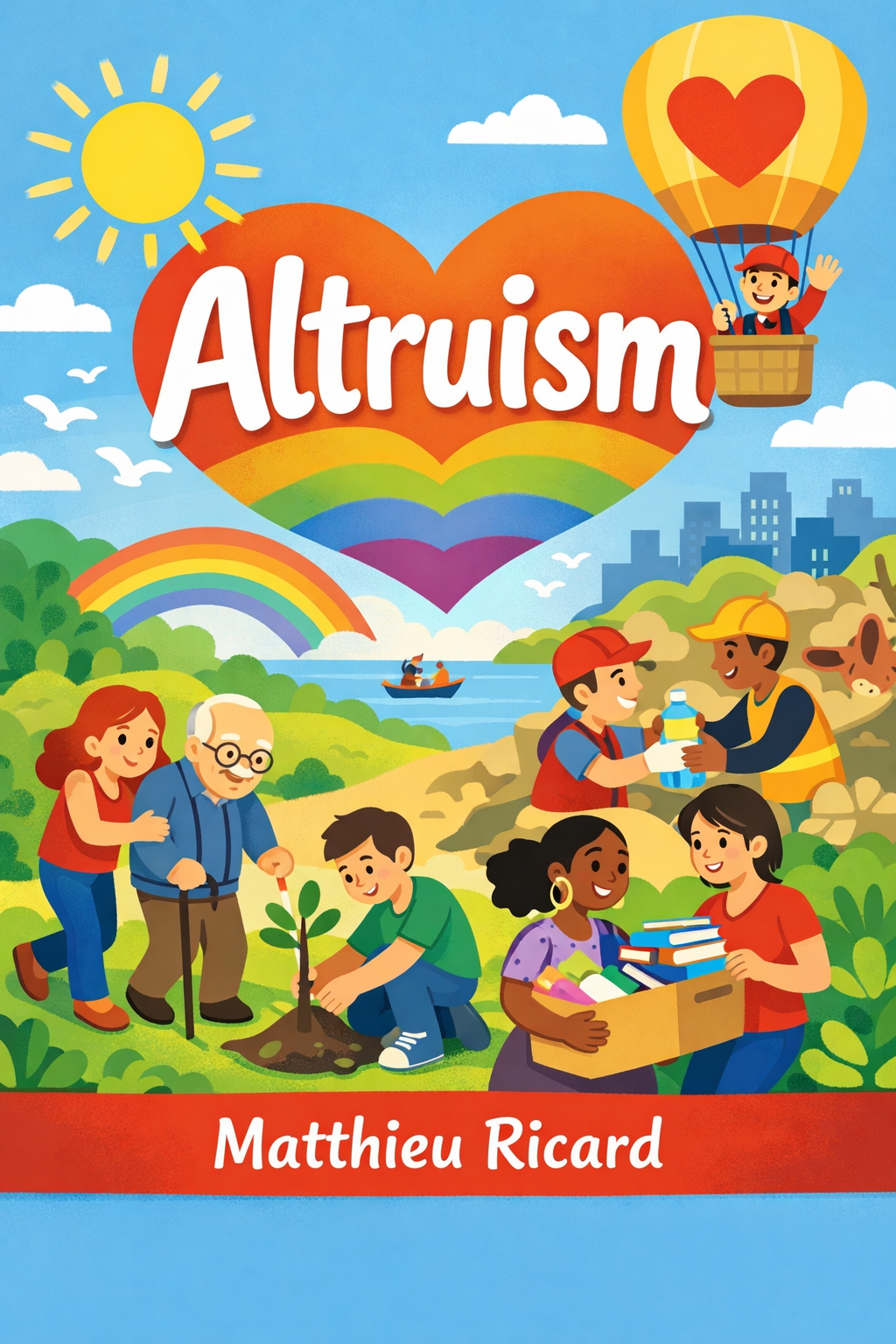
The journey toward a more compassionate world begins with a simple, yet profound, understanding: altruism is not a rare virtue but a fundamental part of the human condition. This exploration reveals that we are born with a natural capacity for care, visible in the protective love of a parent for a child. This instinctual kindness, however, is just the seed. A deeper, more expansive form of altruism exists—one that must be consciously nurtured throughout our lives. This cultivated altruism extends beyond our immediate circle to embrace a genuine concern for all beings, driven by the recognition that every person seeks happiness and wishes to avoid suffering, just as we do. The ultimate expression of this is a commitment to alleviating the suffering of others, a path that promises profound personal and collective transformation.
At its heart, this cultivated altruism is inseparable from love—a steady, unconditional appreciation for others. This love is not a finite resource but a renewable energy that grows the more it is shared. Scientific insights, such as the function of mirror neurons in our brains, show that emotions are contagious; when we express genuine care, we inspire similar feelings in others, creating a positive feedback loop of compassion. This isn’t merely philosophical. Modern neuroscience confirms that our minds are malleable. The principle of neuroplasticity demonstrates that habitual altruistic thinking physically strengthens the neural pathways associated with empathy and kindness, making compassionate action more intuitive over time. Even more astonishingly, the field of epigenetics suggests that our mental patterns and behaviors can influence how our genes express themselves, meaning that living with altruistic intention might subtly reshape our very biological predispositions toward goodness.
Despite this innate potential, a pervasive myth of inherent human selfishness persists, often wrongly justified by a distorted view of natural selection. In truth, cooperation and community have been central to human survival and flourishing. An excessive focus on the self, or egocentrism, stifles our natural empathy and leads to isolation and misery. This is starkly evident in caregiving professions, where performing duties without genuine compassion can cause real harm, as opposed to healing. The path away from this constricted self-focus involves deliberate mental training. Meditation emerges as a powerful tool in this regard. Regular practice, even in small daily doses, builds the inner stability, focus, and resilience needed to effectively help others. It can even alter our perception of pain, allowing us to endure discomfort in the service of a greater good. Specific practices, like metta or loving-kindness meditation, directly train the mind to generate feelings of unconditional goodwill, systematically expanding our circle of compassion from ourselves to loved ones, strangers, and even those with whom we have difficulty.
True altruistic heroes embody this selfless spirit, finding fulfillment in the act of helping itself, rather than in public recognition or reward. Their actions, often performed quietly and without fanfare, provide a blueprint for authentic compassion. To scale this individual virtue into a societal force, we must address the structures that hinder it. Inequality is a major obstacle to widespread altruism, as it breeds division, distrust, and a scarcity mindset. Building a more altruistic society therefore requires a committed fight against economic and social disparities at every level, creating a foundation where cooperation can thrive. History shows that the drive to perform good deeds is remarkably resilient, often shining brightest during the most difficult and dangerous times, proving that our capacity for collective care is a constant and powerful force.
Finally, the future of altruism is inextricably linked to education. By integrating the cultivation of empathy, ethical reasoning, and social-emotional skills into learning, we can equip new generations to build a better world. This education is not just for the young; it is a lifelong process of opening the heart and mind. The message is ultimately one of hope and agency. We are not prisoners of a selfish biology or a competitive culture. Through mindful practice, a commitment to justice, and the daily choice to extend kindness, we can each nurture the altruistic potential within us, contributing to a world that is not only more successful but fundamentally happier and more connected for all.