Description
We often think of resilience as a kind of emotional armor, a tough shell that allows us to bounce back from hardship unchanged. This book proposes a different, more powerful idea: true resilience is not about returning to a previous state, but about adapting, learning, and transforming through difficulty. It is a dynamic, flexible skill that can be cultivated, not a fixed trait you either have or lack. The journey outlined here is about moving from a mindset of mere survival to one of purposeful growth, where challenges become the raw material for building a wiser, more capable, and ultimately more fulfilled self.
The foundation of this adaptive strength lies in a radical shift in perspective. Instead of viewing stressful events as threats to be feared and avoided, we can learn to see them as challenges to be met. This isn’t about naive optimism, but about a conscious choice of focus. The book explores how our internal narrative—the story we tell ourselves about what is happening—directly shapes our physiological and emotional response. By reframing a setback from “This is a disaster that proves I’m a failure” to “This is a difficult problem I can learn from,” we activate a cascade of cognitive and emotional resources. This challenge mindset lowers defensive stress hormones and opens us to creativity, connection, and solution-seeking, fundamentally altering our experience of adversity.
With this mindset as our compass, we then develop a toolkit of core practices. Central to this is the skill of psychological flexibility—the ability to stay present with painful thoughts and feelings without being ruled by them, all while keeping our values clearly in sight. It means feeling the anxiety of a career change, acknowledging the thought “I might fail,” and still taking a step forward because growth is important to us. The book provides practical methods for disentangling from unhelpful thought patterns, such as catastrophic thinking or rigid self-criticism, and for grounding ourselves in the reality of the present moment. This creates a critical space between stimulus and response, where choice resides.
Another pillar is the deliberate cultivation of personal resources. Adaptive resilience recognizes that we cannot draw water from an empty well. The text guides readers in proactively building reserves in four key domains: physical (through sleep, movement, and nutrition), emotional (through practices like gratitude and positive connection), mental (through continuous learning and cognitive challenges), and spiritual or values-based (through a sense of purpose and connection to something larger than oneself). These resources are not indulgences; they are the essential fuel that allows us to endure strain and recover effectively. The book emphasizes small, sustainable investments in these areas, creating a compound interest effect on our overall capacity.
Furthermore, the journey is deeply social. While inner strength is vital, the myth of the lone, stoic hero is dismantled. Our relationships are our most potent resilience infrastructure. The book explores how to build and rely upon a support network characterized by vulnerability and reciprocity. It’s about having the courage to ask for help and the generosity to offer it, creating webs of mutual aid. This also involves setting healthy boundaries to protect our energy and learning to navigate toxic or draining relationships that deplete our adaptive reserves. Resilience, in this light, is a community project as much as a personal one.
Finally, the concept is anchored in post-traumatic growth—the well-documented phenomenon where people report positive life changes after struggling with major crises. This is the ultimate expression of adaptive resilience: not just recovering from a loss, illness, or failure, but integrating the experience to develop a greater appreciation for life, deeper relationships, new possibilities, increased personal strength, and spiritual development. The book provides frameworks for processing trauma and difficulty in ways that mine them for meaning, helping to craft a coherent narrative of one’s life that incorporates the broken pieces into a stronger, more beautiful whole.
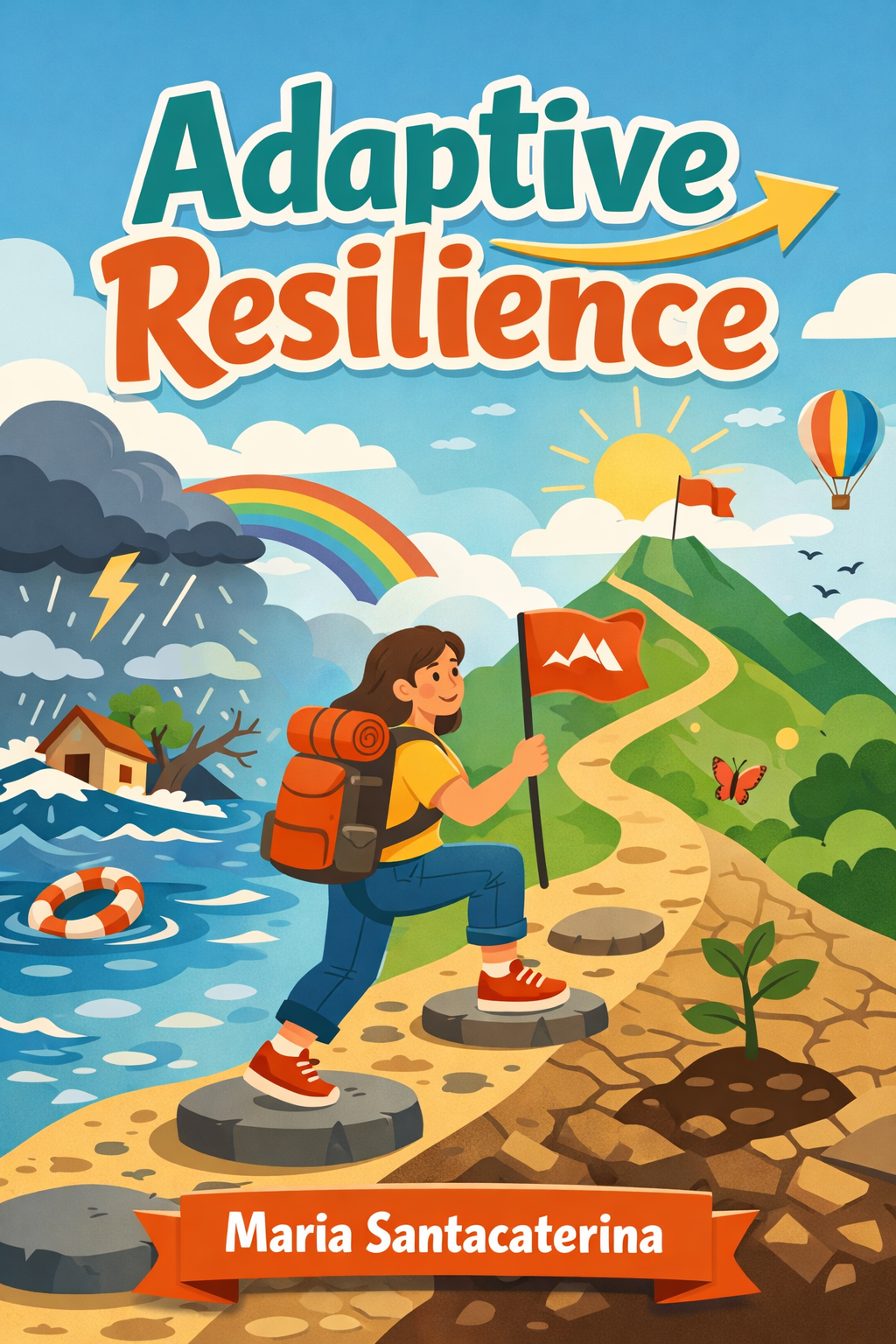
In essence, this work is a manual for dynamic self-evolution. It argues that the storms of life will inevitably come. We cannot control the wind, but we can learn to adjust our sails, strengthen our vessel, and navigate toward a destination of our own choosing. By embracing adaptability, building multifaceted resources, connecting authentically with others, and seeking meaning in the struggle, we don’t just withstand the waves—we learn to sail better because of them, discovering strengths and horizons we never knew were possible.