Description
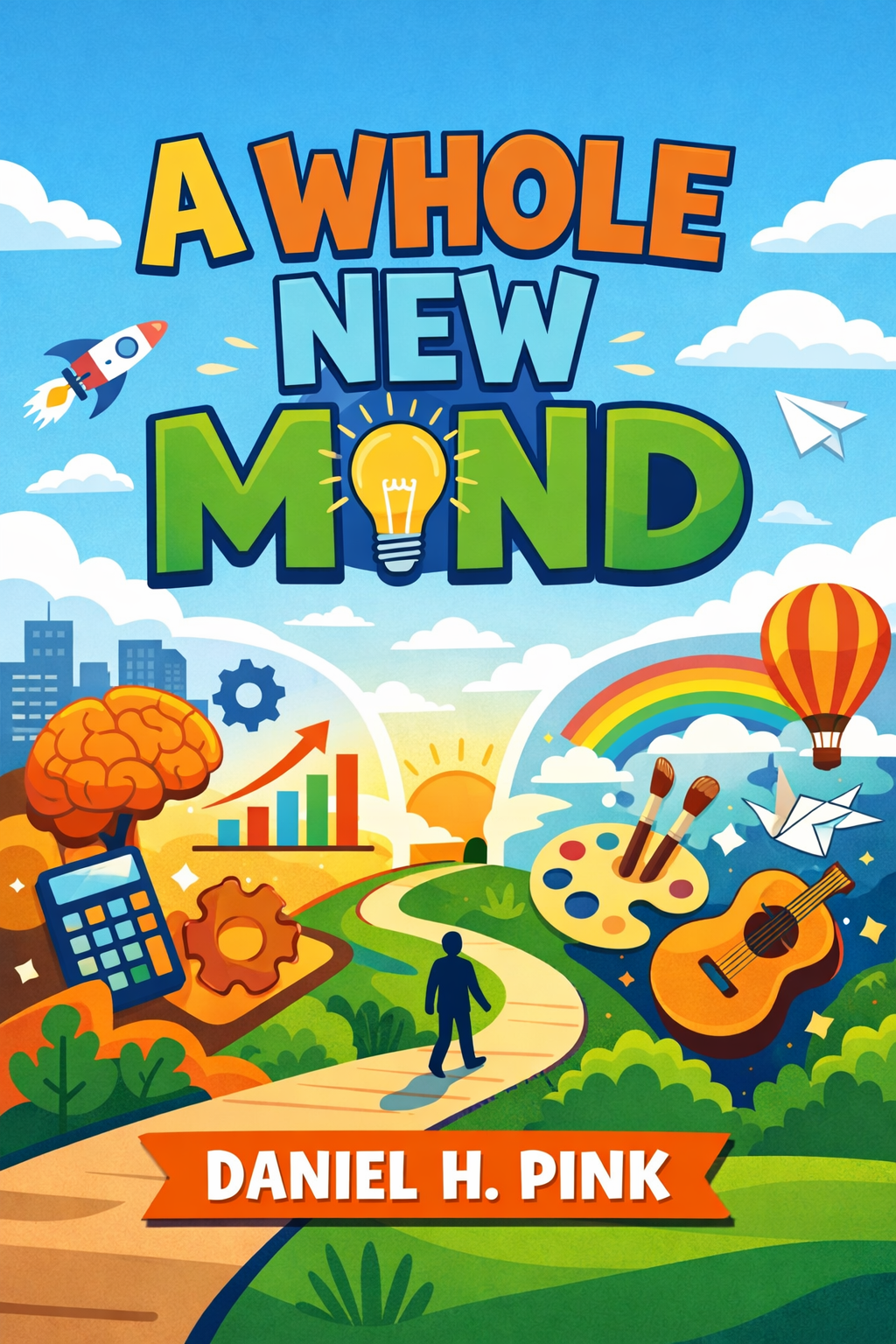
For generations, society has operated on a simple, unspoken principle: the path to success is paved by logical, linear, and analytical thinking. This left-brain approach, emphasizing sequential reasoning, factual accumulation, and functional problem-solving, built the Information Age. It created prosperity, advanced technology, and established the white-collar professional as the archetype of achievement. Yet, a profound shift is underway. We are transitioning into a new era where the capabilities once sidelined as ornamental—creativity, empathy, meaning-making—are becoming the new economic and personal imperatives. This is the dawn of the Conceptual Age.
The drivers of this change are both external and internal. Abundance has saturated our material world; functionality and price are no longer sufficient to command attention in a marketplace overflowing with comparable goods and services. Automation and outsourcing are systematically handling routine, left-brain tasks, from basic accounting to software code. What remains, and what is increasingly valuable, are precisely the skills that are hardest to codify and replicate: the artistry of the right hemisphere. This is not about abandoning logic but about complementing it with a new set of senses. The future will favor those who can think holistically, who can weave together disparate threads into a novel tapestry, and who can engage not just the spreadsheet but the human spirit.
To thrive, we must cultivate six fundamental aptitudes. The first is **Design**. It’s no longer enough for a product, a service, or an experience to merely work. It must also delight, engage, and resonate on an aesthetic level. Design is the marriage of utility and significance, transforming the mundane into the meaningful. In an age of abundance, good design is a decisive competitive edge, differentiating commodities and forging emotional connections with users.
The second aptitude is **Story**. Data and facts are ubiquitous and cheap. What is scarce is the context, the emotion, and the understanding that frames them. The ability to craft a compelling narrative—to weave facts into a story that has resonance and meaning—is what persuades, connects, and is remembered. From branding to leadership to medicine, the most effective communicators are those who understand that we are wired for narrative, not just for data points.
Third is **Symphony**. This is the capacity for synthesis, for seeing the big picture by connecting seemingly unrelated fields. It’s the opposite of analysis, which breaks things down. Symphony is about putting the pieces together to invent something new. It is cross-disciplinary thinking, the ability to recognize patterns, and the courage to combine art with science, technology with psychology, to generate bold, innovative solutions.
Fourth is **Empathy**. In a world of advanced logic engines, the ability to understand what makes another human tick, to forge trust, and to care for others becomes the irreplaceable human advantage. Empathy is about stepping into another’s shoes, perceiving unspoken emotions, and building relationships. It is the foundational skill for teamwork, leadership, caregiving, and any role that requires navigating the complexities of human motivation and need.
The fifth aptitude is **Play**. Research shows that humor, games, and lightheartedness are serious business. They fuel innovation, strengthen social bonds, and improve mental and physical health. In the Conceptual Age, a playful spirit is not a distraction from productivity but a pathway to it. It encourages risk-taking, defuses tension, and often leads to those breakthrough “aha” moments that pure, grim diligence misses.
Finally, there is the pursuit of **Meaning**. With material needs largely met for many, a deep hunger has emerged for purpose, transcendence, and spiritual fulfillment. This is the ultimate right-brain quest. Individuals and organizations that can address this yearning—by crafting work that matters, building communities of belief, or offering avenues for personal growth—will tap into a powerful and enduring source of motivation and connection.
This transition is an invitation to a more balanced and fulfilling mode of existence. It asks the lawyer to also consider the narrative of justice, the doctor to hear the patient’s story, the engineer to embrace elegant design, and the manager to lead with empathy. It is a call to educate our whole minds, to value the artist and the caregiver as highly as the programmer and the accountant. The future belongs not just to those who can compute, but to those who can create, connect, and bring meaning to our world.