Description
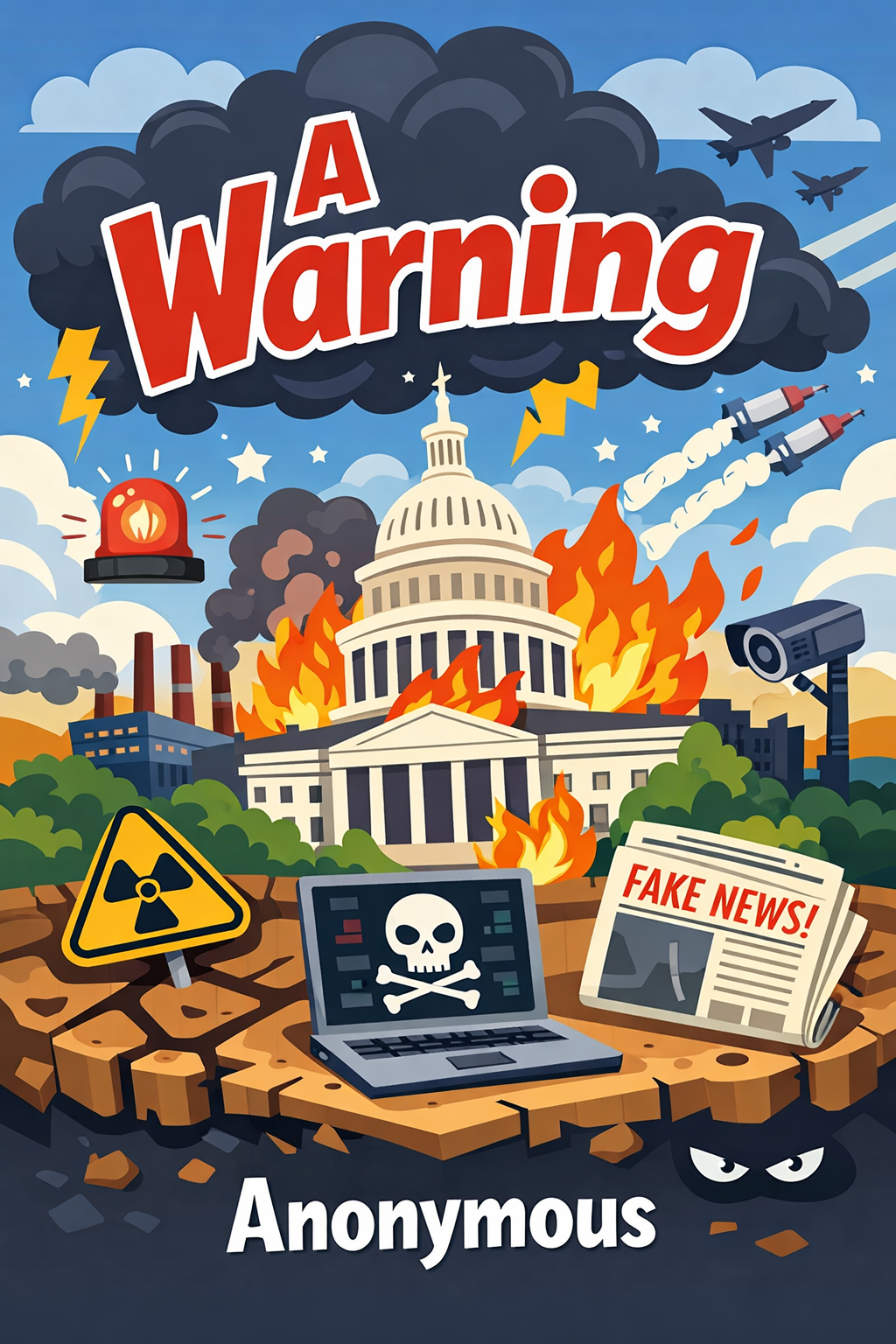
The narrative unfolds as a stark, firsthand chronicle from within the highest levels of power, revealing an administration perpetually on the brink of crisis. It begins with a portrait of profound internal dysfunction, where seasoned professionals and military officials find themselves powerless against a tide of impulsive decisions. The sudden announcement of a military withdrawal via social media, catching the entire defense establishment off guard, is not an anomaly but a standard operating procedure. These individuals, who entered government with the aim of providing stability, are instead reduced to managing a chief executive who operates on whim, disregards detailed briefings, and floats ideas that are often legally dubious or profoundly irresponsible. Their subsequent departures, one by one, create a vacuum filled only by those who amplify the president’s most reckless instincts, leaving the mechanisms of government dangerously exposed.
At the heart of this turmoil is the president himself, presented as a figure devoid of the foundational qualities required for leadership. The analysis draws a striking parallel to the ancient virtues outlined by Cicero—wisdom, justice, courage, and temperance—finding a fatal absence in each category. Instead of wisdom, there is a stubborn ignorance and an active disdain for learning. In place of justice, a penchant for personal vendettas and public bullying replaces the fair application of law. Courage is supplanted by a pattern of avoiding responsibility and shifting blame, while temperance is utterly abandoned in favor of rashness and inflammatory rhetoric. This character assessment is crystallized in the response to a national tragedy, where a failure to clearly condemn violent extremism reveals a moral compass spinning wildly, with profound consequences for public discourse and national unity.
The account further argues that this leadership is not merely unconventional but fundamentally unmoored from any consistent ideology. The president’s political identity is shown to be a matter of sheer convenience, with a history of vacillating positions that contradict even the core tenets of the party he leads. On fiscal responsibility, national security, and economic policy, the administration’s actions are depicted as direct repudiations of traditional conservative principles, favoring massive spending, erratic foreign policy maneuvers, and protectionist trade wars that alienate allies and unsettle markets. This ideological incoherence is symptomatic of a deeper void: a lack of any guiding belief system beyond self-interest.
This self-interest, the narrative asserts, evolves into a direct threat to democratic governance. The president’s obsession with past rivals and perceived enemies transforms the institutions of state into weapons for personal combat. The independent judiciary, the nonpartisan intelligence community, and the professional bureaucracy are not respected as pillars of a balanced system but are maliciously branded as parts of a conspiratorial “deep state” whenever they fulfill their duty to the Constitution rather than to the person of the president. This relentless assault on institutional legitimacy seeks to erode public trust in any entity that could provide a check on power, paving a path toward a more autocratic style of rule.
The danger, we are shown, extends beyond America’s borders. On the world stage, the president’s approach to diplomacy is characterized by a cavalier disregard for established alliances and a baffling admiration for foreign strongmen. Crucial international partnerships are undermined through public ridicule and transactional demands, while authoritarian leaders are praised. This behavior not only weakens global standing but also emboldens adversaries who perceive American leadership as unpredictable and susceptible to flattery. The nation’s role as a beacon of democratic values is voluntarily dimmed, creating a vacuum that other, less benevolent powers are eager to fill.
Compounding these substantive failures is a revolutionary and perilous communication style. The direct, unfiltered, and often malicious use of social media bypasses all traditional gatekeepers and fact-checking mechanisms, allowing falsehoods to be seeded directly into the public consciousness with official authority. This constant stream of provocation, insult, and conspiracy theory is designed to dominate the news cycle, inflame partisan divisions, and create an alternative reality for loyal followers. It represents a powerful tool for undermining shared facts, which are the very bedrock of a functional democracy, replacing them with a politics of perpetual conflict and tribal loyalty.
Faced with this comprehensive portrait of disruption, the narrative turns to the political party that enabled this presidency. It presents Republican officials with a stark and unsustainable choice: loyalty to their long-stated principles or loyalty to the president. Time and again, the account shows party leaders choosing the latter, defending the indefensible and remaining silent in the face of norm-shattering behavior out of fear or political calculation. This moral compromise, it argues, has not only transformed the party but has also left the country’s system of checks and balances dangerously weakened, as one major political organ abdicates its constitutional role.
The conclusion is not one of passive despair but a clarion call to the most fundamental democratic action. The remedy prescribed is electoral. The argument posits that the most definitive and constitutionally sound method to end the ongoing crisis is a repudiation at the ballot box. It is a plea for citizens to recognize the gravity of the moment, to look beyond partisan tribalism, and to use their vote to restore guardrails, reaffirm institutional integrity, and demand a return to basic standards of presidential conduct. The final message is that the preservation of the democratic experiment ultimately rests not with insiders or institutions alone, but with the collective will of the people it is designed to serve.